

Operating cost of shipping lines doing business at Sorong Port (container terminal TPK Sorong) has down over 30%, some contacted shipping operators have said. Shorter port-stay and the increasing productivity indicated by the higher and higher BSH (box/ship/hour), have helped shipping performance to stay at this position, thanks to the operational transformation and human resources improvement the terminal operator has done.
Just like other ports and terminals at Papua Island, Sorong Port (TPK Sorong) has long been known as a port with lower productivity and high cost. Many complicated problems caused this lower performance, but human resource competence, skill, and work ethos are cited as the main causes.
“There is such a significant improvement in operation in the last year. The stevedoring went faster, resulting in a shorter port stay. Of course, this impacted on our operating cause,” Faizal Arifin, Sorong Branch Head of PT Salam Pacific Indonesia Lines (SPIL), said recently.
“It is hard to count the amount of saving from this, but our operating cost during berthing has been down by over 30%,” said Faisal, admitting that shipping lines also got additional benefits from the shorter TRV (turn round voyage).
SPIL is the leading shipping line for Sorong with market share of more than 51%.
Faizal explained that the port stay at TPK Sorong was now only 24 hours, significantly down from earlier three days (72 hours). This improvement, according to Faisal, has encouraged SPIL to add more ship calls, to 5 calls/month, from only 3 earlier.
Echoing this, Sorong Branch Head of PT Tanto Intim Line (Tanto) Slamet Riyanto admitted that container services in Sorong were getting better, thanks to the Pelindo transformation programs that supported this terminal performance to get better.
He also admitted that this better performance has encouraged shipping lines to add more services. Tanto, the second leading shipping line to TPK Sorong with market share of 31%, has added its calls to 5 per month, from 3 calls earlier. But, he expects Pelindo to continue improve human resources competence, skill, and work ethos.
“The system implemented by Pelindo is good, but it must be acknowledged that its implementation is still all local, which means that in the future there must be intervention on human resources through improving mindset, skills, and work ethos,” he said.

Jece Julita Piris: “The transformation has supported anything running in a system.”
Head of Sorong Harbourmaster and Port Authority (KSOP) Jece Julita Piris appreciates any transformation the TPK Sorong has done. “The transformation has supported anything running in a system, making the process of container loading/unloading and receiving/delivery become faster. In addition, the also reduces extortion,” Jece said.
Planning Control – Based Operation
Terminal Head of TPK Sorong Herryanto explained that the transformation steps and programs the Pelindo did post-merger has encouraged the terminal to this position. The transformation, he said, was done through implementing port operational system standardization. For information, Pelindo 1-4 was merged in 2021 into Pelindo.
“Currently, TPK Sorong has carried out terminal standardization based on planning and control-based operation. Previously, we worked only if a vessel was berthing without early planning. We didn’t work until a vessel was coming,” said Herryanto.
“But now, following the adoption of planning and control framework, we plan anything before a vessel comes, not only at the birth site, but also at the CY (container yard). We prepare anything, including the position of a vessel to berth, the container location at the yard after loading from the vessel,” he said further.
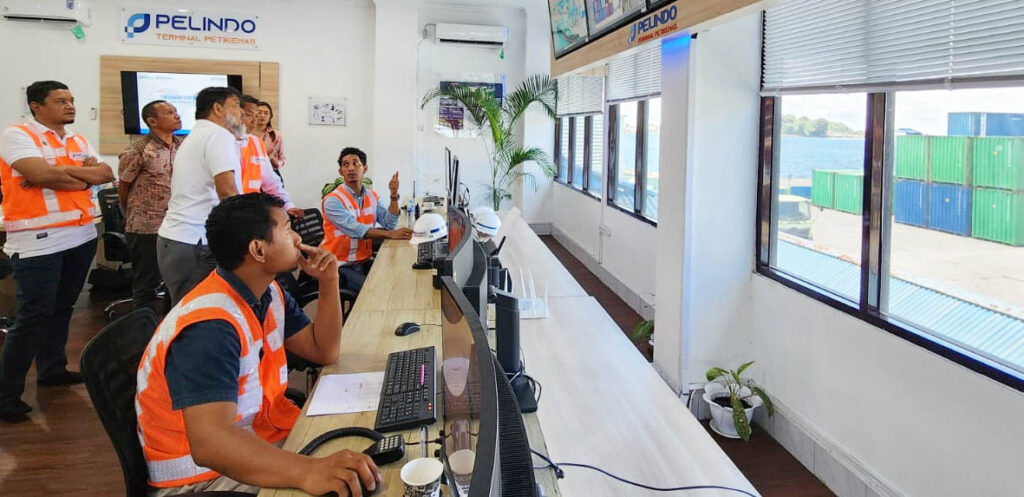
Herryanto : “We plan anything before a vessel comes.”
This new system, Herryanto said, has resulted in a shorter port stay and faster process of loading/unloading seen in higher BSH (Box/Ship/).
TPK Sorong BSH now has reached 30, from earlier 17 boxes, while its crane productivity (BCH – box/crane/hour) has reached 22, from earlier only 8 boxes. Its port stay has been only 24 hours, from 72 hours earlier.
Though there was no new investment in facilities and equipment, added Herryanto, TPK Sorong was still able to improve performance, thanks to any efforts to improve human resources, application of information technology (IT) including the online system. “No additional cranes (QC), nor RTGs. These achievements were mostly due to our transformation programs,” he said.
Sorong is equipped with some equipment of 2 QCC (quay container crane), 2 RTGC (rubber tyred gantry crane), 3 Reach Stackers, 2 FL, and 8 Head Trucks.
Apart from that, he added, the utilities at TPK Sorong are still very adequate to serve containers. With such faster services, TPK Sorong has also reduced its YOR (yard occupancy ratio) to only 24.32%, down from earlier 36.33%.
“As we work for 24/7, our YOR is available until 74%,” he said.
Industry Growth Expected
However, though TPK Sorong has improved its services that resulted in a faster process of loading/unloading, shorter port stay, and cheaper operating cost to port users, but it did not automatically trigger the terminal throughput. Data tells that last year (2022), its throughput was down to 46,000 TEUs, from 55.000 TEUs in 2021. Until September this year, this terminal throughput has reached 36,000 TEUs.
Slow growth of hinterland which is indicated by the lower volume of outbound cargoes is cited as the main cause why this terminal throughput is static with no significant increase. “In average, this terminal yearly throughput is more than 50,000 TEUs, mostly dominated by inbound cargoes,” Herryanto said.
With lower industry of Sorong, the outbound cargoes reached only 29% of the vessel capacity from this terminal, according to TPK Sorong data.

Slamet Riyanto: “There is totally an imbalance between inbound cargoes and outbound.”
The lower outbound cargoes is also seen in the data from shipping lines. The load factor of SPIL and Tonto from Sorong is only 7%. “There is totally an imbalance between inbound cargoes of 100% and outbound of only 7% at this terminal. This is due to a small number of industries within this region (Sorong),” said Slamet Riyanto.
Faizal Arifin affirmed it, saying that SPIL’s outbound container load only ranged from 7-10%. Slamet Riyanto and Faizal Arifin both expect the government to do more initiatives to invite investment, thus encouraging industrial growth.
“Now, it’s just a matter of the government’s role in encouraging industrial growth and utilizing ports,” said Faizal Arifin.
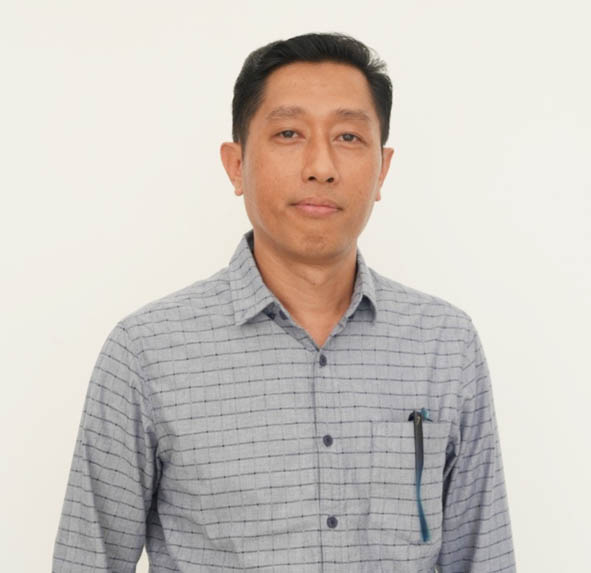
Faizal Arifin: Now, it’s just a matter of the government’s role in encouraging industrial growth and utilizing ports.”
Sorong Container Terminal (TPK) in Southwest Papua Province this year recorded an increase in service performance which is expected to be a trigger to encourage the growth of industrialization.
“The operation problems of the terminal have been overcome. Now it’s just a matter of how to support the industry growth. The government has to attract more investment,” Slamet Riyanto.
According to data, Sorong’s economic growth in 2022 reached 1.88% y-o-y. The growth was mostly contributed by two sectors of accommodation and food and beverage sector which grew 7.91% and transportation and warehousing business sector (6.23%). In terms of expenditure, household consumption grew 3.76 percent. Meanwhile, the inflation rate in Sorong in September 2023 was 1.99%.