
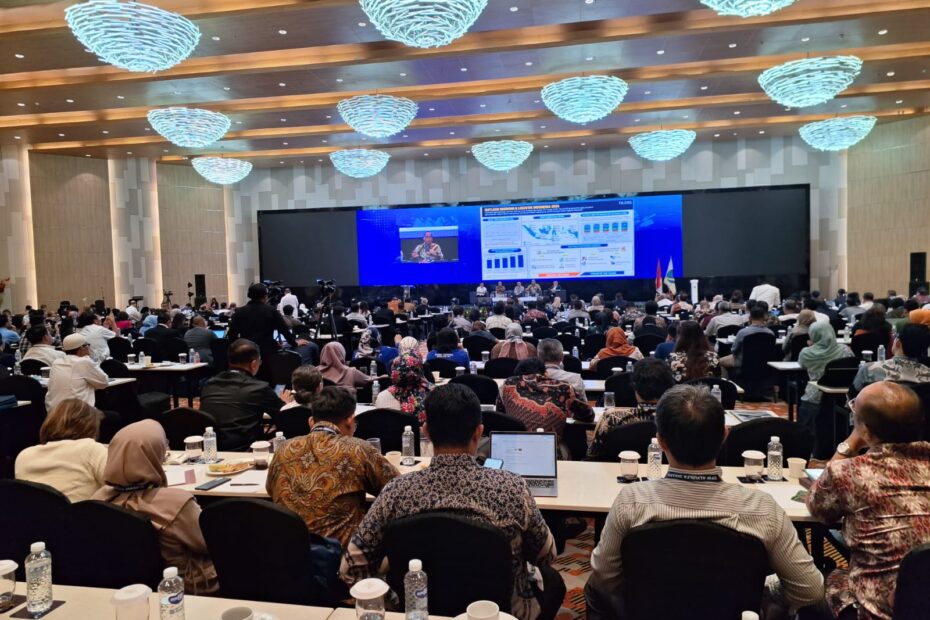
The Indonesian logistics sector is poised for significant growth. The country’s positive yearly economy growth plus the business transformation to digital have encouraged it, according to key note speakers for the 6th ALFI (Indonesia Logistics and Forwarders’ Association) Chapter Jakarta Conference held on December 11, 2024.
Speakers said the sector continuously grew up double digit in the last years. In 2023 for example the Jakarta logistics sectors value reached IDR 1,436 trillion, marking a 13.4% increase from the previous year.
Speakers also underlined the importance of efficient logistics to meet the economy growth target. In his keynote address, Adil Karim, Chairman of ALFI Jakarta highlighted the importance of an effective and efficient logistics system to support the government’s target of 7-8% annual economic growth.
He stated that national logistics performance can be significantly enhanced through comprehensive digitalization, which will help reduce costs, improve efficiency, and boost productivity.
Adil further elaborated on the vital role of Jakarta, the nation’s economic and logistical hub. Jakarta’s contribution to Indonesia’s GDP stands at 16.54%, while the Greater Jakarta area (Jabodetabek), including Bogor, Depok, Tangerang, and Bekasi, contributes approximately 23.8%.
Jakarta serves as the gateway to the national economy, and its logistics services are crucial in ensuring continued competitiveness in the global market.
To maintain this economic dynamism, Karim called for the development of a digital-based logistics ecosystem in Jakarta. This ecosystem would help logistics companies meet the demands of both local and global markets and foster higher economic growth.
He also outlined six key priorities for logistics sector development in Jakarta: Building a digital logistics ecosystem within Jakarta; Enhancing infrastructure efficiency, including ports, roads, and airports, to streamline the flow of goods, documents, and fleets; Improving integrated electronic information and communication systems for all logistics stakeholders; Raising the competency of human resources to meet both national and international standards; Strengthening the capabilities of logistics service providers; and Promoting the implementation of supply chain management practices.
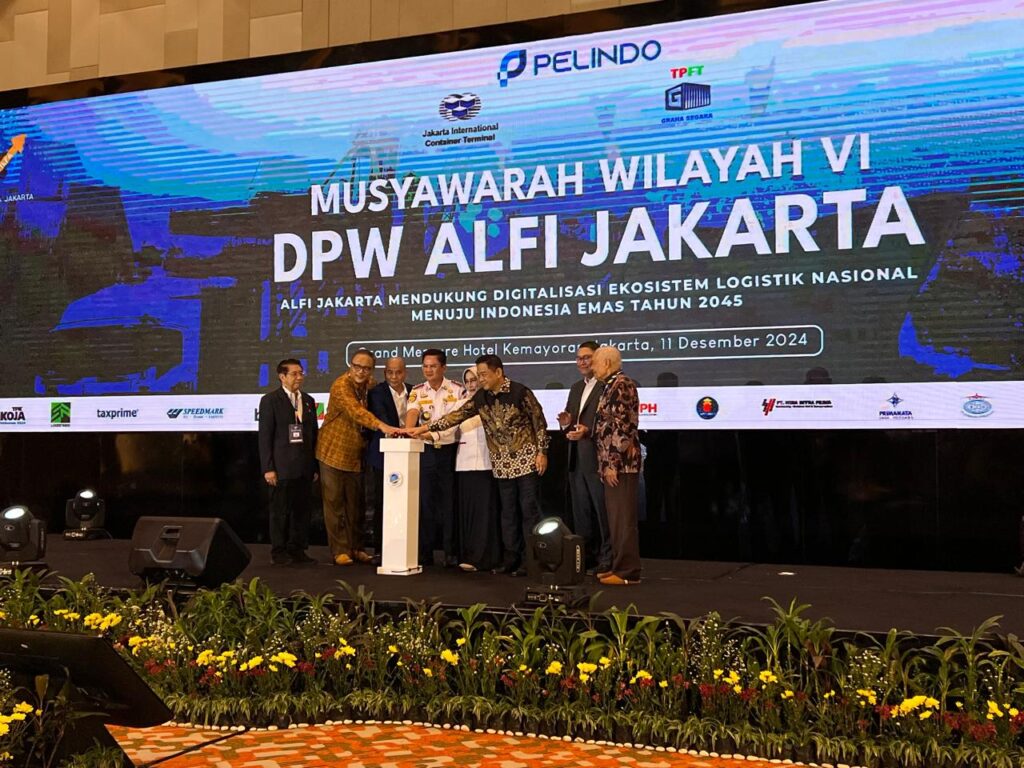
Adil expressed hope that the conference would generate actionable proposals that could influence policies designed to improve the logistics ecosystem in Jakarta, ultimately making it more effective, efficient, and productive.
Collaboration and Synergy for Growth
The conference was officially opened by Safrin Liputo, Head of the Jakarta Provincial Transportation Agency. He emphasized the importance of collaboration across all logistics stakeholders, including government agencies and industry players like ALFI Jakarta, to achieve the desired growth in logistics performance.
“Synergy is crucial to ensure the smooth flow of goods, which is essential for supporting national economic growth,” said Safrin. He also noted that Jakarta is set to become a global economic center in the future, necessitating more professional and efficient logistics services to meet the demands of a globalized economy.
Diana Dewi, Chairperson of the Jakarta Chamber of Commerce and Industry (KADIN), also addressed the gathering, revealing that Jakarta’s logistics potential had reached IDR 1.436 trillion in 2023, a notable 13.4% increase from the previous year.
She emphasized that logistics is a vital link in the nation’s economic chain, facilitating trade between producers and consumers. However, she also pointed out the challenges faced by the sector, particularly the uneven distribution of infrastructure, especially in eastern Indonesia, and the issue of unbalanced cargo, leading to empty return shipments.
Key Stakeholders and Future Outlook
The event brought together various stakeholders from the logistics sector, including officials from Tanjung Priok Port, the Indonesian Customs Office, and the Indonesian Stevedoring Companies’ Association (APBMI), as well as representatives from Pelindo, the state-owned port management company.
Representatives from various regional ALFI chapters across Indonesia were also in attendance, underscoring the national significance of the event and the shared goal of improving Indonesia’s logistics infrastructure and services. As the logistics sector continues to evolve, the implementation of advanced technologies, better infrastructure, and closer collaboration among stakeholders will be essential to ensuring Jakarta’s role as the nation’s logistical powerhouse and contributing to Indonesia’s broader economic growth ambitions.