
In the first quarter of 2025, ALFI Institute (Indonesian Logistics and Forwarder Association Institute) observed that Indonesia’s economy continues to face a mix of external and internal pressures.
These challenges include the uncertainty surrounding global interest rate cuts by the U.S. Federal Reserve and internal issues such as a weakening Rupiah, high rates of layoffs, weak tax absorption, capital outflows from financial markets, and concerns about the government’s limited fiscal space.
Adding to the difficulties, Indonesia is now impacted by a 32% trade tariff imposed by the United States on certain goods, which has affected Indonesia’s exports to the U.S. This tariff could lead to further challenges, including a decline in export performance, reduced competitiveness of Indonesian products in the U.S. market, weakening demand that may affect labor absorption, and intensified export competition as countries seek to diversify their export markets.
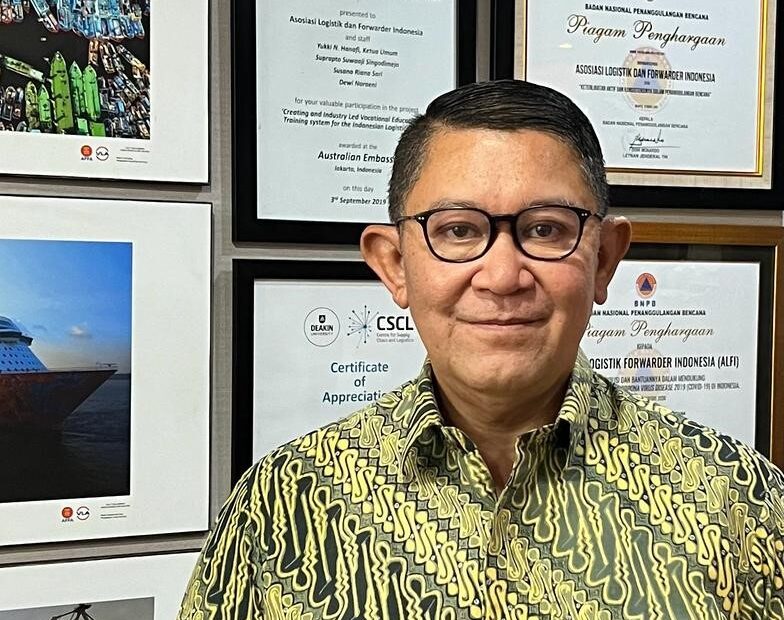
Yukki Nugrahawan Hanafi, Chairman of the ALFI Institute, believes that the economic outlook for 2025 is challenging and could negatively impact national GDP growth.
“The U.S. trade tariffs on various countries, including Indonesia, will slow economic growth, especially in export-driven sectors. Indonesian exports to the U.S. account for about 10% of total national exports. Moreover, even before these tariffs, Indonesia’s economy was already facing pressures such as layoffs, a weakening currency, and capital flight,” said Yukki.
Given the external and internal pressures on the economy, the government must take immediate strategic steps to strengthen domestic consumption, which has historically been the backbone of Indonesia’s economy.
“In 2025, we’re seeing domestic consumption under strain, marked by reduced purchasing power and deflation in January and February compared to the same period last year. Domestic consumption contributes more than 50% to national economic growth,” Yukki added.
Although the government has prepared a negotiating team for discussions with the United States, Yukki argues that a comprehensive approach is necessary to safeguard Indonesia’s economic growth.
He proposed several policy recommendations, first strengthening economic diplomacy. “This can be done through fostering bilateral relations with the U.S. by appointing an Indonesian Ambassador to the U.S and expand market access by exploring new non-traditional markets,” said Yukki.
“In addition, the diplomacy can also be done through completing the Free Trade Agreement (FTA) with the European Union (EU-CEPA) and maximize the RCEP (Regional Comprehensive Economic Partnership),” Yukki explained further.
He also suggests to leverage Indonesia’s Participation in BRICS to enhance global economic ties.
Second, Enhancing National Competitiveness. This step can be done through simplify Licensing Regulations to attract export relocations from countries facing higher tariffs than Indonesia (e.g., Vietnam, Cambodia, Laos) and ensure political stability and maintain a conducive labor environment that supports both growth and stability.
Third, Fiscal Policy Adjustments. This can be done through review and reduce non-essential spending to preserve fiscal stability, such as reassessing programs like the Free Nutritious Meals (MBG) initiative; provide fiscal stimulus and financing support to businesses impacted by U.S. tariffs; stimulate demand through increased government spending across various sectors; and support vulnerable groups with social cushions for the poor, vulnerable, and middle-class populations.
Fourth, attract investment and accelerating downstreaming. “We can execute this through implementing structural reforms to attract investment that drives downstream activities, particularly in sectors like plantations, marine, fisheries, and forestry. These sectors can create significant job opportunities and bolster national food security,” explained Yukki.
Fifth, maintain purchasing power and boost domestic consumption. To realize this, it can be done by stimulating consumer spending through targeted incentives that encourage middle-class consumption; creating new jobs through stimulus measures in sectors with high economic multipliers, such as manufacturing, food and beverages, technology, and MSMEs; and providing subsidies or tax incentives to boost the disposable income of the middle class.
“With Indonesia’s large domestic market and its productive demographic, the government must focus on strengthening domestic purchasing power and consumption to shield national growth from external uncertainties. We’ve seen how China has successfully reoriented its economic policies toward domestic consumption, and Indonesia can take similar steps,” Yukki said a conclusion.