
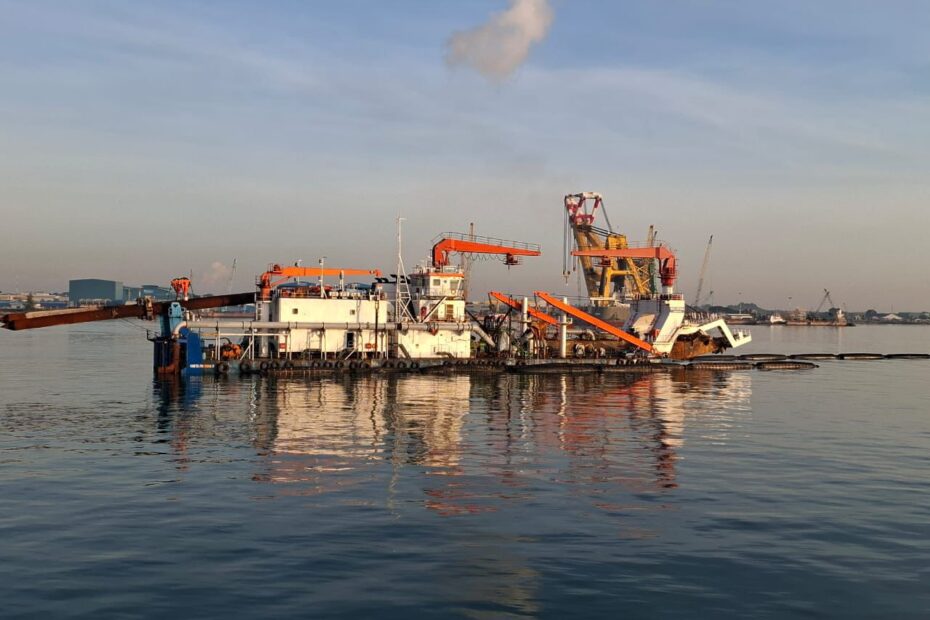
Hope has finally arrived for Bengkulu’s paralyzed port. A set of dredging vessels have docked at Pulau Baai, ready to clear the silted channel. While the arrival of dredging vessels signals a turning point, port users are urging a routine dredging in the future to prevent such disruptions from happening again.
Sixteen ships of all sizes still were being trapped inside the usually busy pool of Pulau Baai Port on Friday morning, May 16, 2025. They anchored not by choice, but by the port channel that had grown too shallow to allow vessels to pass.
These vessels, from container ships and oil tankers to passenger boats and barges hauling coal and crude palm oil (CPO), were effectively stranded – floating, but frozen in place.
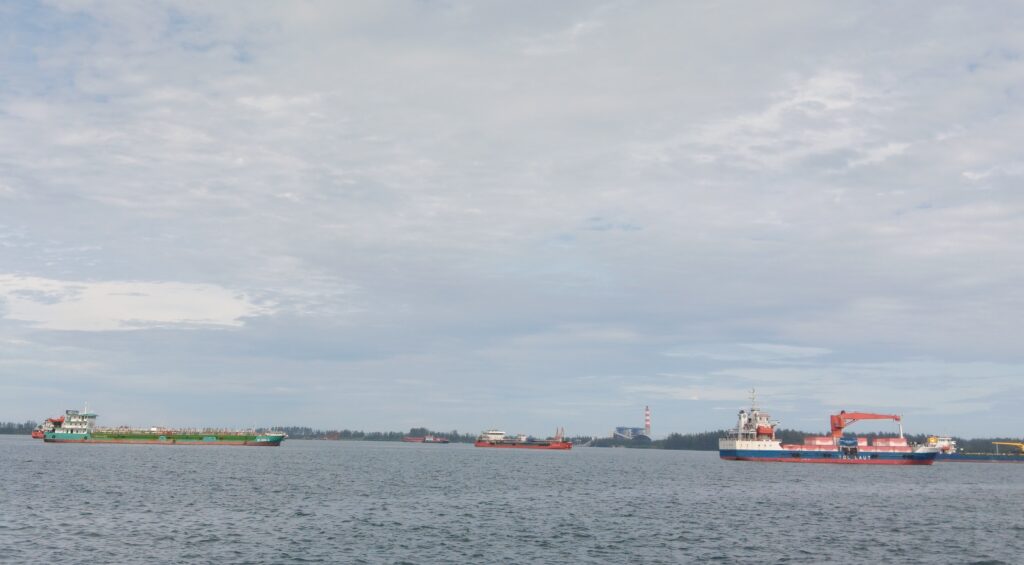
Photo: Dozens of vessels trapped at Bengkulu for months
Their names are etched in the logbooks of PT Pelabuhan Indonesia’s Bengkulu branch, a record of this maritime traffic jam. Vessels of KM Kendaga Nusantara 2, SPOB Srikandi 515, TB Titan 29/ BG Titan 30, TB. Melak 1/BG.AMB Catrine, SPOB. Seluma Express, SPOB BSP XXX, SPOB Bahari Maju II, SPOB Bahari Maju III, SPOB Seroja, TB.MAX 08/BG.MAX, SPOB Tirta Samudera XIX, TB. Nera 13/BG.Sarana Marine 14, KM. Berau Mas, MT. Patra Tanker, KL MH. Thamrin, and TB. Sindo Asia 1/TK. Ocean Global 1 caught in limbo, waiting for the sea to let them go.
Outside the port, another seven ships waited their turn to enter, but that turn never came. The ships, among them SPOB Srikandi 518, SPOB Sea Gull 351, TB. Nera 08/BG Sarana Marine 16, KM.Koyo, KM.Haluan Sentosa, MT. Kencana Express, dan KP Pulo Tello, drifted slowly on the water, rocking with the tide in a futile holding pattern.
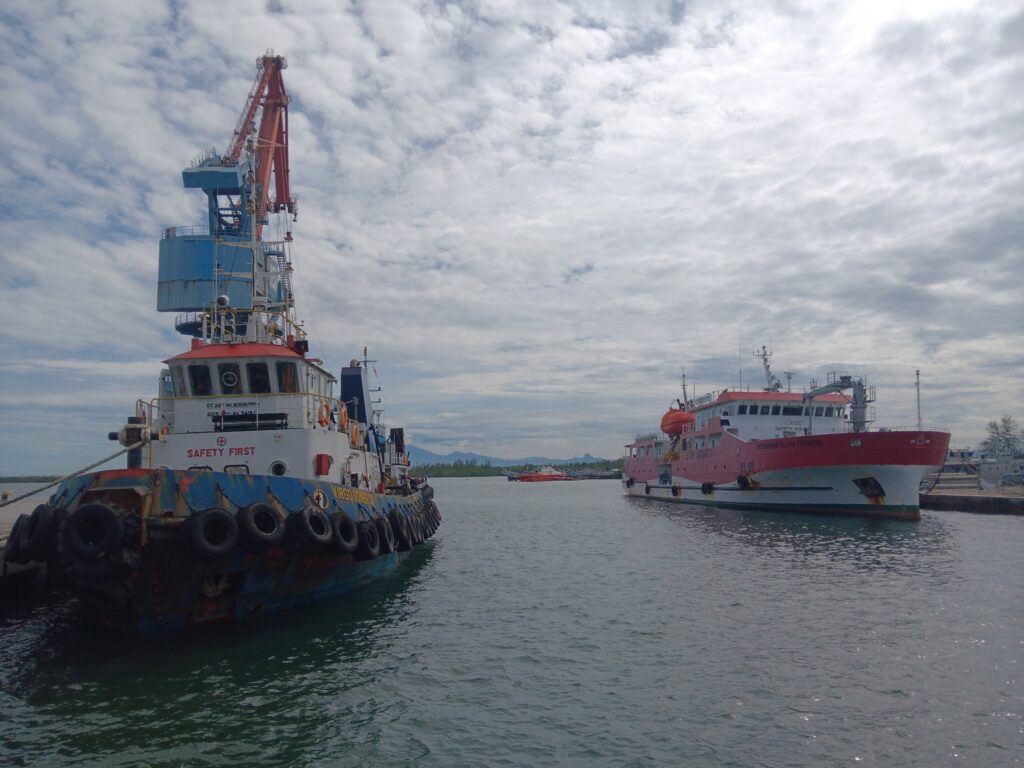
Photo: Some vessels berthing for no activities
“It’s like a long traffic jam, but at sea,” said Indarto, Chairman of the Indonesian Shipping Agencies’ Association (ISAA) in Bengkulu. “Everything is stuck. We can’t get in, and we can’t get out.”
The paralysis at sea was mirrored on land. Around Samudera Pier, mountains of coal lay idle in stockpiles. Nearby, conveyor belts stood silent. Trucks still arrived, albeit fewer and fewer, climbing slowly up growing mounds of unsent coal.
“There are still trucks coming in from the mines, but it’s nothing like before,” said Eja, a staff member from Pelindo monitoring the situation.
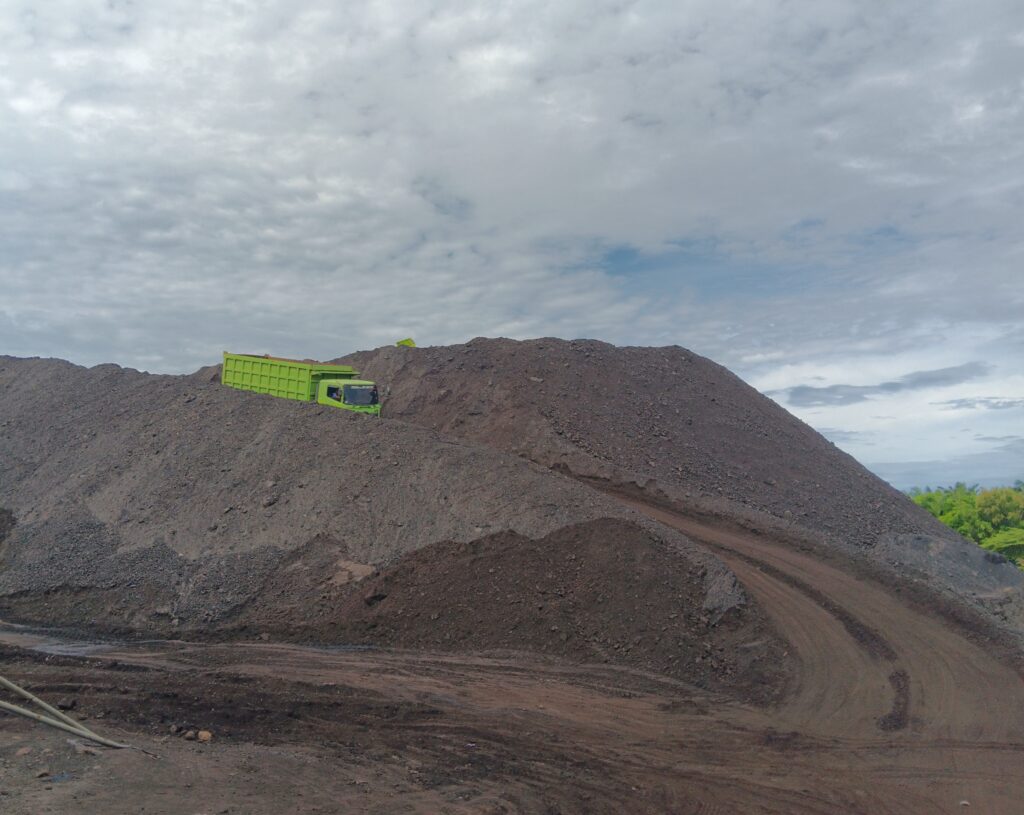
Photo: Mountains of unsent coal lay in stockpiles on May 16, 2025
Coal and CPO, Bengkulu’s two main export commodities, were hardest hit. While some goods could be rerouted by land to other ports like Panjang or Teluk Bayur, coal and palm oil needed Pulau Baai’s specialized facilities.
“When shipping stops, production at the mines is also affected,” explained Ino Jehabur, Commercial Director of ANB Holding, the parent company of shipping line PT Samudera Sarana Floresma.
For companies like PT Samudera Sarana Floresma, the impact was immediate: two of their ships, TB Nera 08 / BG Sarana Marine 16 and TB Nera 13 / BG Sarana Marine 14, were stuck.
“There’s nothing we can do but wait and hope the dredging begins soon,” Ino noted.
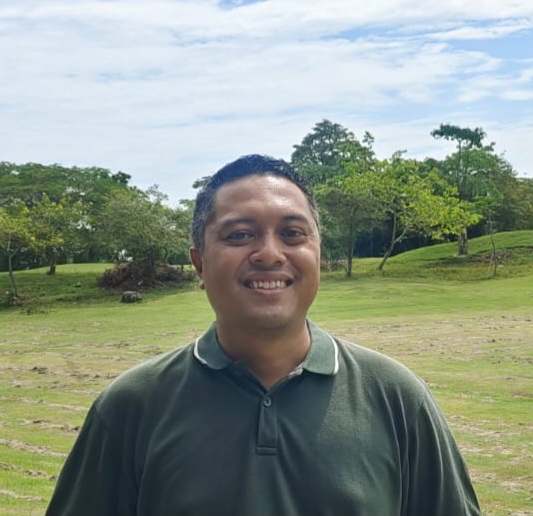
Ino Jehabur: ” “It’s not just about time, it’s about economics.”
The cost of that wait mounts daily. Ino emphasized that the stakes are more than just logistical. “It’s not just about time, it’s about economics. For example, if coal sits exposed on a barge, the rain will lower its quality. That’s real financial loss.”
Port Predictably Running Again Mid-June
Hope finally arrived on the morning of Thursday, May 22. Just after 8:00 a.m. A set of dredging vessels – dredger CSD Costa Fortuna 3 and its tug boat AHT Costa Fortuna 5 – arrived in Pulau Baai. Dispatched by Pelindo from Batam, these dredging ships brought with them the promise of freedom for those trapped in the harbor.
“We’ll need a few days to prepare, but dredging operations will start immediately,” said Drajat Sulistyo, Executive Director of Pelindo Regional 2.
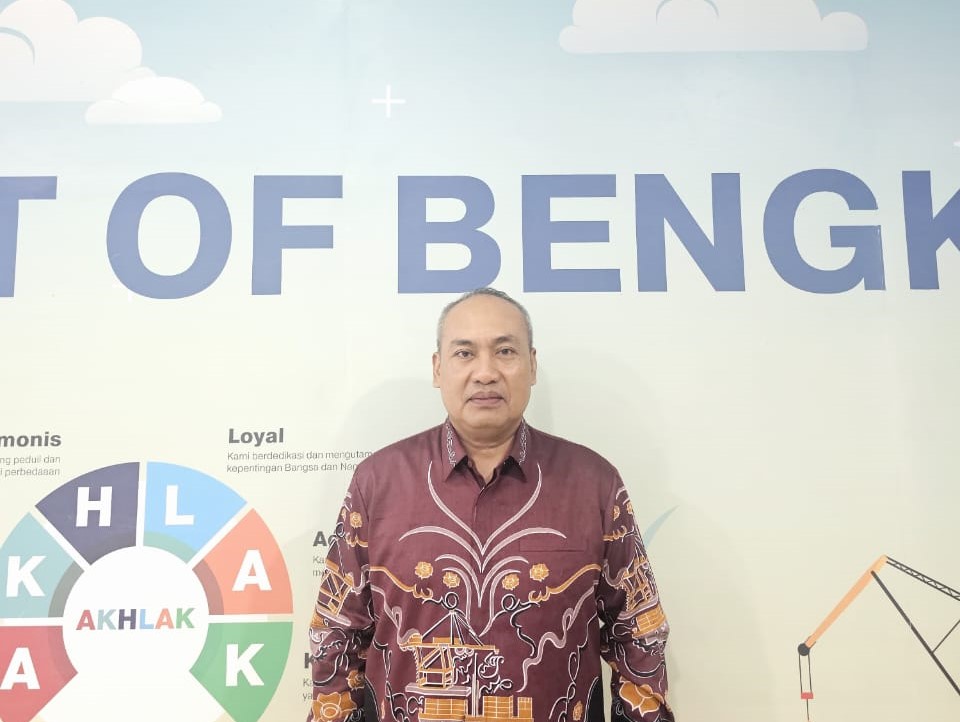
S Joko: “We’re targeting completion by early June.”
Pelindo’s General Manager in Bengkulu, Capt. S. Joko, projected the dredging would deepen the channel to seven meters, enough to restore safe passage for the 16 trapped vessels and those still waiting outside.
“We’re targeting completion by early June,” Joko said. “Then, loading and unloading can resume, and we’ll get the port running again.”
Shipping stakeholders across the region voiced their relief. Rela Sumadiyana, Chairman of Indonesian National Shipowners’ Association (INSA) Bengkulu, stressed the importance of cooperation.
“We fully support the steps being taken by the government and Pelindo. No one wants Baai Port to stop operating, especially us in shipping,” he said.
A Call for Routine Dredging
The root of the crisis is no mystery. Over time, sediment has quietly crept into the channel, gradually choking the route ships rely on. Without routine dredging, this was inevitable.
Indarto, Chairman of ISAA Bengkulu, warned that this incident should be a turning point.
“The sedimentation in this channel is too high, and it’s clear we need more consistent maintenance. A comprehensive survey is essential to understand what’s causing it , and to prevent this from happening again.”
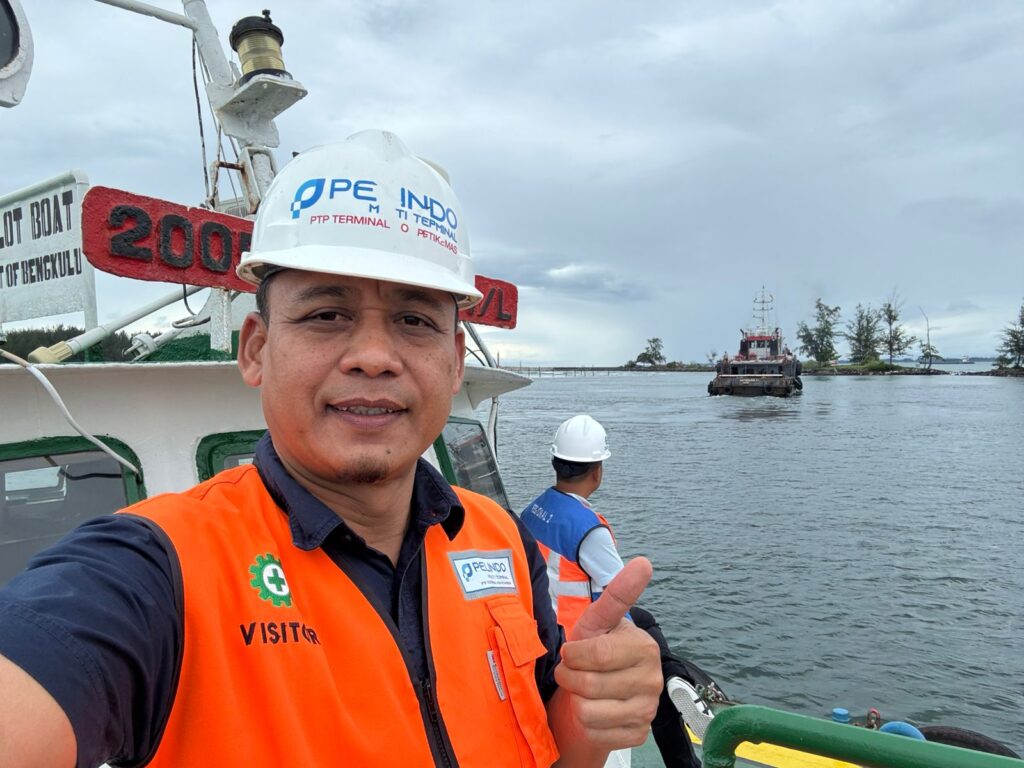
Indarto: “Routine dredging isn’t just a technical issue. It’s about protecting the economy.”
He proposed structural improvements like extending the breakwater and routinely clearing sand traps. But even those measures would mean little without a consistent dredging program.
“Routine dredging isn’t just a technical issue,” Indarto added. “It’s about protecting the economy, ensuring maritime safety, and preserving investor confidence.”
With the right focus and consistent efforts, Pulau Baai, and Bengkulu’s broader port economy can thrive again. But the sea, as always, demands respect. Left unchecked, even its silent sediment can turn a harbor into a prison.