
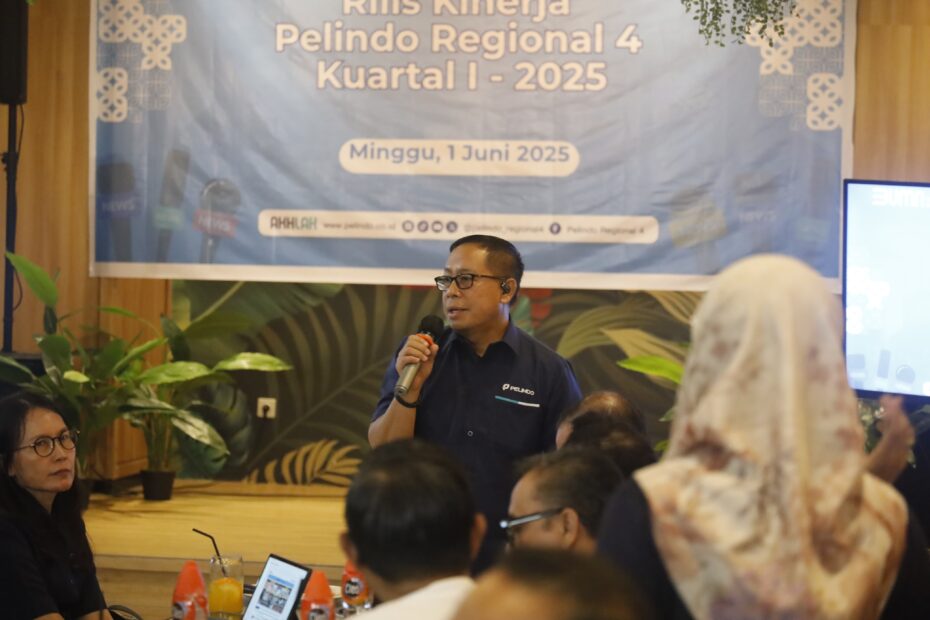
Buoyed by robust economic activity across Eastern Indonesia, PT Pelabuhan Indonesia (Persero) Regional 4 has reported strong operational performance in the first quarter of 2025.
Key performance indicators, including passenger numbers, container throughput, and ship calls, have all shown significant year-on-year growth, reflecting a strengthening recovery and increased economic integration in the region.
According to consolidated operational data, passenger traffic surged by 20.87%, rising from 2.32 million in Q1 2024. This growth highlights the increasing mobility of people in the region, supported by ongoing improvements in port infrastructure and inter-regional connectivity.
Container throughput also showed growth, up 3.40% to 786,924 TEUs. Ship calls recorded the most dramatic increase, jumping 23.69% to 35,608 units by April 2025, underscoring strong demand for port services and growing trust among maritime stakeholders in Pelindo Regional 4’s capabilities.
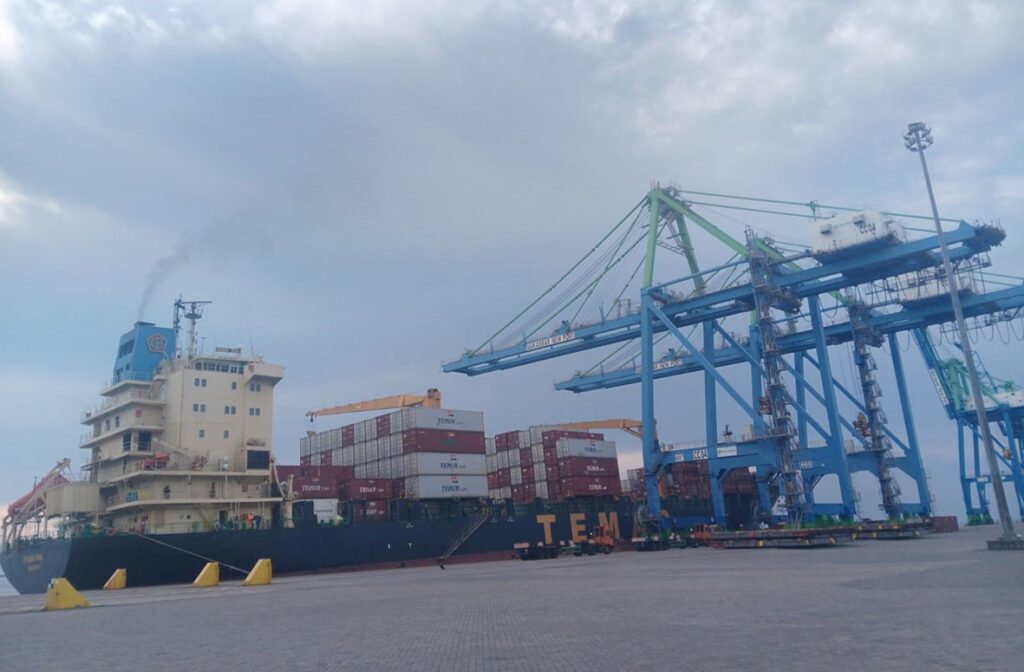
Photo: A Container Vessel Berthing at New Makassar TPK 2 in Early May, 2025
“This performance is the result of synergistic collaboration and continued transformation of our services,” said Abdul Azis, Executive Director of Pelindo Regional 4.
“Efficient service strategies, increased digitalization, and strong partnerships with stakeholders have contributed to these tangible results. We are optimistic that this positive trend will continue,” he said further.
Port Activity Across the Region Driving Growth
Yusida M. Palesang, Head of Operations at Pelindo Regional 4, elaborated on the drivers behind the numbers. The growth in ship calls has been fueled by increased coal barge activity at Balikpapan and Samarinda, the uptick in roro (roll-on/roll-off) services at Pantoloan Port, as well as the higher frequency of dry bulk and oceangoing container calls at Makassar Port. Parepare Port also saw rising visits from both roro vessels and inter-island passenger ships.
Container volume gains were largely attributed to stronger export activity from PT Meratus, increased throughput from PT SPIL at Bitung Container Terminal, and heightened demand for consumer goods ahead of national holidays at Makassar Terminal and Makassar New Port.

Photo: A Cruise Ship call to Makassar in Q1 2025
Agricultural exports, particularly coconuts from Pantoloan, and higher imports of fertilizers at Gorontalo, along with basic consumer goods at Samarinda, also played a significant role.
Passenger volume growth, meanwhile, was aided by improvements in port services and systems.
“The implementation of the Centralized Ticketing Terminal (CTT) at Bastiong Port in Ternate has streamlined travel,” said Yusida. “Increased travel during the New Year and Eid al-Fitr holidays, especially at Ambon, Makassar, and Manokwari ports, further boosted passenger traffic.”
Addressing Social Issues with a Human Touch
Beyond operational performance, Pelindo Regional 4 is also making strides in addressing long-standing social issues around Makassar Port, particularly concerning the regulation of street vendors and baggage workers.

Photo: Pelindo Sustainability Program through Kaluku Bodoa Waste Disposal (Bank Sampah) Initiative in Makassar
In collaboration with the Makassar Harbormaster and Port Authority Office (KSOP), local law enforcement, and other stakeholders, the company is reorganizing the passenger terminal area to ensure safety and order. This includes educating street vendors about restricted zones, tightening access control, and enhancing monitoring of goods and people entering and exiting the port.
Efforts are also underway to ensure fair and transparent labor distribution through the official port system. Simultaneously, Pelindo is collecting data on informal economic actors in the vicinity to support sustainable livelihood programs under its Social and Environmental Responsibility (TJSL) initiative.
“We recognize that ports are not just logistical hubs, but also social ecosystems,” said Abdul Azis. “That’s why our approach to port management is rooted in dialogue, empathy, and collaboration.”
As Pelindo Regional 4 continues to invest in operational excellence and community engagement, it aims to solidify its role as a vital connectivity node for Eastern Indonesia—and a national model for integrated port development.