
Logistics and forwarding business players are urging Tanjung Emas Port to adopt Terminal Booking System (TBS), the system that can encourage logistics business efficiency and foster regional economy growth.
This pressing recommendation was a highlight of the Regional Board Meeting (Rapimwil) and Regional Working Meeting (Rakerwil) of the Indonesian Logistics and Forwarders Association (ALFI) for Central Java and DIY. Held in two sessions this April, the gatherings brought together logistics leaders, port authorities, and government agencies to strategize for the future of regional trade and infrastructure.
The first session, Rapimwil, took place on April 15 at the Truntum Gama Semarang, under the theme: “Commitment of ALFI/ILFA Central Java & DIY DPW Management to Improve Association Performance.” Attendees included the association’s advisor and 35 senior administrators, including the General Chairperson and representatives from Yogyakarta.
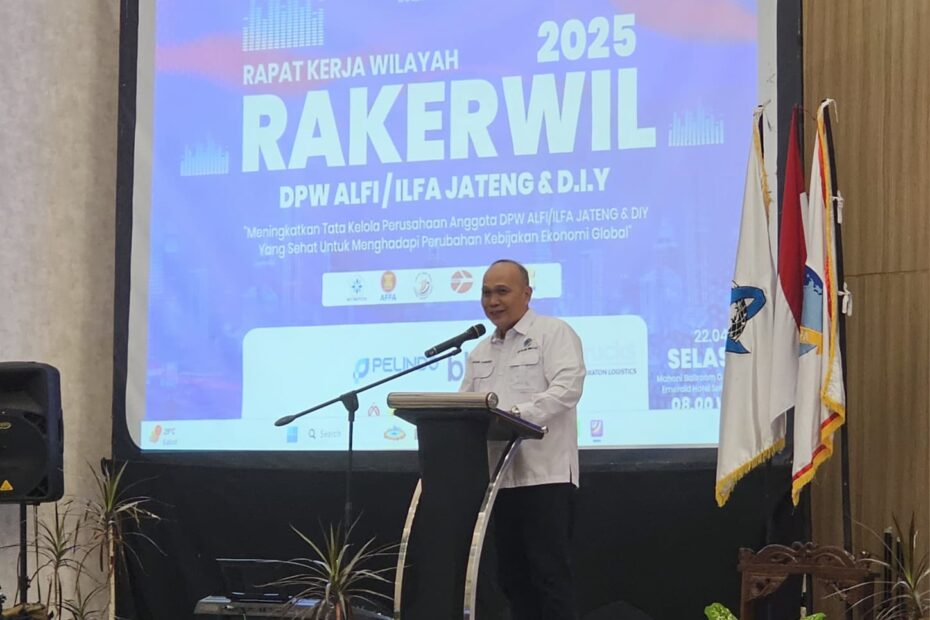
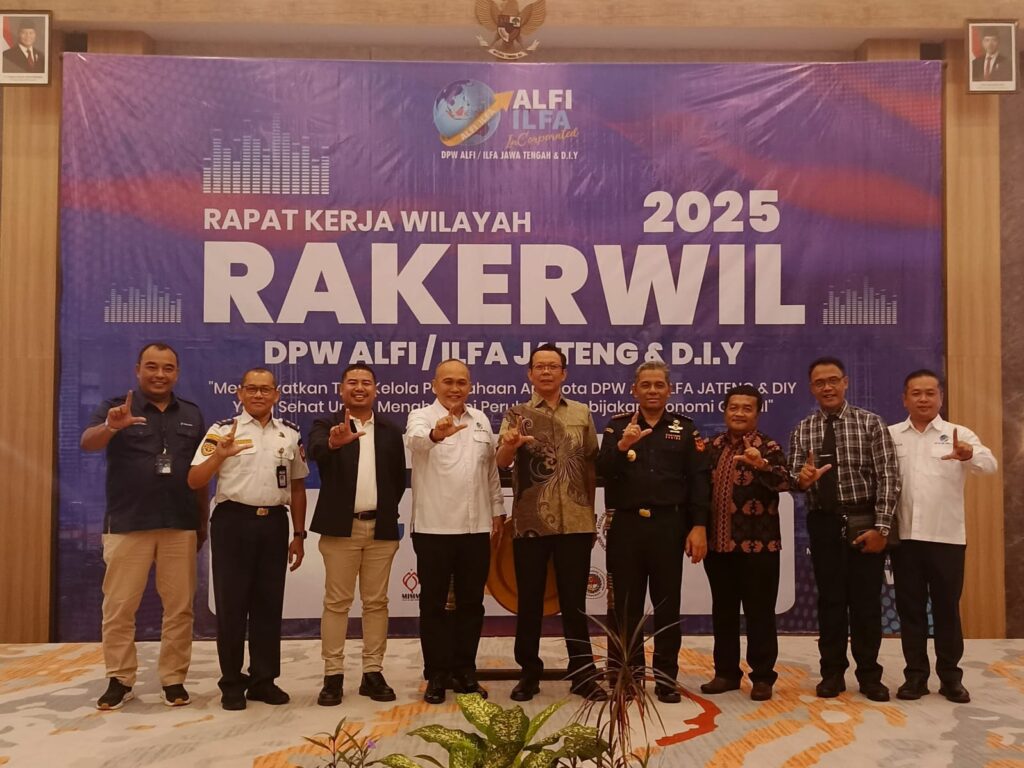
One week later, on April 22, the Rakerwil convened at the Mahoni Ballroom of the Oak Tree Emerald Hotel, Semarang. This second session focused on “Improving Healthy Corporate Governance to Navigate Global Economic Shifts.” Representatives from the Central Java Transportation Agency, Tanjung Emas port authorities, customs, quarantine, railway services, and other stakeholders were in attendance, highlighting the collaborative nature of the meeting.
Teguh Arif Handoko, Chairperson of ALFI Central Java & DIY, emphasized that the meetings were more than just formalities. They served to fulfill organizational mandates outlined in ALFI’s Articles of Association, and—more importantly—to strengthen cooperation among key players in the region’s logistics ecosystem.
“These gatherings help align our vision with government bodies and port authorities,” said Teguh. “We also gain firsthand updates on industrial developments and the infrastructure that must accompany this rapid growth.”
Indeed, industrial activity in Central Java and DIY is growing at nearly 20% annually. Such momentum demands not only modernized infrastructure but smarter logistics solutions to ensure the smooth movement of goods.
Key Recommendations for Unlocking Tanjung Emas Bottlenecks
Teguh noted that congestion at Tanjung Emas Port remains a persistent issue, worsened by irregular vessel schedules and delays at container depots. These bottlenecks, he said, threaten the efficiency of both domestic and international shipments.
To address this, ALFI Central Java & DIY put forth a set of strategic recommendations: First, Revive and Optimize the Terminal Booking System (TBS). Although introduced over two years ago, the TBS has yet to be fully embraced. ALFI believes this system is crucial for streamlining port entry and exit, reducing dwell time, and improving traffic flow within the port area.
Second, Stronger Stakeholder Synergy. ALFI commits to working closely with regulators and port operators, ensuring logistics operations—from planning to execution—are handled with greater precision and accountability.
Third, Infrastructure Investment and Integration. The association urges PT Pelindo, local governments, and related agencies to enhance port facilities, expand container depots, and improve access roads to and from the port. Such efforts are vital for keeping pace with the region’s rapid industrialization.
Fourth, 24/7 Depot Operations. One of the most tangible solutions proposed is the round-the-clock operation of container depots. With current Yard Occupancy Ratios (YOR) reaching 70%, extended hours would alleviate bottlenecks and support uninterrupted loading and unloading of empty containers.
“If depot operations move to 24/7, we could significantly reduce yard congestion and enhance overall service efficiency at the Semarang Container Terminal,” Teguh explained.
As Central Java and DIY position themselves as emerging industrial hubs, logistics efficiency will be key to sustaining growth. ALFI’s message is clear: modern ports need modern systems, and collaboration across all levels is essential.
Teguh concluded with optimism, stressing the importance of continued dialogue between the private sector and public institutions. “We’re committed to being part of the solution. With joint mitigation and consistent improvement, we can turn Tanjung Emas into a benchmark for smart, efficient port operations in Indonesia.”