
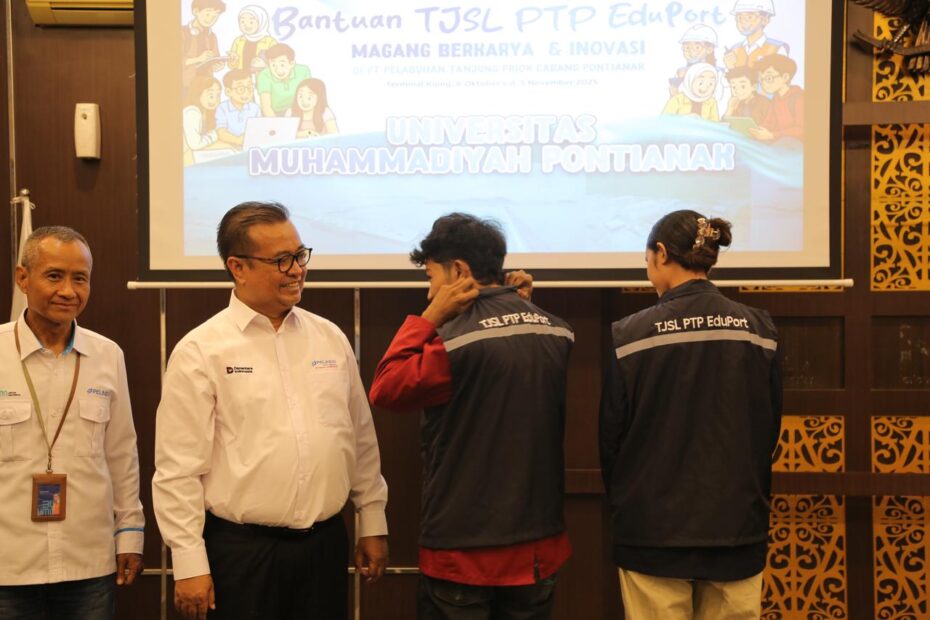
PT Pelabuhan Tanjung Priok (PTP Nonpetikemas), a subsidiary of state port operator Pelindo, has launched an education-focused social responsibility initiative aimed at integrating academic talent into the development of the Kijing Terminal, one of Indonesia’s key national infrastructure projects.
The program, titled TJSL EduPort: Magang, Berkarya, dan Inovasi Bersama – Internships, Work, and Innovation Together -, was officially inaugurated on Monday in Pontianak.
Fifteen students from Tanjungpura University and Muhammadiyah University of Pontianak have been selected to take part in the one-month program that combines classroom instruction, field training, and innovation development. Participants come from a range of disciplines, including engineering, public health, and management.
The initiative is part of PTP’s broader Social and Environmental Responsibility (TJSL) program and aims to foster local talent while promoting innovation in the maritime and logistics sectors. Students will work on five key themes, including productivity enhancement in cargo handling (liquid bulk, dry bulk, and general cargo), Health, Safety, Security, and Environment (HSSE) improvements, and renewable energy solutions to support the port’s green transformation.
“This is not a conventional internship,” said Indra Hidayat Sani, President Director of PTP Nonpetikemas.
“EduPort is a strategic effort to align industrial development with education. It reflects our commitment to building local human capital and implementing the Creating Shared Value (CSV) approach between campuses and the port industry.”

Kijing Terminal, operated by PTP Nonpetikemas, is part of Indonesia’s National Strategic Projects and plays a crucial role in supporting industrial downstreaming in West Kalimantan, including the nearby Smelter Grade Alumina Refinery (SGAR) developed by PT Borneo Alumina Indonesia. Indonesia still imports raw materials for aluminum production, and the government hopes the terminal will bolster national self-reliance in the sector.
“We envision Kijing not just as a port, but as an economic engine for the region,” Indra said.
Bridging Theory and Real World
University leaders welcomed the initiative, highlighting its value as a learning model that goes beyond textbooks.
“This program serves as a strategic bridge between theory and real-world application,” said Dr. Yopa Eka Prawatya, Vice Dean of the Faculty of Engineering at Tanjungpura University.
“Students are not only learning to think systematically and solve problems but are also being shaped into future talent for Indonesia’s industrial ecosystem.”
Samsudin, Vice Rector of Muhammadiyah University of Pontianak, expressed hope that the collaboration would become a sustainable platform for student development. “Our students are gaining direct field experience and an in-depth understanding of port operations,” he said.
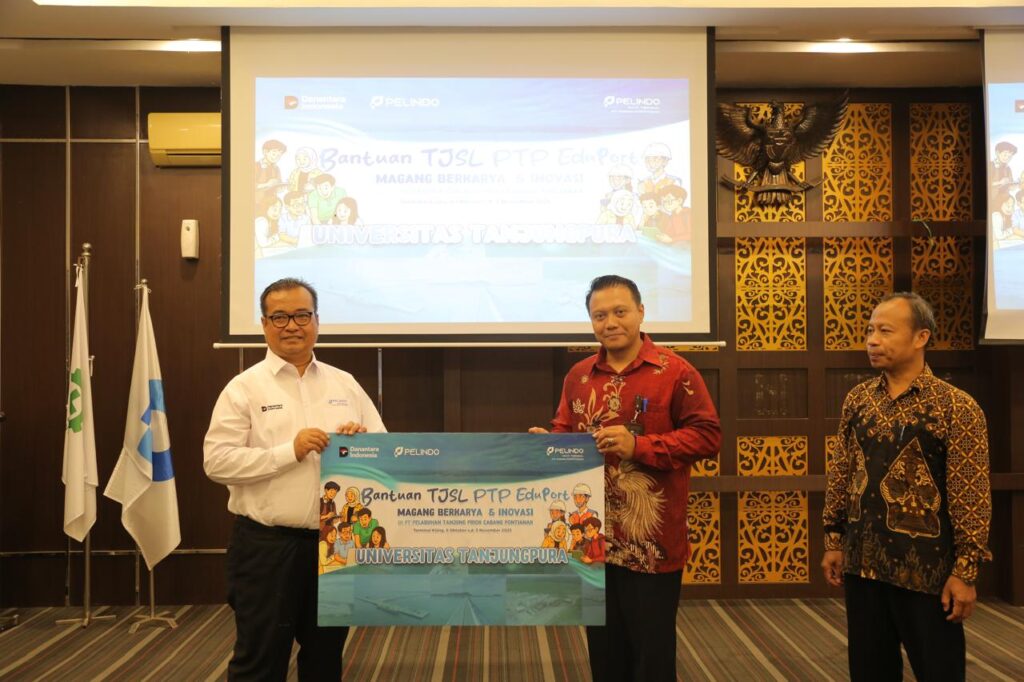
Pelindo Regional 2 Pontianak also lent its support. Representing the general manager, Arif Mustangin, Finance & HR Manager, urged participants to prioritize safety while working in the field.
“Coordinate with the HSSE team and always use protective equipment. Your contributions, even during this short period, can help shape the future of Kijing Terminal,” he said.
The students will receive mentoring, transportation, meals, accommodation, and employment protection through BPJS Ketenagakerjaan, Indonesia’s workers’ insurance scheme. They are expected to uphold occupational safety standards and represent both their universities and the company with professionalism.
One participant, Indah Maharani, an industrial engineering student from Tanjungpura University, said she was enthusiastic about the opportunity.
“I’m truly grateful to be part of this program. I hope it benefits all of us and allows us to contribute meaningfully,” she said.
The EduPort program runs through early November 2025 and is envisioned as a model for similar collaborations across Indonesia. The launch event concluded with the signing of a memorandum of understanding (MoU) on the Tri Dharma of Higher Education – education, research, and community service – as well as the handover of education-focused CSR aid and PPE vests, symbolizing the partnership between PTP and the universities.
PTP Nonpetikemas hopes the initiative will foster a generation of innovators ready to support the nation’s maritime and logistics ambitions.