
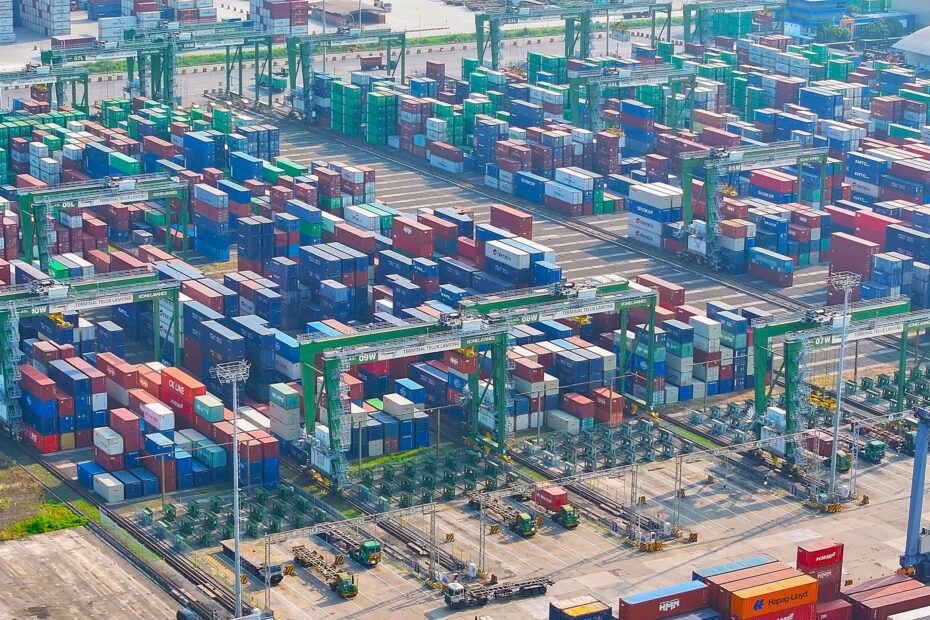
Indonesia’s PT Terminal Teluk Lamong (TTL) reported a combined container throughput of more than 2 million twenty-foot equivalent units (TEUs) in the first nine months of 2025, reflecting strong operational growth across all three of its terminals.
The state-run terminal operator said its total container traffic reached 2,043,111 TEUs between January and September, driven by expanded international and domestic routes and sustained infrastructure optimization.
“This achievement is a positive indicator of increasingly solid operational synergy, optimization of terminal infrastructure, and our consistency in human resource development,” said David Pandapotan Sirait, TTL’s President Director, in a statement.
TPK Lamong, TTL’s flagship terminal, processed 681,969 TEUs, up 3.6% from the same period a year ago. The growth was largely supported by the launch of new international shipping routes during the third quarter.
TPK Nilam, another TTL-managed facility, posted the group’s strongest year-on-year growth, with a 12% increase in throughput to 357,536 TEUs, boosted by rising domestic cargo flows. The operator cited growing volumes on routes connecting Makassar, Banjarmasin, Kendari, Baubau, and Berau.
Meanwhile, TPK Berlian handled the highest volume among the three, recording 1,003,606 TEUs, a 2% rise from last year. TTL said increased traffic on eastern Indonesia routes, particularly to Makassar, contributed to the performance.
TTL attributed the company’s consistent performance not only to its infrastructure and route expansion but also to a sharpened focus on workforce development. The operator has introduced a structured, continuous training program covering terminal operations, risk management, and occupational safety.
“Company performance will be optimal when supported by competent and enthusiastic human resources. Therefore, competency development and enhancing HR skills are an integral part of our long-term strategy,” David added.
With strong throughput figures and a continued push for operational efficiency and staff development, TTL said it remains optimistic about its ability to adapt to an increasingly competitive logistics market.
The state-owned enterprise plays a key role in strengthening national and international logistics networks, particularly through its operations in eastern Indonesia, where connectivity remains a strategic focus for the Indonesian government.