
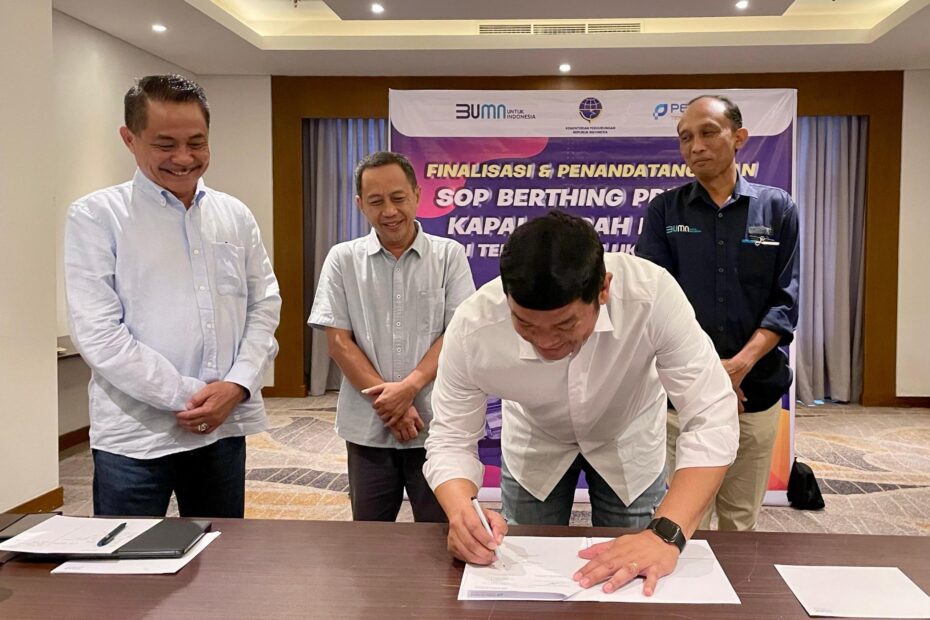
PT Terminal Teluk Lamong (TTL) has officially implemented a new Standard Operating Procedure (SOP) for berthing priority, marking a significant upgrade in dry bulk operational services at the terminal.
This strategic move replaces the traditional First In, First Out (FIFO) system with a more dynamic, booking-based scheduling model that prioritizes efficiency and service quality.
The newly introduced Berthing Priority SOP revolutionizes vessel mooring by assigning berthing slots based on booking submissions from cargo owners or shipping agents, either before or after the ship departs from the port of origin.
This system aims to provide greater predictability and reduce congestion, offering a timely response to the increasingly complex demands of bulk shipping logistics.
The SOP was formally signed on April 30, 2025, by key stakeholders: Head of the Tanjung Perak Port Authority (KSOP), Agustinus Maun; Division Head of Regional Operations 3, Johanes Wahyu; and TTL President Director, David Pandapotan Sirait.
Agustinus Maun emphasized the importance of swift implementation. “This SOP is an agile innovation that ensures better planning of ship arrivals and pilotage services,” he said in an official statement to Indonesia Shipping Gazette.
“Innovations like this are vital to improving operational flow, boosting the competitiveness of Indonesian exports, and strengthening our national logistics system.”
TTL has been piloting the Berthing Priority system since October 2024, with promising results. According to company data, average vessel waiting times for berthing have plummeted from 8.9 days to just 1.6 days in the May 2025 schedule—significantly cutting idle time and improving turnaround.
From a customer perspective, the benefits are substantial. The system reduces the risk of demurrage penalties, allows vessels to optimize fuel consumption by adjusting sailing speeds, and even opens up the opportunity for dispatch bonuses from charterers for faster cargo handling.
Ongoing Commitment to Excellence
President Director David Pandapotan Sirait underlined TTL’s dedication to service excellence. “The Berthing Priority system reflects our commitment to delivering transparent, efficient, and effective service,” he said. “This ensures dry bulk vessels have clear scheduling and timely access to unloading operations.”

To support this initiative, TTL has developed a 250-meter-long dry bulk dock, outfitted with two state-of-the-art Grab Ship Unloader (GSU) units, four excavators, two wheel loaders, and a conveyor system that connects directly to the storage warehouse. With a water depth of LWS -14 meters and an unloading capacity of up to 4,000 tons per hour, the terminal is well-equipped for fast and efficient service.
David also highlighted the importance of collaboration in making the SOP a success. “The effective implementation of this system requires close coordination between regulators, terminal operators, and service users,” he stated. TTL and the Tanjung Perak Main KSOP plan to conduct extensive outreach to ensure that all stakeholders are aligned.
Looking ahead, TTL hopes this system can serve as a model for other terminals across Indonesia. “By replicating this initiative, we can facilitate smoother bulk cargo operations nationwide and help stabilize commodity prices, especially in East Java,” David added.