

The Indonesian Ministry of Transportation has conducted a comprehensive review of energy conservation initiatives at three state-linked port operators – PT Terminal Teluk Lamong (TTL), Terminal Petikemas Nilam (TPK Nilam), and PT Berlian Jasa Terminal Indonesia (BJTI) – as part of a wider push to accelerate sustainability and operational efficiency across the nation’s ports.
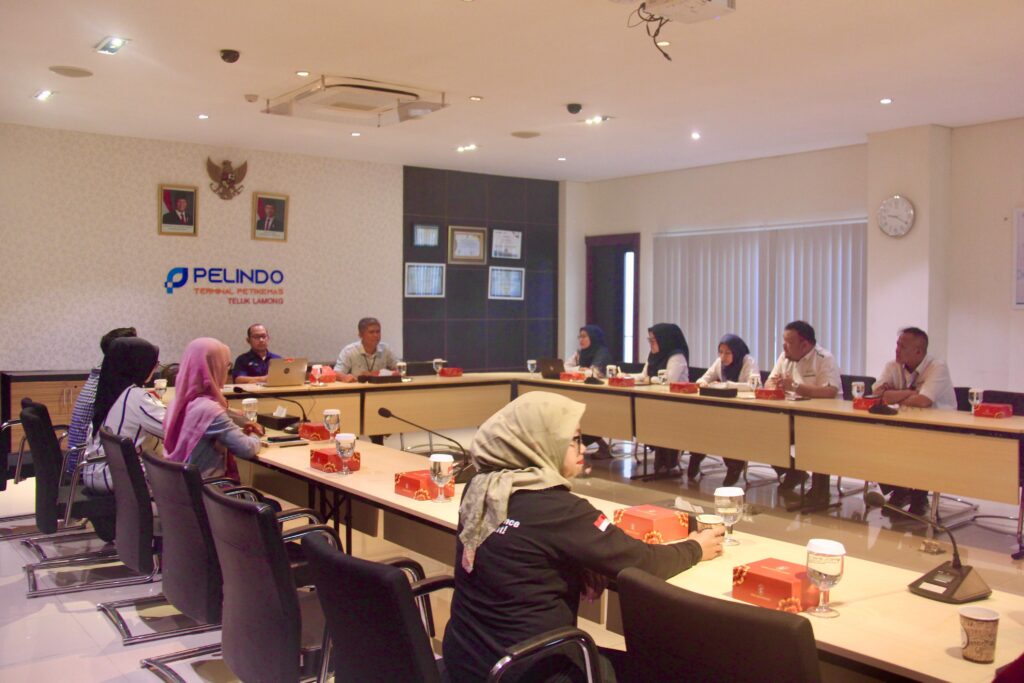
A team from the Ministry’s Center for Sustainable Transportation Management, including Rachmat Budi Setiawan, Linda Evans, Dina Kartika, and Danawirya Silaksanti, visited the terminals in Surabaya to assess their efforts in energy management.
The review aims to identify scalable best practices that can be replicated at other port facilities nationwide, including river, lake, and ferry terminals under the Directorate General of Sea and Land Transportation.
“This initiative reflects our commitment to fostering sustainable practices within Indonesia’s transport infrastructure,” said Danawirya Silaksanti, Environmental Impact Controller at the Ministry. “The energy strategies being implemented here can serve as benchmarks for other port operations.”
Greenport Practices in Action
TTL, a flagship port operating under the greenport and smartport model, has deployed an array of clean energy infrastructure. Its cargo-handling operations are powered entirely by electric equipment, including Automatic Stacking Cranes (ASC), Ship-to-Shore Cranes (STS), and Grab Ship Unloaders (GSU). The company says the electrification drive has significantly cut energy consumption and carbon emissions.
TTL also holds ISO 50001:2018 certification for its energy management system and has established an internal energy committee to oversee performance. Complementing these measures, TTL has installed solar power systems and solar-powered lighting throughout the port as part of its renewable energy integration strategy.
“We welcome the Ministry’s visit as an opportunity to share what we’ve achieved,” said Anang Januriandoko, Senior Manager of Quality, Health, Safety, Security, and Environment at TTL. “Energy efficiency and sustainability are central to our operational model.”
Progress Across Other Terminals
TPK Nilam outlined a series of ongoing and planned energy conservation efforts, including the use of B40 biodiesel, replacement of sodium lamps with LED lighting, the adoption of shore power connections, and the planned deployment of Electric Rubber-Tired Gantry (ERTG) cranes by early 2026.
Meanwhile, BJTI has initiated a shift from conventional to electric-powered cargo-handling equipment. Its transition includes converting Harbor Mobile Cranes (HMC) and Rubber-Tired Gantries (RTG) to electric and battery-powered alternatives, aimed at lowering fuel consumption and reducing greenhouse gas emissions.
“The switch to electric and battery-based equipment brings both environmental benefits and significant cost savings,” said Adi Sugiri, Commercial and Engineering Director at BJTI.
Policy Support and Future Coordination
The Ministry’s delegation praised the commitment shown by TTL, TPK Nilam, and BJTI, and encouraged the continuous improvement and dissemination of their energy-saving strategies across Indonesia’s port system.
In alignment with Government Regulation No. 33 of 2023 on Energy Conservation, the Ministry also urged all port operators to submit their energy management data via the national Energy Management Online Reporting (POME) platform, managed by the Ministry of Energy and Mineral Resources.
The Transportation Ministry’s Sustainable Transportation Center said it is ready to facilitate coordination with the Directorate of Energy Conservation to support the onboarding and compliance process for port operators nationwide.