
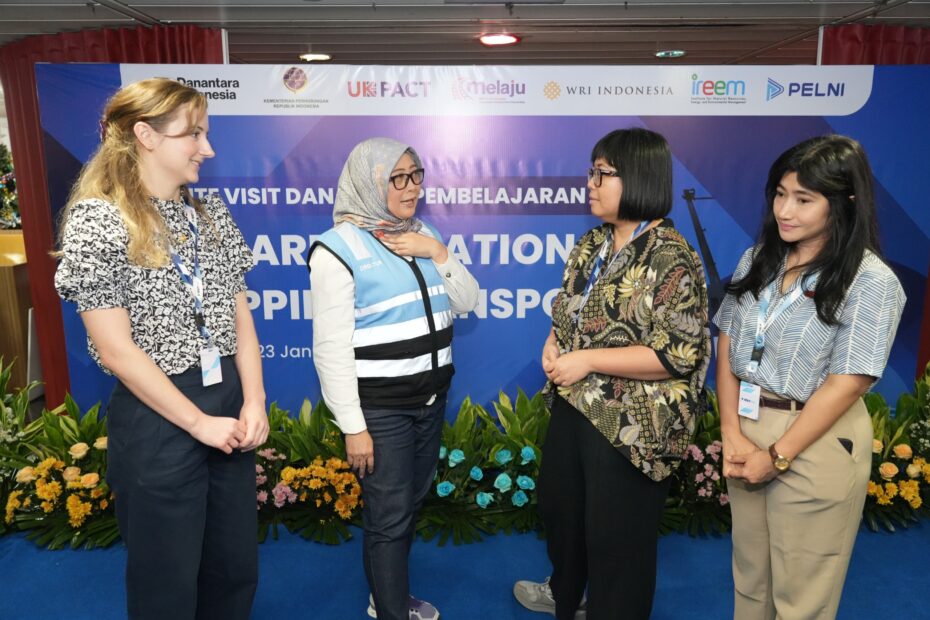
In a tangible step toward greener shipping, the British Embassy in Jakarta, in partnership with the UK Partnering for Accelerated Climate Transitions (UK PACT) program, hosted a site visit to KM Kelud, a passenger ship operated by PT Pelayaran Nasional Indonesia (PELNI), on Friday, January 23.
The event drew around 30 students from universities across Jakarta, offering them a firsthand view of Indonesia’s efforts to decarbonize its national shipping sector.
The visit served both as an educational platform and as a showcase of practical measures PELNI has taken to reduce carbon emissions in maritime transportation. Central to these efforts is the adoption of B40 biodiesel across the company’s fleet, a move aligned with Indonesia’s broader energy transition and decarbonization agenda.
“PELNI strongly supports the decarbonization program through the use of low-carbon fuels in our ships,” said Anik Hidayati, PELNI’s Director of Finance and Risk Management, during the onboard learning session titled Decarbonization in Shipping Transport.
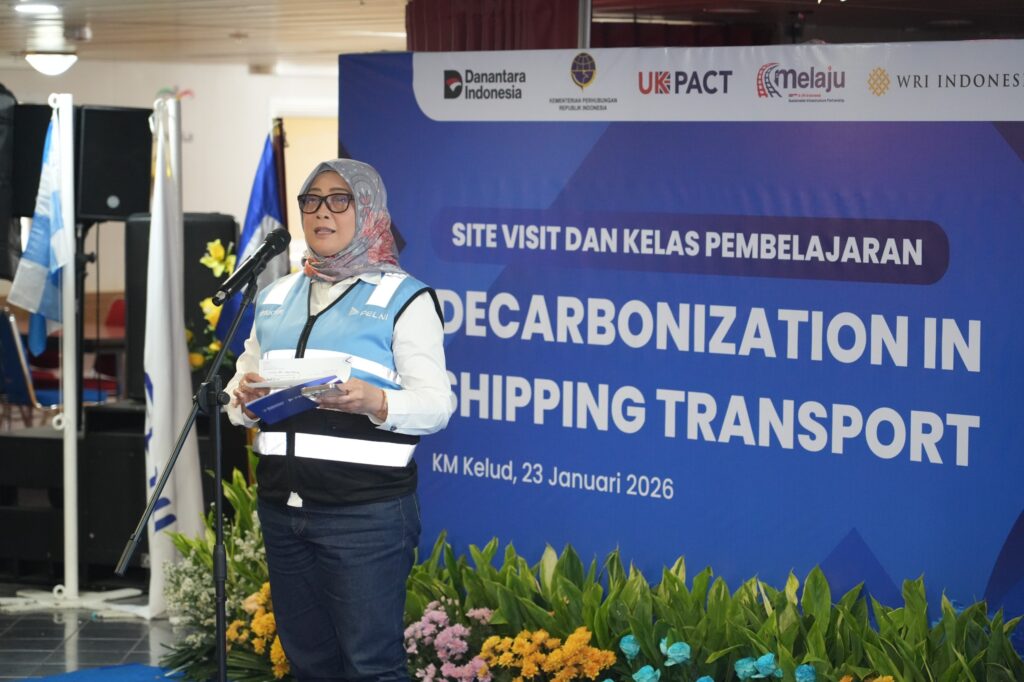
Anik Hidayati: “All our ships use B40 fuel. This is a concrete step by PELNI to support decarbonization in the shipping sector.”
“All our ships use B40 fuel. This is a concrete step by PELNI to support decarbonization in the shipping sector.”
Anik highlighted the dual rationale behind the shift: it not only aligns with government policy to increase the renewable energy mix but also underscores PELNI’s environmental responsibility.
She noted the strategic importance of the shipping sector, which plays a vital role in Indonesia’s inter-island logistics and, as a result, contributes substantially to national greenhouse gas emissions.
“Sea transportation is the backbone of national logistics. Reducing emissions in this sector is crucial to achieving our decarbonization targets,” Anik said.
She also pointed to the potential for B40 adoption to act as a bridge toward more advanced, environmentally friendly shipping technologies, with PELNI remaining open to global maritime innovations and regulatory developments.
Phoebe Rimmer, Deputy Head of Low Carbon Infrastructure at the British Embassy, underscored the importance of cross-sector and cross-national collaboration in accelerating decarbonization.
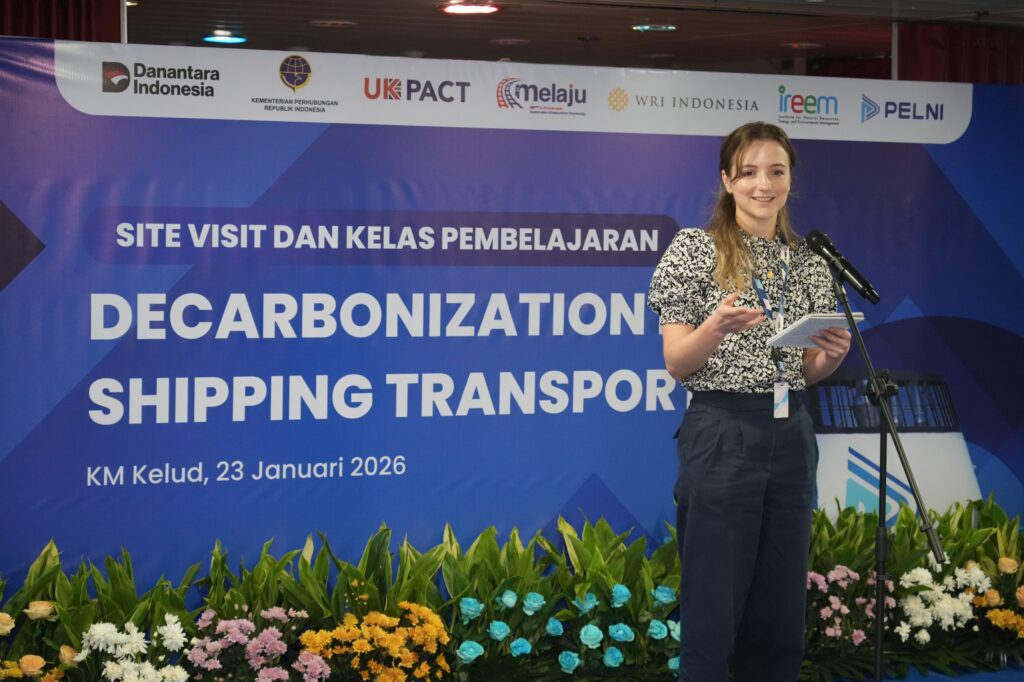
Phoebe Rimmer: “The shipping sector has significant potential to contribute to emission reduction targets, especially in an archipelagic nation like Indonesia.”
“Decarbonization is not only a global issue, but also a shared responsibility. The shipping sector has significant potential to contribute to emission reduction targets, especially in an archipelagic nation like Indonesia,” she said, praising PELNI’s initiative as a model for balancing climate responsibility with economic function.
Phoebe stressed that engaging younger generations in these discussions is key to sustaining policy momentum and technological innovation over time.
Andi Azka Faurianthi Poetri, Chair of UK PACT Indonesia, elaborated on the partnership’s mission, which is a joint initiative of the UK Government, through the Foreign, Commonwealth & Development Office (FCDO), and Indonesia to accelerate the transition to low-carbon development.
“Our vision rests on three main pillars: low-carbon transport, energy efficiency, and carbon pricing,” she said, noting the transportation sector’s outsized contribution to greenhouse gas emissions.
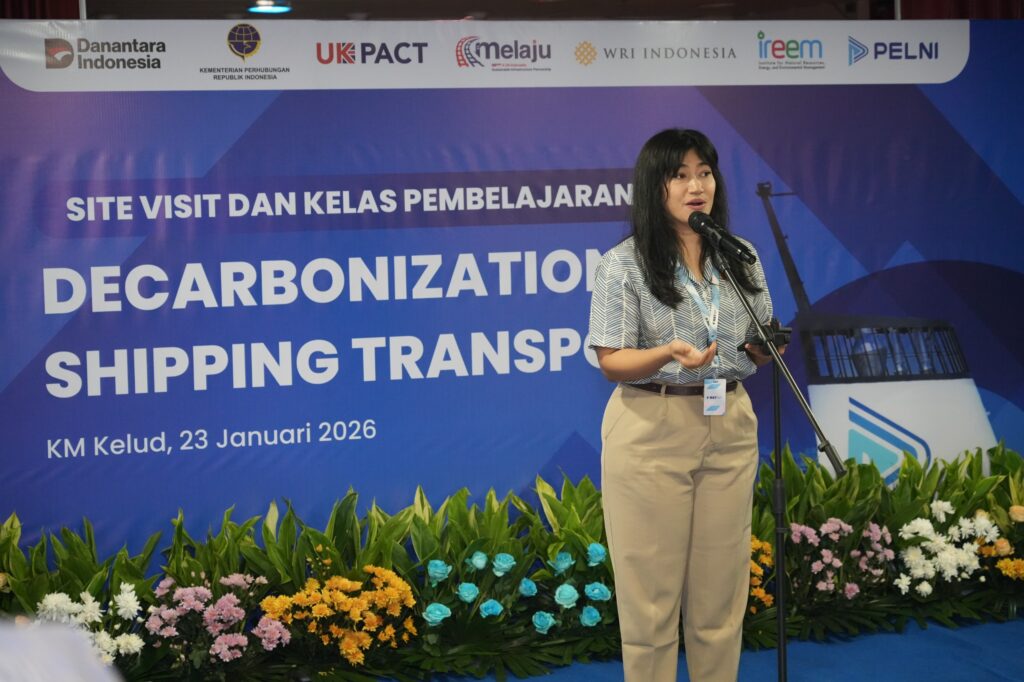
Andi Azka Faurianthi Poetri: “Our vision rests on three main pillars: low-carbon transport, energy efficiency, and carbon pricing.”
In the maritime context, UK-Indonesia cooperation includes promoting sustainable shipping, enhancing industrial capacity, and introducing technological and regulatory advancements.
UK PACT also supports the development of sectoral carbon economic values, aiming to embed long-term incentives for emission reduction across the shipping sector.
As Indonesia seeks to meet its climate targets, initiatives like PELNI’s B40 fleet and UK PACT’s partnership signal a growing recognition of shipping as both a climate challenge and an opportunity. For students and stakeholders observing the Kelud, the message was clear: decarbonization is not a distant policy goal but an actionable pathway being charted today.