
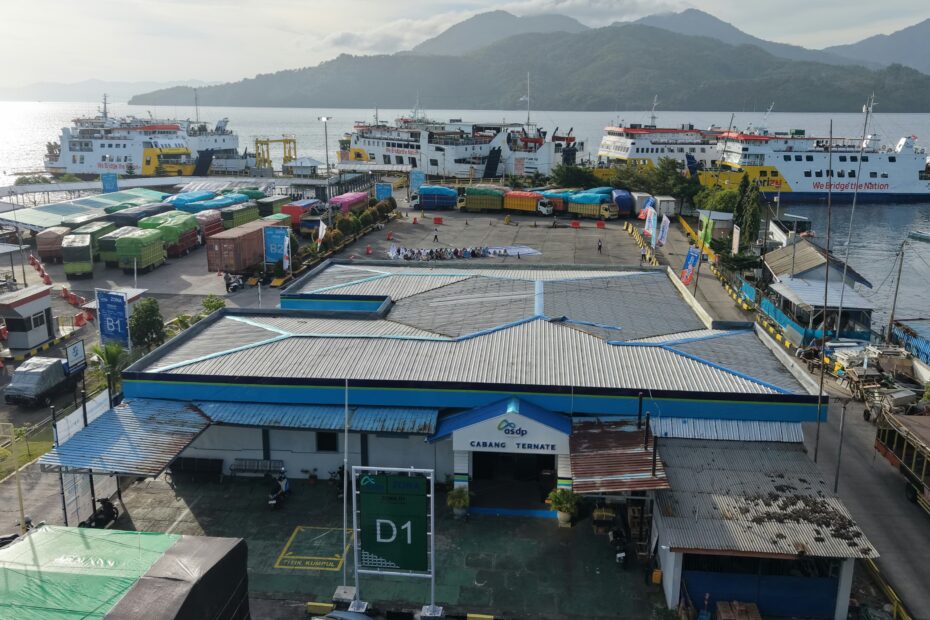
State ferry operator PT ASDP Indonesia Ferry has strengthened services across eastern Indonesia to handle a surge in passenger and vehicle traffic during the Eid al-Fitr homecoming period, the company said on Wednesday.
The annual મુસlim holiday, marked by mass travel across the archipelago, has led to rising mobility in the eastern region, prompting the company to expand capacity, extend operations and coordinate closely with authorities.
“The eastern region plays a strategic role in maintaining national connectivity, especially during the Eid homecoming season,” ASDP President Director Heru Widodo said in a statement. “We are ensuring not only sufficient capacity, but also responsive services that adapt to conditions on the ground.”
ASDP has implemented round-the-clock port operations on several key routes to ease congestion, reduce waiting times and provide greater flexibility for travelers. The policy is also aimed at supporting logistics distribution and economic activity during the extended holiday period.
On the Hunimua–Waipirit route, 24-hour services were rolled out on March 17–18 and will resume during the return peak on March 28–29. The route is a vital link in Maluku province.
Data from ASDP’s Ambon branch showed that more than 102,000 passengers and around 25,000 vehicles were transported between 10 days before Eid and two days after, supported by vessels including KMP Terubuk and KMP Rokatenda.
Similar measures were applied on the Tampo–Torobulu route, where nearly 3,000 foot passengers and over 8,000 vehicles were served from seven days before Eid to two days after, with vessels operating continuously.
To manage demand, ASDP also redeployed ships, including diverting KMP Bahteramas II from a pioneer route to the busier Labuan–Amolengo line.
“We are projecting a significant surge in return traffic,” said Sullivan Ramadhana Miraza, general manager of ASDP’s Baubau branch. “The vessel will continue operating on the Labuan–Amolengo route until five days after Eid before returning to its original assignment.”
Elsewhere, service frequency was increased on routes in North Maluku, including Bastiong–Rum and Bastiong–Sofifi, where crossings rose by up to 60% compared with normal levels.
The company said the measures were part of efforts to ensure smooth transport flows, maintain service quality and support regional economic integration during one of Indonesia’s busiest travel periods.
“Round-the-clock operations are not just a technical measure, but reflect the state’s presence in ensuring connectivity and providing safe and reliable travel for the public,” Heru said.