
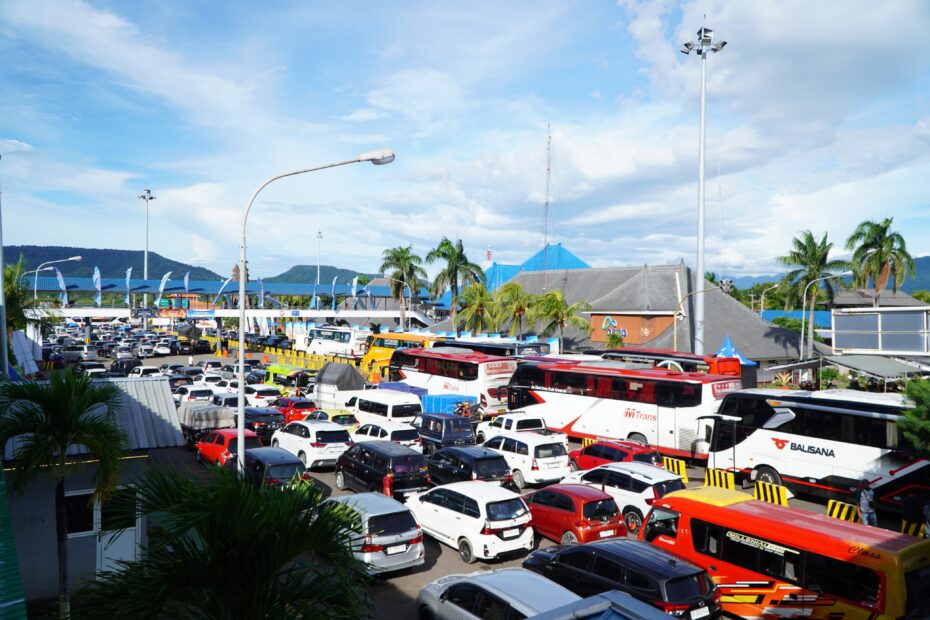
Indonesian authorities have cleared vehicle congestion at Gilimanuk Port, a ferry gateway linking Bali and Java, with all traffic now redirected into designated buffer zones, officials said on Wednesday.
State ferry operator PT ASDP Indonesia Ferry said the situation had stabilised after days of heavy build-up, following intensified coordination among transport authorities, police and port operators.
Monitoring at 4:30 p.m. local time showed no vehicles queueing outside the port area, with all traffic contained within the cargo buffer zone to allow a more orderly and controlled flow toward ferry terminals.
“This queue reduction is the result of collaborative efforts, from optimising ship operations to managing traffic and maximising the buffer zone,” Deputy President Director Yossianis Marciano said.
The government confirmed that access routes to the port were now under control. Aan Suhanan, Director General of Land Transportation at the Ministry of Transportation, said that since 4:00 p.m. local time, all vehicles had been accommodated داخل the buffer zone, eliminating roadside congestion.
Authorities have implemented a series of mitigation measures to sustain traffic flow, including deploying additional vessels, accelerating docking turnaround times and applying a faster arrival–unloading–departure system to improve loading efficiency.
Holiday Travel Surge
The improvements come as Indonesia approaches the peak travel period ahead of Eid al-Fitr, when millions travel across the archipelago.
Data from Gilimanuk recorded 144 ferry trips between midnight and 2:00 p.m. on March 18, with passenger crossings from Bali to Java reaching 48,230, up 37.4% from the same period last year.
Vehicle traffic rose across all categories, led by commercial transport. Motorcycle crossings increased 35.0% to 11,343 units, while cars rose 26.9% to 4,237. Truck volumes jumped 67.9% to 613 units, and buses climbed 35% to 320.
Total vehicle crossings reached 16,513, a 33.8% increase year-on-year.
Cumulative figures from 10 days before the holiday to March 18 showed passenger numbers at 431,628, up 3.4% from a year earlier, while total vehicle crossings rose 5.5% to 139,405.
ASDP said it would maintain close coordination with stakeholders to ensure smooth operations during the peak travel period, while urging passengers to follow on-site instructions to support safety and efficiency.