
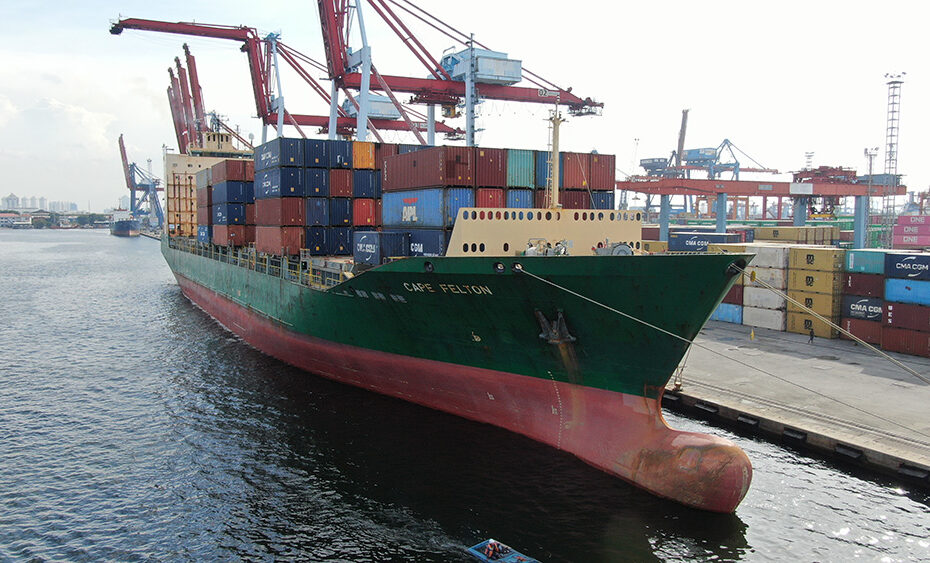
IPC Container Terminal (IPC TPK) reported a 6.82% rise in January throughput, buoyed by stronger domestic and international trade flows and early signs of resilience in the country’s export engine.
The state-linked terminal operator handled 299,891 twenty-foot equivalent units (TEUs) in January, up from 280,743 TEUs in the same month a year earlier, according to company data released on Friday.
The increase marks a steady start to the year for one of Indonesia’s key port operators, amid a shifting global trade environment and ongoing supply chain realignments.
“This growth reflects the optimism of business players and the effectiveness of our operational strategy in responding to the strengthening dynamics of global and domestic trade,” Pramestie Wulandary, corporate secretary of IPC TPK, said in a statement.
She added that the performance was in line with the company’s push to build “integrated, reliable, and globally competitive port services.”
The Panjang terminal posted the strongest increase, with volumes rising 16% year-on-year. Meanwhile, Tanjung Priok Area 1, part of Indonesia’s busiest port complex, recorded a 10.2% increase, while Tanjung Priok Area 2 saw volumes climb 8%.
The improvements come as IPC TPK steps up efforts to lift productivity and service reliability, part of a broader strategy led by parent group Pelindo to tighten integration across the country’s port ecosystem and improve supply chain efficiency.
Pelindo has set a 2026 focus on operational excellence, digitalisation and customer experience, seeking to position Indonesian ports as more competitive regional hubs at a time when Southeast Asian trade routes are attracting renewed investor attention.
Export Momentum Provides Tailwind
Such surge was in line with Indonesia’s export trend in the last year. Data from Indonesia Statistic Burea BPS shows that total exports reached $282.91 billion in 2025, up 6.15% from a year earlier.
Manufacturing, the largest contributor, accounted for $227.1 billion, growing 14.47% year-on-year. Agriculture, forestry and fisheries exports rose 21.01% to $6.88 billion, while mining and other sectors contracted 23% to $35.86 billion.
The strength in manufacturing and agricultural shipments, both heavily containerised sectors, has helped sustain cargo volumes at major terminals, industry observers say.
Focus on readiness
For IPC TPK, the priority now is maintaining momentum. The company said it will continue optimising terminal facilities, accelerating service digitalisation and deepening collaboration with shipping lines, logistics providers and other stakeholders. The aim is to ensure capacity and reliability keep pace with potential increases in trade flows through the year.
As global trade patterns continue to adjust to geopolitical shifts and supply chain diversification, Indonesia’s ports are positioning themselves as critical nodes in regional commerce. January’s performance suggests that, at least for now, cargo volumes are moving in the right direction.