
Indonesia’s leading container terminal – PT Jakarta International Container Terminal (JICT) – is starting 2026 with a commitment to strengthen logistics continuity, saying it plans to introduce new electric port equipment as part of efforts to improve service reliability and operational resilience.
“As part of our preparations for 2026, JICT will deploy new equipment, including electric quay cranes (e-QC), electric rubber-tyred gantry cranes (e-RTGC), and electric terminal trucks,” Deputy President Director Budi Cahyono said on Tuesday.
The planned procurement forms part of JICT’s broader strategy to enhance efficiency, reinforce occupational safety and align terminal operations with international and environmental standards, as challenges in the logistics sector continue to grow.
The new year also marked a seamless transition in terminal performance, with JICT maintaining uninterrupted operations as 2025 drew to a close and 2026 began.
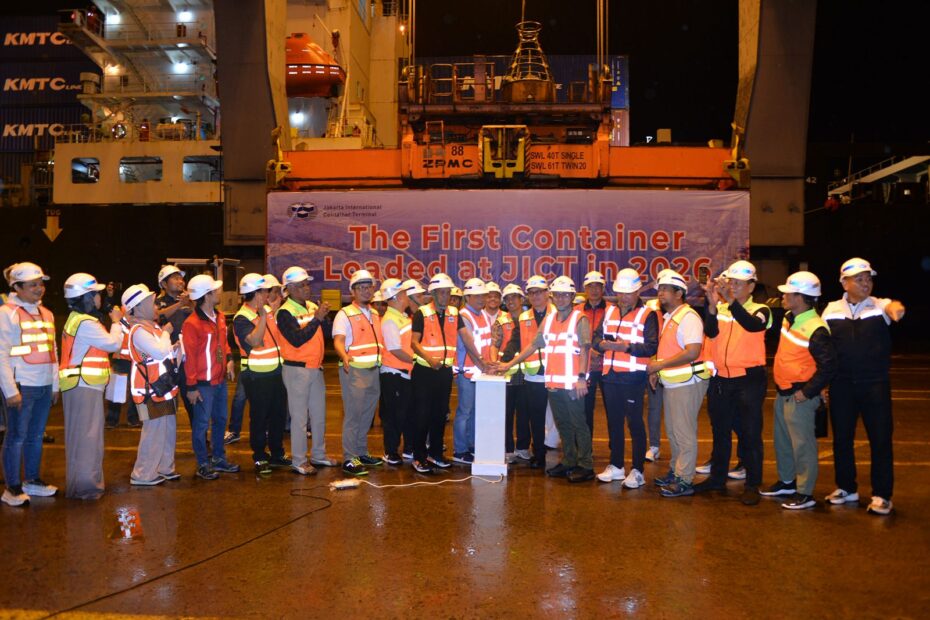
The terminal lifted its final container of 2025 late on Dec. 31, followed minutes later by the loading of the first container of 2026, carried out under normal operating conditions with an emphasis on safety, system reliability and cross-functional coordination.
The back-to-back operations, part of JICT’s annual “Last Container Lifted” and “First Container Loaded” tradition, highlighted the continuity of terminal services and the company’s readiness to operate from the first moments of the new year.
“The turn of the year does not mean a pause in operations,” Budi said. “It confirms that JICT is ready to work from the first second of the new year to maintain customer trust and ensure the logistics chain continues to run.”
He said every container movement reflects collaboration across all levels of the terminal, from field operators and operations planners to support teams, forming the foundation of JICT’s operational reliability and global competitiveness.
“With the readiness of our people, systems and planned equipment upgrades, we are optimistic about advancing further in 2026 and continuing to serve as a key gateway to Indonesia’s economy,” Budi added.