
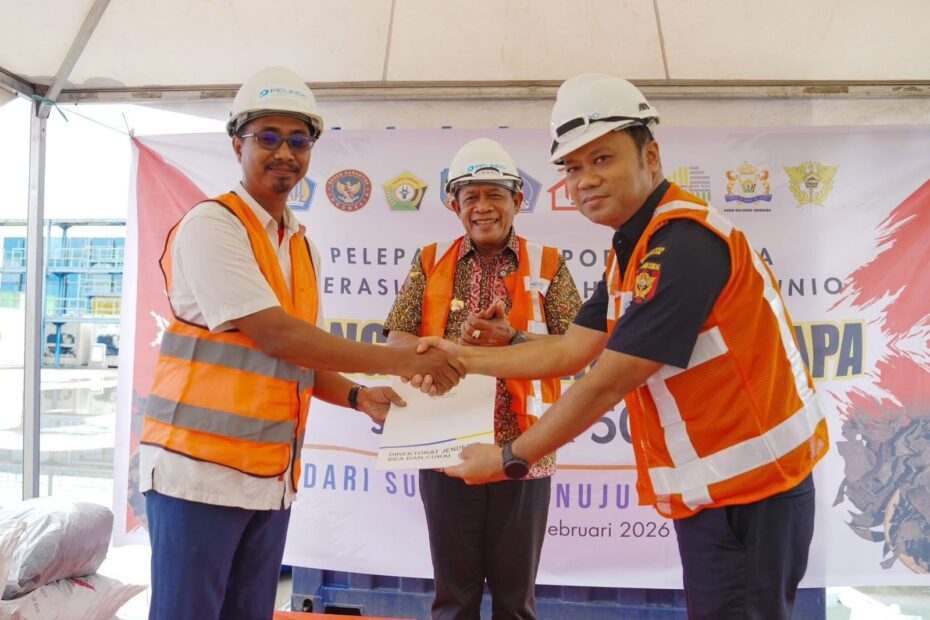
Fifty tons of coconut shell charcoal were loaded at Kendari Container Terminal (TPK Kendari) for export to China on Saturday (February 21), the first overseas shipment by the village cooperative Koperasi Merah Putih of Awunio Village, Kolono District.
For Deputy Governor Hugua, who officiated the launch, the shipment represents more than a trade transaction. “This first export must be the beginning of sustainable steps to expand global market access, increase the added value of local products, and strengthen the cooperative-based people’s economy,” he said at the ceremony.
Coconut shell charcoal, widely used for shisha, barbecuing and industrial fuel, is produced from what was once considered agricultural waste. In Awunio, villagers collect and process coconut shells using locally managed facilities, creating a supply chain that spans farmers, processors and logistics providers.
The cooperative says the production model emphasizes sustainability, both environmentally and economically. By processing raw materials locally rather than selling them unrefined, villagers retain more value within the community.
Management of Koperasi Merah Putih of Awunio Village described the China-bound shipment as a foothold in a competitive global market.
“We are committed to increasing production capacity, maintaining consistent quality and strengthening governance to meet global standards,” a cooperative representative said. Future shipments, they added, will depend on maintaining reliability and meeting buyer specifications.
Port Infrastructure as Enabler
The export also underscores the strategic role of TPK Kendari, a container terminal operated by Pelindo Terminal Petikemas, in connecting Southeast Sulawesi to international markets.
According to Herryanto, head of TPK Kendari, the facility is prepared to handle growing trade volumes from the region.
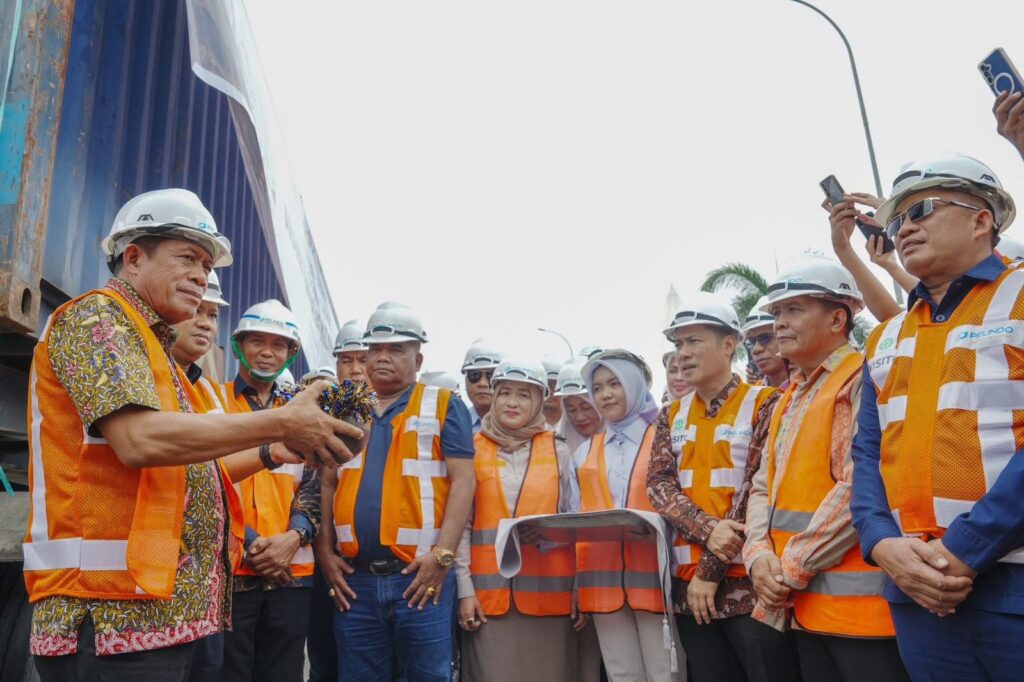
“We are ready to support all export and import activities with adequate facilities and efficient operational services,” he said. “The success of this inaugural export motivates us to continue improving service quality to support regional economic growth.”
Operated by Pelindo Terminal Petikemas, the terminal has been positioning itself as a gateway for commodities ranging from fisheries and mining products to agricultural derivatives. Officials say smoother port operations are essential if smaller producers are to compete globally.
Cooperative-Led Growth
Indonesia has in recent years encouraged cooperative-based business models (Koeprasi Merah Putih) as a means of strengthening rural economies. In Southeast Sulawesi, local authorities view the Awunio shipment as a test case: whether village-scale production can consistently meet export standards and secure repeat orders.
If successful, officials say the model could be replicated across other districts, enabling more communities to move up the value chain.
For Awunio’s residents, however, the significance was tangible and immediate — a container sealed, a bill of lading issued, and a product once confined to local markets now bound for buyers thousands of kilometers away. As the vessel departed, it carried not only charcoal, but the expectations of a village seeking a firmer place in global trade.