
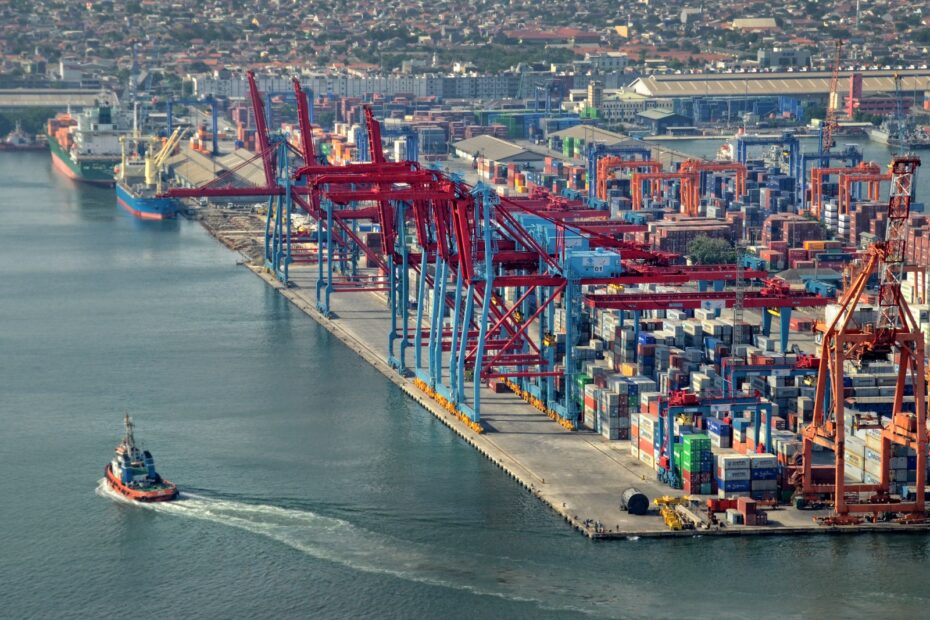
Higher container throughput, tighter cost controls, and ongoing restructuring under Danantara boosted Pelindo’s first-half earnings while supporting efforts to improve port efficiency and national logistics connectivity
PT Pelabuhan Indonesia (Persero), or Pelindo, posted a 60.4% increase in first-half (January-June, 2026) net profit, supported by higher port activity and tighter cost controls as the state-owned port operator continued a corporate transformation under sovereign investment agency Danantara Indonesia.
Profit for the January-June period reached 2.57 trillion rupiah ($IDR), up from the same period a year earlier, the company said on Monday.
The earnings growth was accompanied by higher operational activity. Container throughput rose 7% year-on-year to about 9.96 million twenty-foot equivalent units (TEUs) as of June, reflecting stronger cargo movement through the company’s ports.
President Director Achmad Muchtasyar said the increase in profit was driven by higher revenue generated from stronger operational performance, combined with stricter management of operating expenses.
“Pelindo’s profit growth was supported by a combination of increased revenue in line with operational performance growth and more disciplined control of operating expenses,” Achmad said in a statement.
The company said it is continuing to implement a corporate restructuring program as part of Danantara Indonesia’s broader transformation agenda, including simplifying its corporate structure to improve governance and operational efficiency.
According to Achmad, the restructuring is intended to streamline decision-making, eliminate overlapping functions and transactions within the group, and enable individual business units to focus more effectively on their core operations.
Pelindo is also pursuing operational improvements through standardized services, digitalization of business processes, higher terminal productivity, and enhanced operational planning and control.
Separately, the company is expanding its hub-and-spoke port network while integrating port services with industrial estates, logistics centers, and other transport modes to improve connectivity across Indonesia’s logistics network.
“Through this network development and service integration, we aim to strengthen the role of ports as key national logistics hubs while creating increasingly efficient connectivity for goods flows,” Achmad said.