
PT Pelabuhan Indonesia is stepping up coordination with government authorities and industry players as it prepares for a rebound in cargo and container traffic at Tanjung Priok Port following the Eid al-Fitr holiday, one of the busiest travel periods in the country.
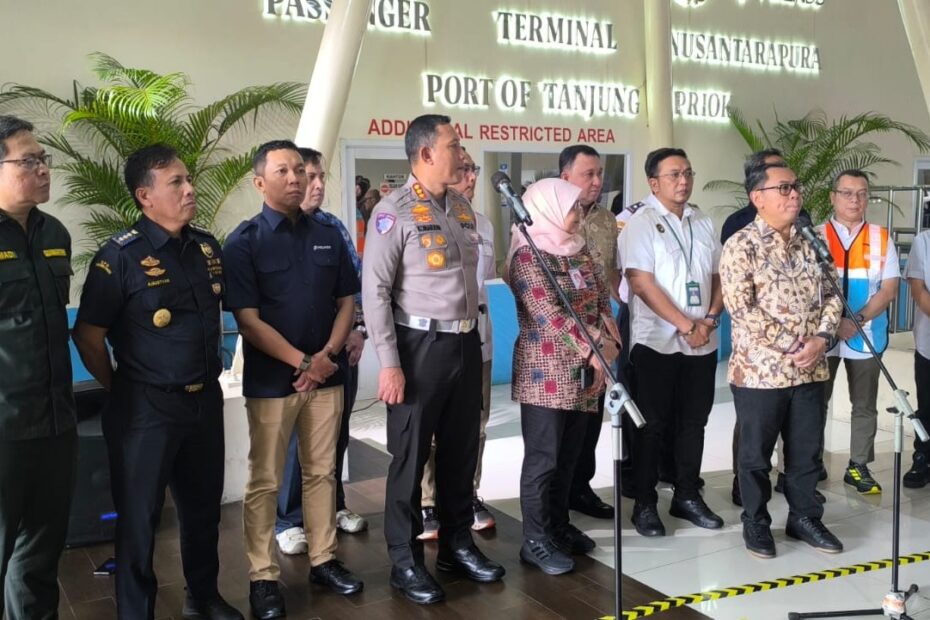
The state-owned port operator has convened a series of coordination meetings involving port authorities, police, local government officials, terminal operators and logistics service users, aiming to ensure that the resumption of industrial activity does not trigger bottlenecks in and around Indonesia’s main maritime gateway.
The post-holiday period is seen as a critical juncture for logistics flows, as factories restart operations and deferred shipments re-enter the system. Deputy President Director Drajat Sulistyo said traffic volumes at Tanjung Priok are expected to rise sharply in the days after the holiday, requiring tighter operational alignment across stakeholders.
“Activity at the port will increase again after Eid al-Fitr, so integrated and collaborative traffic management is needed to ensure the smooth flow of goods without causing congestion,” he said.
Handling more than half of Indonesia’s international trade, Tanjung Priok serves as a linchpin in the country’s supply chain. Even minor disruptions at the port can ripple across manufacturing, retail and export sectors, underscoring the importance of maintaining steady throughput during peak periods.
To mitigate congestion risks, Pelindo and its partners are focusing on improving the flow of trucks entering and exiting the port, adjusting terminal operating schedules and strengthening coordination on the ground. The company is also pushing for wider adoption of digital traffic management systems and time-based entry regulations, which are designed to spread vehicle arrivals more evenly throughout the day.
Such measures are increasingly viewed as essential in managing Jakarta’s chronic congestion, particularly in logistics corridors linked to the port. By smoothing traffic peaks and reducing idle times, officials hope to improve turnaround efficiency for both trucks and vessels.
“The principle we are promoting is collaboration,” Drajat said. “Traffic management in the port area cannot be handled partially but must involve all stakeholders.”
Speaking on the same occasion, Capt. Heru Susanto, head of the Tanjung Priok Port Authority, said regulators have prepared a set of operational controls to manage the anticipated surge in activity. These measures include gradually adjusting daily gate-pass quotas for trucks, synchronizing operations across terminals and fine-tuning ship berthing schedules to prevent overlaps that could strain yard capacity.
“We are implementing these measures in a measured and gradual manner, while maintaining a balance between logistics flows and traffic conditions in the port area,” Heru said.
Coordination among terminal operators is also being intensified to ensure that vehicle movements remain orderly and predictable, reducing the risk of pileups at key access points.
The effectiveness of these efforts will be closely watched in the coming weeks, as Indonesia’s logistics sector navigates the post-holiday rebound, an annual test of the system’s resilience and the ability of public and private players to work in concert.