
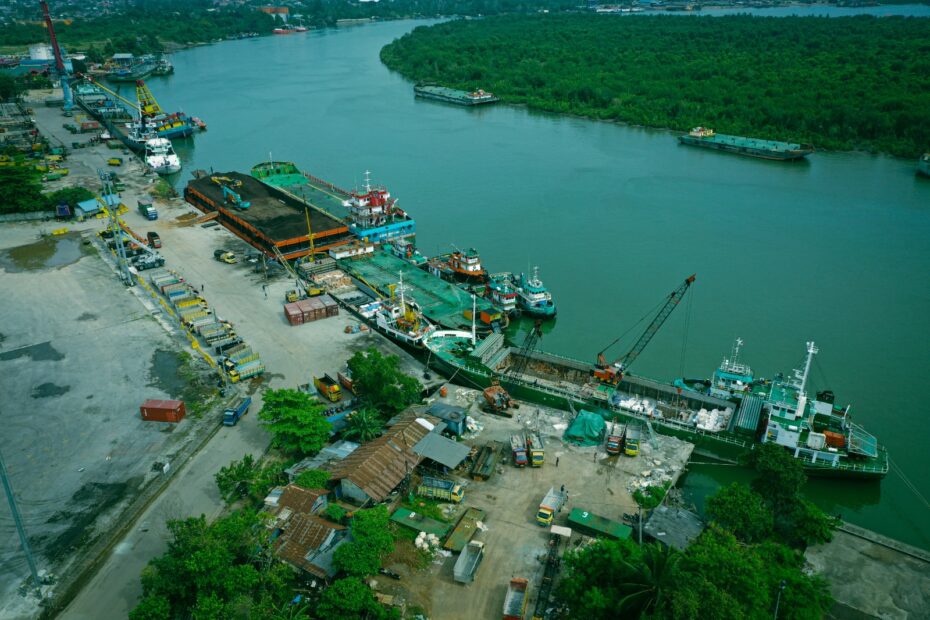
PT Pelabuhan Tanjung Priok (PTP Nonpetikemas) is expanding its crude palm oil (CPO) handling capacity at Pangkal Balam port to support supply chains in Indonesia’s Bangka Belitung Islands, the company said.
The port handles large volumes of liquid bulk cargo, mainly CPO sourced from oil palm plantations across Bangka Island, its main hinterland. Plantation area in Bangka Belitung reached about 355,065 hectares in 2025, with potential output of around 4 tons per hectare, according to company data.
PTP Nonpetikemas Pangkal Balam recorded total cargo throughput of 1.6 million tons in 2025, with liquid bulk accounting for 33.24%. In the first quarter of 2026, throughput reached 391,624 tons, with liquid bulk contributing 35.18%.
Branch Manager Alamsyah said the company is focusing on improving efficiency and safety in handling liquid bulk cargo, particularly palm oil.
“We continue to strengthen our services in handling CPO and its derivatives through operational innovations that improve efficiency while maintaining safety and environmental standards,” he said.
The port has introduced a portable drop tank system equipped with submersible pumps to improve handling efficiency and increase pumping capacity. A truck-loading system allows simultaneous servicing of up to four vehicles.
To mitigate environmental risks, the facility is equipped with oil spill response systems, including oil booms, decomposer materials and support vessels.
The company is also preparing additional measures, including drop tank covers, to maintain operations during the rainy season. With rainfall averaging 12 days per month, the upgrade is expected to increase loading capacity to around 5,280 tons per month.
Beyond CPO, the port is expanding services for palm oil derivatives. Since mid-2025, it has handled palm kernel shells, with dry bulk volumes rising from 185,229 tons in 2024 to 310,441 tons in 2025, and reaching 85,410 tons in the first quarter of 2026.
The Pangkal Balam facility, part of state-owned port operator Pelindo, is supported by a 649-metre pier, cargo-handling equipment and storage facilities.
The port serves a range of commodities, including fertilizer, cement, construction materials, rubber, palm kernel meal and containers, and operates terminals in Pangkal Balam and Belinyu.