
State-backed non container terminal operator reports steady first-quarter throughput growth, driven by dry and liquid bulk cargo, while accelerating digital transformation, infrastructure expansion and ESG initiatives to support efficiency and competitiveness nationwide
PT Pelabuhan Tanjung Priok Nonpetikemas (PTP Nonpetikemas) is reinforcing its role in Indonesia’s logistics sector as it posts steady operational growth and accelerates digital and infrastructure development to navigate increasingly complex global supply chain dynamics.
Ports are no longer merely transit points for vessels but have become strategic hubs that determine the efficiency of goods distribution and a country’s economic competitiveness.
In this context, PTP Nonpetikemas, a multipurpose terminal operator under the Pelindo Group and a subsidiary of PT Pelindo Multi Terminal (SPMT), is positioning itself as a key player in maintaining the smooth flow of national logistics.
The company said its operational performance in the first quarter of 2026 remained solid, with total non-container throughput reaching 12.84 million tonnes. The figure reflects stable growth despite fluctuations in global trade and domestic logistics flows.
Dry Dulk Dominates Volumes; Liquid Drives Growth
Dry bulk cargo continued to dominate operations, contributing 46% of total throughput. Liquid bulk accounted for 25%, followed by general cargo at 24% and bag cargo at 5%. The composition highlights the continued importance of industrial raw materials in Indonesia’s logistics ecosystem.
A notable increase was recorded in the liquid bulk segment, which rose 16% year-on-year to 3.09 million tonnes, exceeding the company’s target for the period. The growth was driven by higher crude palm oil (CPO) export volumes from Teluk Bayur, sustained loading and unloading activity in Pontianak, and increased commodity flows through Tanjung Priok.
Dry bulk volumes reached 5.76 million tonnes, broadly in line with company targets, while general cargo stood at 2.92 million tonnes. Bag cargo handling totalled 656,000 tonnes, slightly lower compared to the same period last year.
To support its operations, PTP Nonpetikemas has continued to prioritise digital transformation as a core strategy. The company has implemented the PTOS-M system, which provides end-to-end terminal services by integrating planning, operations and payment processes with banking and customs systems.
The integration is aimed at improving efficiency, accelerating service times and enhancing transparency and data accuracy, ultimately contributing to lower logistics costs.
“We continue to strive to provide more efficient, integrated and adaptive services in line with customer needs. Digital transformation and operational strengthening are key to supporting a smooth national supply chain,” said Dwi Rahmat Toto, director of commercial and business development and acting director of operations.
At the branch level, several ports posted strong performances. Tanjung Priok recorded significant growth in the general cargo segment, exceeding its targets, while Teluk Bayur led in liquid bulk handling. Bengkulu also showed notable performance in dry bulk operations.
Priok Anchors Growth as Main Contributor
Among all branches, Tanjung Priok remained the main contributor to the company’s overall performance. In the first quarter, the branch accounted for more than half of total revenue and recorded throughput of around 4.03 million tonnes, marking an increase from a year earlier.
“With results exceeding targets, Tanjung Priok further confirms its role as a driving force for the company’s performance,” said Budi Utoyo, branch manager of PTP Nonpetikemas Tanjung Priok.
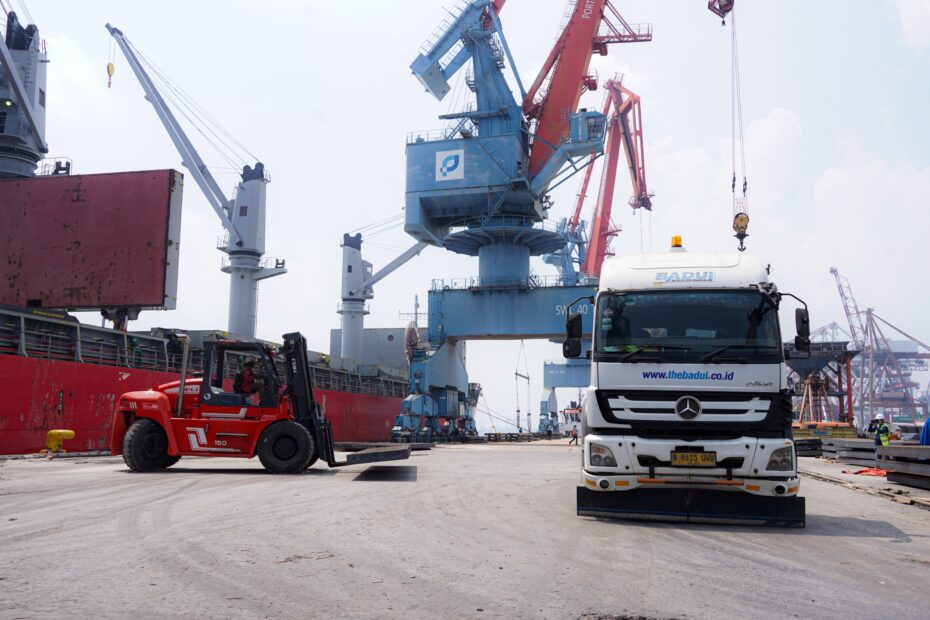
The strong performance at Tanjung Priok is supported by extensive infrastructure, including multipurpose terminals equipped with large berths, stacking yards, warehouses and various loading and unloading equipment capable of handling a wide range of commodities, from steel and pulp to bulk cargo such as coal and fertiliser.
The company is also continuing infrastructure expansion beyond its main hubs. One of its strategic projects is the development of Kijing Terminal in West Kalimantan, which has been positioned as an international logistics hub supporting export-import activities and the downstreaming of mineral commodities, a key national priority.
In addition, PTP Nonpetikemas is developing shorebase services in several locations, including Lhokseumawe, Tanjung Priok, Cirebon and Banyuwangi. These facilities are designed to support the oil and gas industry by providing integrated logistics services, including storage for materials and chemicals.
On the innovation front, the company has introduced portable drop tank technology equipped with submersible pumps. The system is designed to improve loading and unloading productivity, reduce operational costs and minimise environmental impact by enabling more efficient cargo handling processes.
ESG Initiatives on Top Agenda
PTP Nonpetikemas is also strengthening its commitment to sustainability through environmental, social and governance (ESG) initiatives. These include the electrification of cargo handling equipment, the use of overhead cranes and the adoption of energy-efficient LED lighting systems across operations.
The company said these measures demonstrate that its transformation efforts are not solely focused on operational performance but also on supporting environmentally sustainable business practices.
Corporate Secretary Fiona Sari Utami said the company continues to foster collaboration with stakeholders as part of its broader strategy.
“PTP Nonpetikemas not only focuses on operational performance but also implements social responsibility programmes that provide tangible benefits to the community. We also continue to strengthen communication and collaboration with various stakeholders,” she said.
As global competition intensifies, the role of ports as logistics hubs is becoming increasingly critical. PTP Nonpetikemas said it remains optimistic about sustaining its growth momentum by continuing to develop innovation, strengthen digital capabilities and improve service quality.
The company’s efforts underline the importance of transformation and efficiency in ensuring Indonesia’s competitiveness in the global supply chain, as well as enhancing the role of its ports in supporting economic growth.