
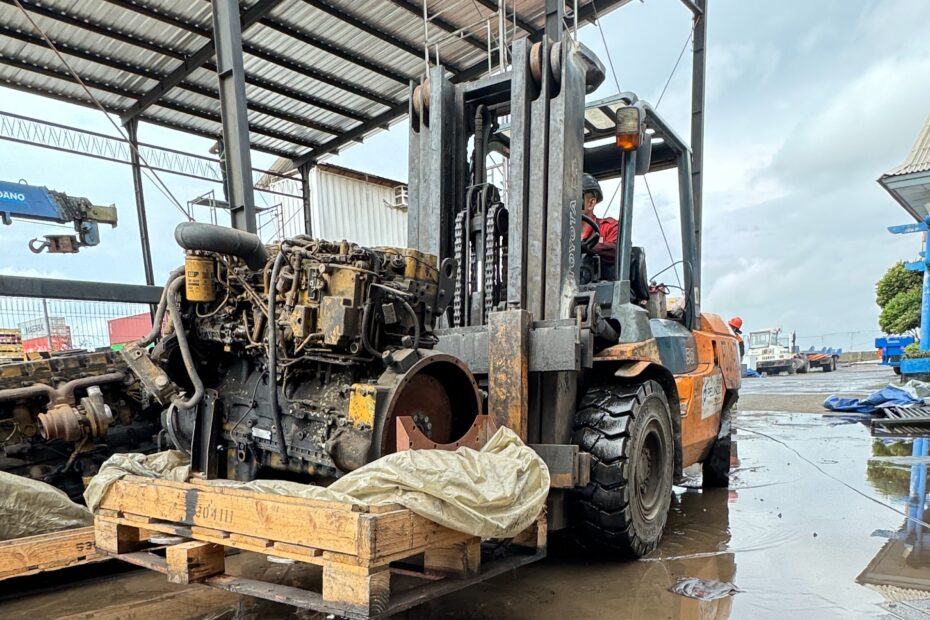
In a workshop classroom in Semarang, a diesel engine that once powered port operations is beginning a second life, this time as a teaching tool.
PT Pelindo Terminal Petikemas, through its Semarang Terminal Petikemas (TPK), has donated 10 Caterpillar C6.6 ACERT engines to vocational schools and higher education institutions, aiming to strengthen hands-on technical education and help prepare students for work in Indonesia’s logistics and maritime industries.
The engines, previously used in terminal head trucks, were removed from service after internal inspections found them no longer suitable for operational use. While classified as non-assets and excluded from the company’s inventory, the machines retain significant instructional value, allowing students to dismantle, analyze and maintain real industrial equipment rather than relying on simulations or diagrams.
The donation was carried out under PT Pelindo Terminal Petikemas’ Social and Environmental Responsibility (TJSL) program, following internal procedures governing the redistribution of leftover materials from maintenance and repair activities. The process adheres to Good Corporate Governance principles, the company said.
From an educational perspective, each Caterpillar C6.6 ACERT engine is estimated to provide learning value equivalent to Rp 30 million to Rp 50 million, based on comparable engines typically purchased for technical training. The valuation reflects its usefulness as a learning tool rather than its accounting value.
“This program shows how industry and education can work together in a concrete way,” said I Nyoman Sutrisna, Head of TPK Semarang.
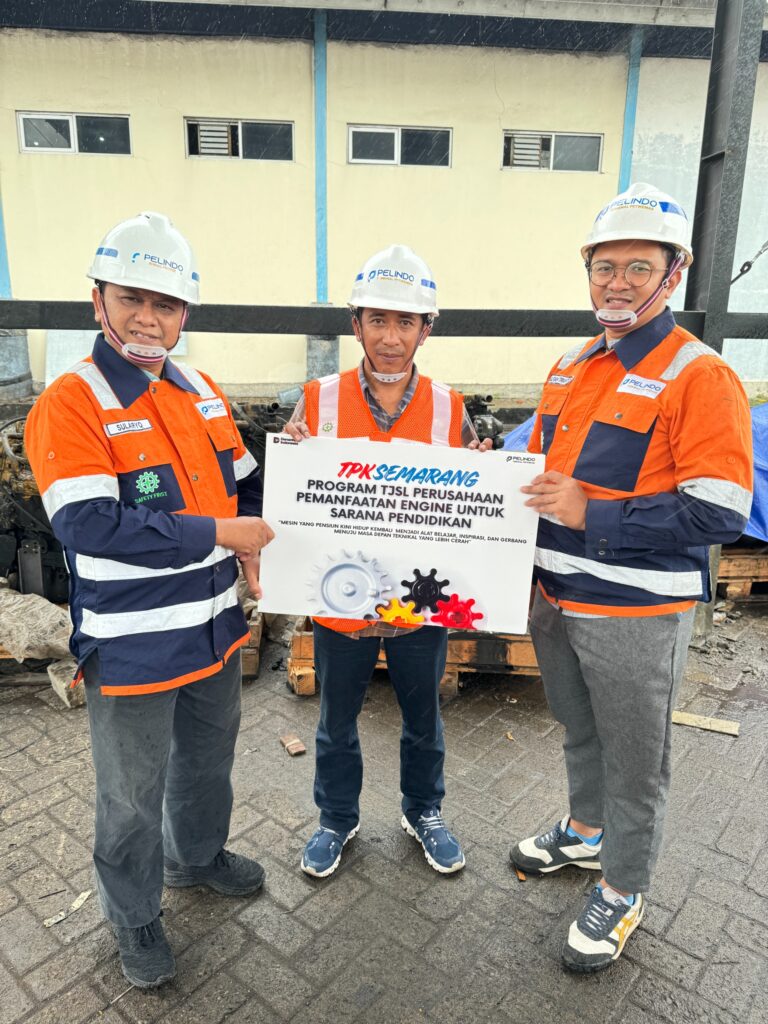
“Although these engines are no longer used in our operations, they still have strong potential to support practice-based learning that matches current industry standards,” he said further.
He said the initiative is part of TPK Semarang’s broader effort to help develop work-ready human resources with skills aligned to the needs of the logistics sector.
The engines were distributed to SMKN 1 Semarang, SMK Muhammadiyah 2 Semarang, SMK Perintis 29 Semarang, the Surabaya State Polytechnic of Shipbuilding, and Maarif Hasyim Latif University in Sidoarjo. Schools are expected to use the equipment to introduce engine systems, conduct maintenance exercises and allow students to directly examine mechanical components.
At SMKN 1 Semarang, teachers say access to real industrial engines makes a tangible difference in the classroom.
“This grant is very helpful in improving our students’ technical skills,” said Silahuddin, a representative of the school. “It supports our commitment to strengthening vocational education and better preparing students for the workforce.”
Asti Hanani from SMK Muhammadiyah 2 Semarang said the engines would be used as core practical tools, helping students bridge the gap between theory and real-world application.
“Hands-on experience is essential for vocational students,” she said. “We appreciate TPK Semarang’s support in improving the quality of learning at our school.” Through the TJSL program, TPK Semarang said it aims to continue contributing to local communities by supporting education, developing skilled human resources and reinforcing Indonesia’s national logistics ecosystem.