
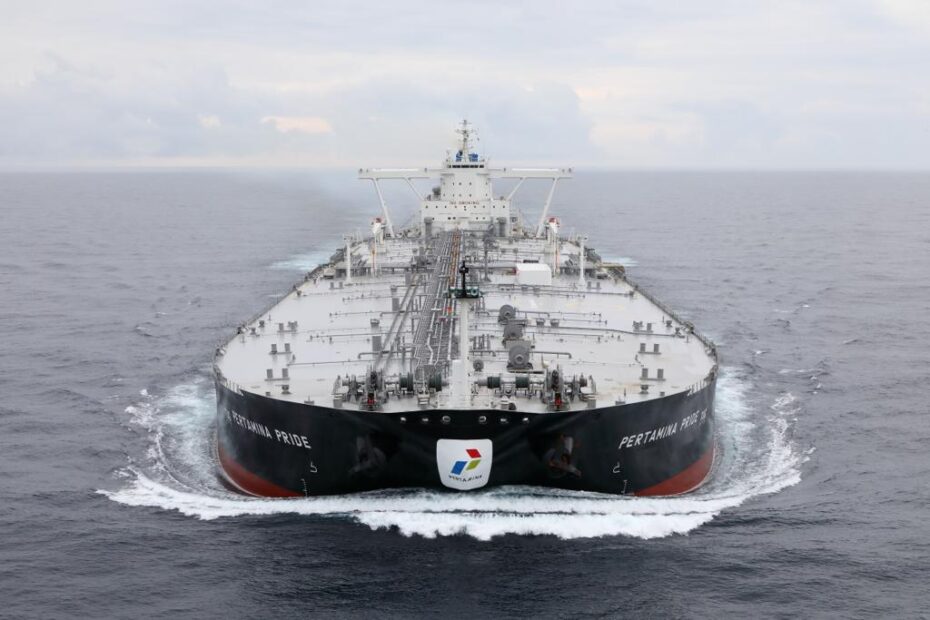
Indonesia has a significant opportunity to import oil from Russia following its official membership in the BRICS economic bloc, which includes Brazil, Russia, India, China, and South Africa.
Minister of Energy and Mineral Resources (ESDM) Bahlil Lahadalia highlighted that the Indonesian government is focused on implementing profitable economic policies, which includes fostering cooperation within the BRICS framework.
Bahlil explained that Indonesia’s foreign policy is grounded in the principle of free and active politics, enabling cooperation with various countries as long as it aligns with national interests and complies with international regulations.
“When we join BRICS and an opportunity arises to obtain oil from Russia, as long as it complies with the rules and regulations,” Bahlil said as quoted by Kontan.
Bahlil also pointed out that some of Indonesia’s oil imports from the Middle East could potentially be sourced from Russia. “While we have imported oil from the Middle East, it is possible that some of it originates from Russia, though this is not yet certain,” he added.
In a separate statement, Acting Director General of Oil and Gas at the ESDM Ministry, Dadan Kusdiana, noted that the government is studying the possibility of purchasing oil from Russia. This exploration of cooperation will be consolidated as part of Indonesia’s full integration into the BRICS group.
“Following our designation as a BRICS member, various sectors will work together to explore potential future cooperation,” Dadan stated at the ESDM Ministry Office on January 10, 2025.
Meanwhile, Hermansyah Y. Nasroen, Corporate Secretary of PT Kilang Pertamina Internasional (KPI), explained that KPI’s procurement of crude oil depends on the specifications required by each refinery, as well as economic considerations aligned with market conditions.
“KPI is open to all types of oil that can be processed effectively and efficiently by our refineries,” Hermansyah told Kontan on January 13, 2025.
He also emphasized that the procurement process adheres to both national and international regulations governing crude oil sourcing.
On the other hand, Moshe Rizal, Chairman of the Investment Committee at the National Oil and Gas Companies Association (Aspermigas), stated that importing oil from Russia could significantly reduce the country’s budgetary expenditures. With Indonesia currently importing between 600,000 and 700,000 barrels of oil per day, taking advantage of Russia’s discounted oil prices could save billions of dollars annually.
“The government should prioritize the nation’s economic needs. Opting for discounted oil from Russia would make the state budget more efficient and strengthen the national economy,” Moshe told Kontan.
Moshe also urged the government to remain steadfast against potential Western pressures, as long as the decision aligns with Indonesia’s national interests.
From a geopolitical standpoint, Bisman Bakhtiar, Executive Director of the Center for Mining Energy Law Studies, cautioned that importing oil from Russia could impact Indonesia’s diplomatic relations with Western countries, particularly the United States.
“The West has been at odds with Russia since the invasion of Ukraine. Indonesia may face diplomatic pressure from Western nations if it continues to import oil from Russia,” Bisman explained.
However, Bisman stressed the importance of clear diplomatic communication. “If Indonesia moves forward with Russian oil imports, it must accompany this decision with diplomatic steps that reinforce its position as a non-aligned country,” he added.