
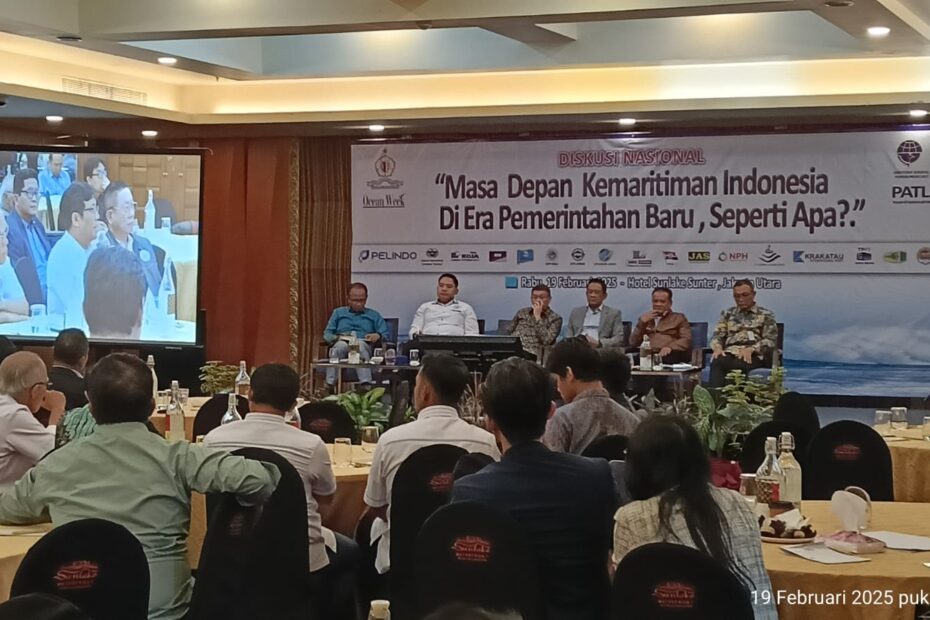
Government of President Prabowo Subianto is being urged to promote greater involvement of the private sector in the development of the nation’s maritime and logistics industries. This involvement could take the form of public-private partnerships or partnerships between private companies and state-owned enterprises (BUMN). Such schemes are expected to alleviate the financial burden on the government, especially concerning the national budget.
This recommendation was one of the key takeaways from the “National Discussion on the Future of Indonesian Maritime Affairs in the Era of the New Government,” held on Wednesday, February 19, 2025, in Sunter, Jakarta. The event was organized by the Alumni Family Association (IKAL) of Lemhannas, Ocean Week, and the Indonesian Transportation and Logistics Experts Association (PATLI).
The seminar featured speakers such as Capt. Hendri Ginting, Director of Shipping and Maritime Affairs at the Ministry of Transportation; Ari Hendryanto, President Director of Pelindo Multi Terminal Subholding (SPMT); Akbar Djohan, President Director of Krakatau Steel and General Chair of the Indonesian Logistics and Forwarders Association (ALFI); and Darmansyah Tanamas, General Secretary of the Indonesian National Shipowners Association (INSA).
Additionally, maritime expert Prof. Dr. Saut Gurning and Fadjar Harjo Seputro, who replaced Representative Bambang Haryo from the House of Representatives’ Commission V, contributed to the discussions.
The Need for Private Sector Engagement
Prof. Saut Gurning, who formulated the seminar’s recommendations, highlighted the importance of expanding the private sector’s role in Indonesia’s maritime development. He emphasized that, given the government’s budget constraints, private sector involvement is crucial to accelerating progress, fostering innovation, and tapping into the vast potential of Indonesia’s marine resources.
The private sector’s involvement is expected to cover areas such as investment in port infrastructure, sustainable marine resource management, and the adoption of advanced maritime technologies. Gurning stressed that while the private sector should take a proactive and creative approach to exploring investment opportunities, the government must still provide a conducive regulatory environment.
“This collaboration can take the form of public-private partnerships or partnerships between private companies and state-owned enterprises (BUMN). Such a model can ease the government’s fiscal burden,” Gurning explained.
MUST BE ON TOP PRIORITY
Vice Admiral Surya Wiranto, representing the IKAL Alumni Association of Lemhannas, criticized the current government for its lack of focus on the maritime sector, which he argued should be a cornerstone of Indonesia’s economic development.
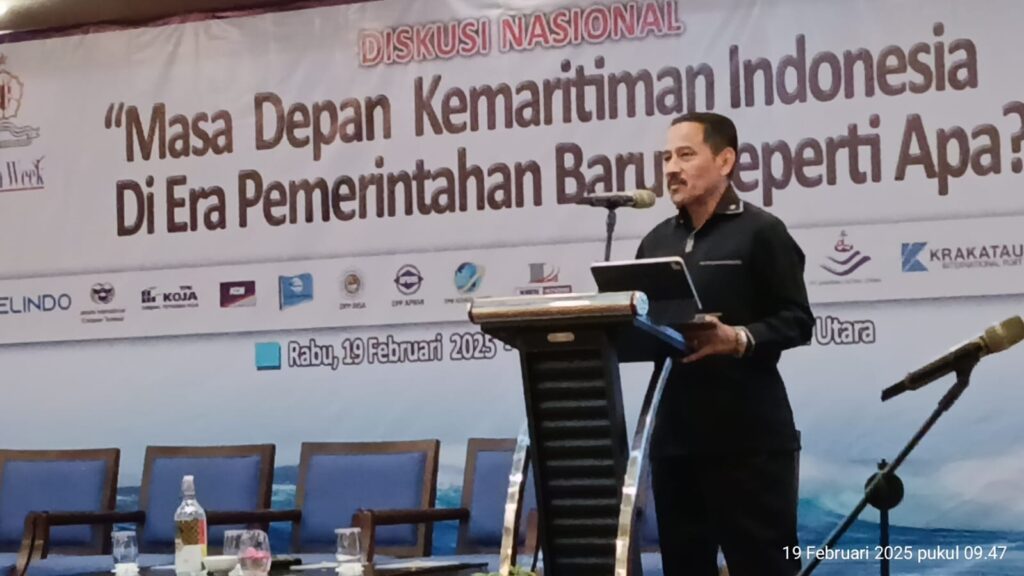
Surya Wiranto pointed out that the maritime sector has not received sufficient attention, citing the sea toll program, which was intended to improve regional connectivity, but has not been prioritized in government policy. He also noted the government’s decision to abolish the position of Coordinating Minister for Maritime Affairs and Investment (Menko Marvest) as a clear signal that the sector is not being treated with the seriousness it deserves.
“This is unfortunate, especially for a maritime nation like Indonesia. The maritime sector, which includes shipping, resource management, tourism, and international trade, holds enormous potential for driving the nation’s economic growth,” Surya Wiranto said.
Despite Indonesia’s vast maritime resources, the sector has yet to reach its full potential. Issues such as underinvestment in port infrastructure, inefficient management of marine resources, and insufficient supportive policies have left Indonesia trailing behind other nations that heavily rely on their maritime industries for economic growth.
Surya Wiranto recalled that as the new government takes office, it is clear that the maritime sector must be given greater priority. This sector holds the key to sustainable economic growth, job creation, and enhancing Indonesia’s competitive edge on the global stage. By revising existing regulations and adopting a more structured, collaborative approach, Indonesia can unlock the full potential of its maritime industry.
Now is the time for the government to refocus its attention on the maritime sector, which should be a central pillar of national development moving forward.
THE FUTURE OF MARITIME SECTOR DEVELOPMENT
Capt. Antoni Arif Priadi, Director General of Sea Transportation, who opened the event, emphasized that the future development of Indonesia’s maritime sector must include a revision of Shipping Law No. 66/2024, integrating all aspects of maritime transportation, port operations, and related industries into a cohesive system.
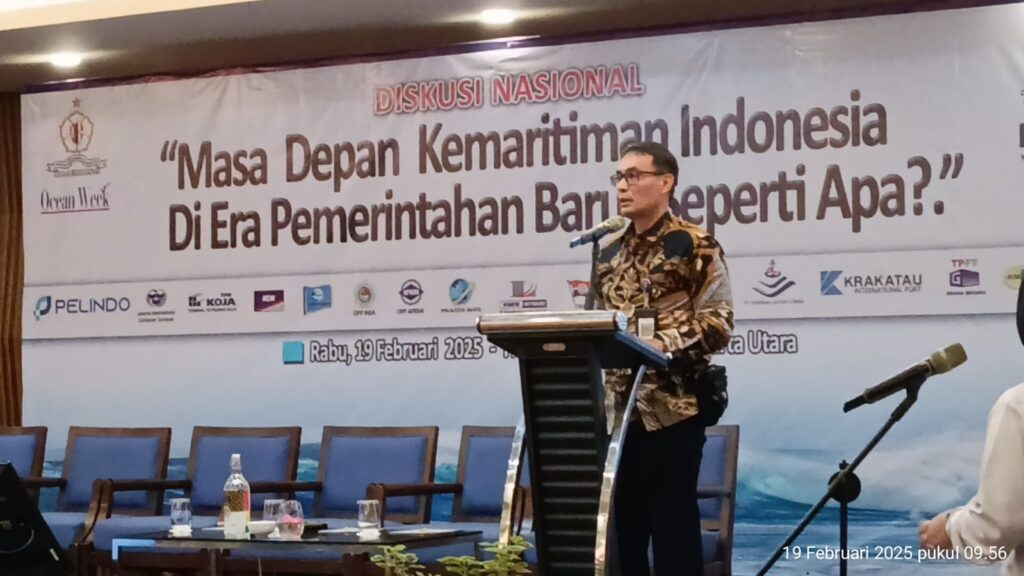
He advocated for the adoption of a maritime cluster approach, which would allow both the government and private industry to identify and prioritize key subsectors for development. “We need to map which subsectors are most critical, such as shipping, which should be classified as tier 1,” Capt. Antoni explained.
This maritime cluster approach will enable Indonesia to focus on high-value sectors with global competitive potential, such as enhancing shipping industry efficiency, upgrading maritime education and training, and modernizing environmentally friendly port management practices.
Despite the promising potential, Indonesia’s maritime sector faces significant challenges, including inadequate infrastructure, low investment levels, and a lack of synergy between the government, private sector, and local communities. Furthermore, climate change and environmental degradation present ongoing threats to sustainable development.
However, these challenges also present opportunities. With the right policies and strong government commitment, Indonesia can tap into its marine resources more effectively. Key initiatives include developing port infrastructure, improving maritime education, and adopting sustainable technologies within the shipping industry.