
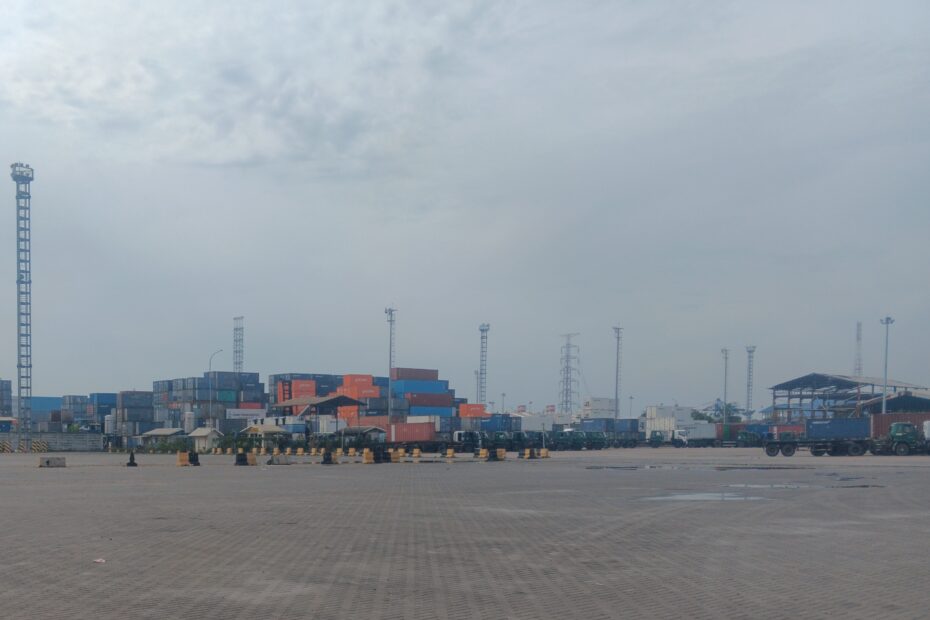
Photo: Priok’s existing buffer zone on the port’s west side
In the wake of a paralyzing traffic jam that brought North Jakarta to a standstill, port stakeholders are calling on PT Pelabuhan Indonesia (Pelindo) and the North Jakarta City Government to take urgent action—beginning with the construction of a new buffer zone on the east side of Tanjung Priok Port.
A buffer zone already exists on the port’s west side, but as container traffic surges, particularly following the post-holiday shipping rush, port stakeholders say a second zone is critical to prevent future gridlock.
This recommendation emerged during an emergency coordination meeting held on Wednesday, April 23, 2025, at the Tanjung Priok Police office as quoted by logistiknews.id. The meeting followed a chaotic three-day traffic jam—dubbed a “horror jam” by truckers – that crippled operations at Indonesia’s busiest port from April 16 to 18.
What Went Wrong?
The meeting brought together a wide range of stakeholders, including representatives from port authority KSOP Tanjung Priok, Pelindo, container terminal operators, depot operators, logistics companies, trucking associations, and other relevant agencies.
According to the investigation, several issues converged to create the massive logjam.
First, ship service planning and operational risk standards at New Priok Container Terminal One (NPCT-1) were found lacking. Second, the terminal reportedly issued nearly 5,000 release gates for export and import—far above the recommended limit of 3,000. This overload led to a dangerously high Yard Occupancy Ratio (YOR), surpassing the safe capacity threshold of 70–80%.
Making matters worse, the layout of NPCT-1 added fuel to the fire. With two separate gates—Common Gate and Gate In—two separate truck queues formed. Compounding the chaos, the buffer zone was too close to public roads, which caused traffic to spill out into surrounding areas.
Proposed Solutions
To prevent future breakdowns, stakeholders agreed on several recommendations. Chief among them: improve coordination to control container YOR levels and redesign traffic engineering within the terminal.
An integrated dashboard for real-time traffic monitoring was also proposed, potentially supported by CCTV and digital tracking systems. Stakeholders emphasized the need for better communication—suggesting the creation of social media channels, a centralized call center, and a formal complaint system for port users.
Another major point: build an eastern buffer zone to accommodate container overflow and reduce the number of idle trucks clogging the roads.
A congestion reduction team, composed of port officials, police, and logistics representatives, was also proposed to monitor and respond to traffic in real time.
A Post-Holiday Bottleneck
The April crisis, however, wasn’t just about infrastructure. According to H. Anas, Secretary of Aptrindo (Indonesian Trucking Companies’ Association) Jakarta, the true trigger was the government-imposed restriction on freight transportation during the 2025 Eid al-Fitr holiday.
A joint decree, signed on March 6, had suspended the movement of certain freight vehicles from March 24 to April 8. The goal was to ease passenger traffic during the annual “mudik” (homecoming) exodus. However, the policy created a bottleneck that exploded once operations resumed.
“Cargoes kept flowing into the port, but trucks were barred from picking them up. By April 16, when trucking resumed, the backlog was overwhelming,” Anas explained.
“Our trucks don’t just roam the streets looking for work. Every trip is based on an official transportation order. When the orders resumed, the surge was immediate and unmanageable.”
He also criticized the port’s prioritization of ship servicing over land transport. “If our trucks can’t operate, those containers never leave the port,” he said. “We’re not the problem—we’re the essential link. Without us, the cargoes don’t move.”