
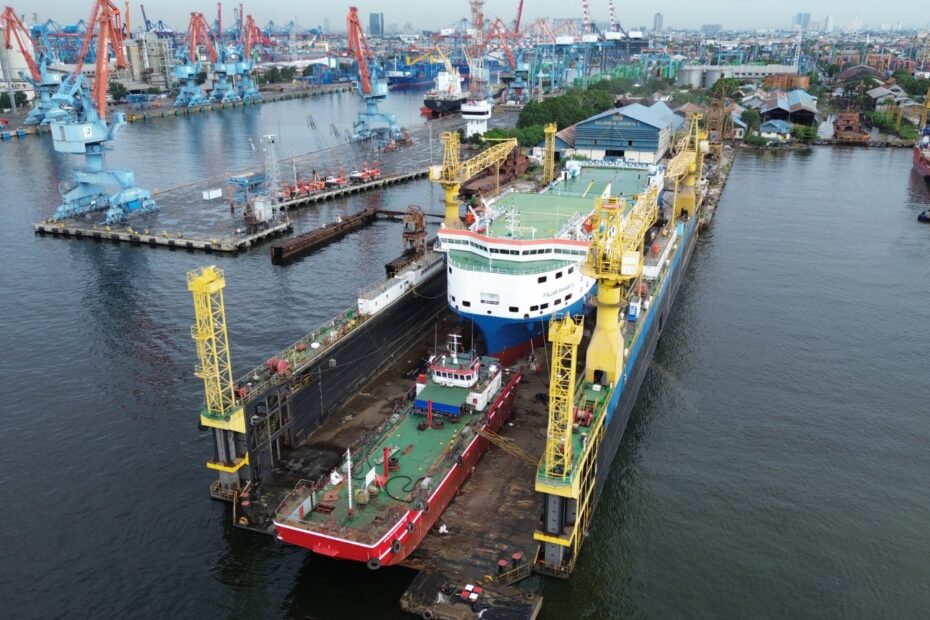
Indonesia’s state-owned shipyard company, PT Dok dan Perkapalan Kodja Bahari (DKB), reported a sharp rise in revenue over the past five years, driven by growing customer trust and increased demand in the national market.
The company’s revenue reached IDR 540 billion ($33 million) in 2024, marking a 30% increase from the previous year and surpassing its internal target set in the Company Work Plan and Budget (RKAP).
“This achievement reflects not only the numbers, but also the dedication and hard work of DKB employees, alongside strong collaboration with our stakeholders,” said Corporate Secretary Rolando Christopher on Thursday.
Revenue has climbed steadily since 2020, when it stood at IDR 185 billion. It surged more than 80% to IDR 331 billion in 2021, followed by IDR 405 billion in 2022 and IDR 398 billion in 2023.
DKB, which specializes in ship and non-ship maintenance and repair, has launched a series of operational initiatives aimed at improving productivity and strengthening its position in the domestic shipyard market.
Key improvements include reducing average docking times to 15 days and adopting the Quality, Cost, Delivery, and Services (QCDS) framework to ensure timely, efficient, and customer-responsive operations.
“Our goal is to provide high-quality service, transparent and controlled costs, and punctual delivery that meets customer expectations,” Rolando said.
DKB has also strengthened customer relations through its Home Doctor Services (HDS) program, which guarantees dock availability and competitive pricing for long-term clients. Major shipping companies participating in the HDS scheme include state-owned PT PELNI (Persero), PT Dharma Lautan Utama, PT Temas Line, and PT Bukit Merapin Nusantara Lines.
“With consistent on-time delivery, quality results, and competitive pricing, we aim to maintain trust and expand our reach in the national market,” Rolando added.
Expanding National Footprint
DKB currently operates eight shipyards across Indonesia, including two facilities in Jakarta and others in Cirebon, Semarang, Palembang, Sabang, Banjarmasin, and Batam.
With decades of experience in the maritime sector, the company views its current performance as a signal of resilience and readiness to support national development.
“We are committed to evolving quickly and consistently contributing to government maritime programs and the broader national economy,” said Rolando.
He also credited government support from the Ministry of State-Owned Enterprises, the Ministry of Finance, and asset management company PT Perusahaan Pengelola Aset (PPA) as instrumental in enabling DKB’s growth.
“Our progress is the result of strategic planning, strong employee commitment, and a collaborative spirit within the company,” he said. “This is a collective achievement that reflects the persistence and dedication of the entire DKB team.”