
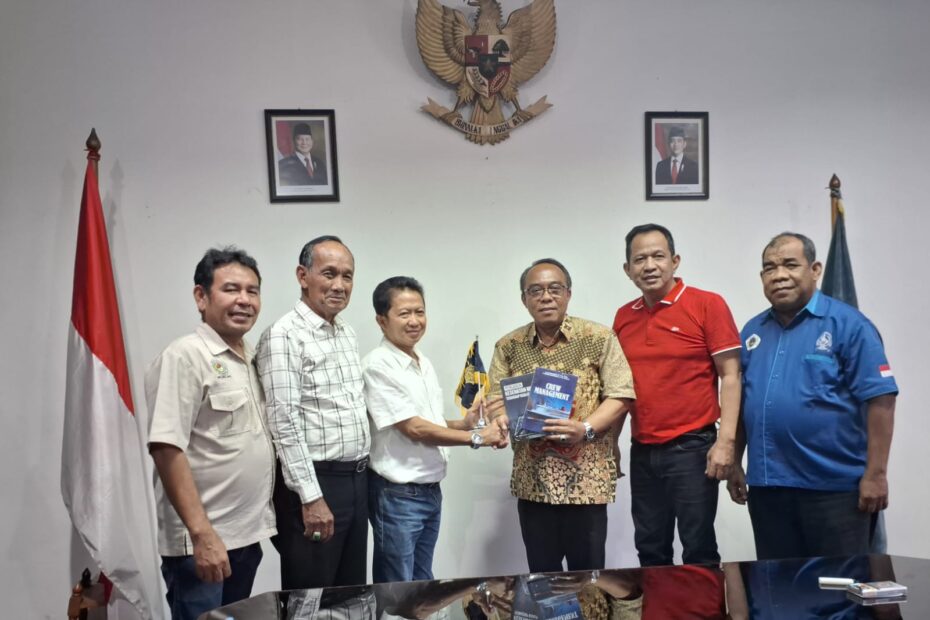
The Consortium of Indonesian Manning Agencies (CIMA) is exploring a partnership with the Indonesian National Shipowners’ Association Jakarta Chapter (INSA Jaya) to strengthen training for seafarers, including a new focus on mental health in line with international maritime standards.
In a joint statement one Wednesday, July 23, 2025, CIMA Chairman Dr. Gatot Cahyo Sudewo said the initiative would include mental health training in Basic Safety Training (BST) programs, a response to upcoming requirements from the International Maritime Organization (IMO), which will mandate mental health awareness components in seafarer training beginning January 1, 2026.
“Starting next year, seafarers must hold a mental health BST certificate issued by a recognized institution to be deemed fit for duty,” Gatot said during a visit to INSA Jaya’s offices in North Jakarta.
“This is not just about compliance; it’s about safety, well-being, and professionalism at sea.”
INSA Jaya, which represents 110 shipping companies operating in the Greater Jakarta area, welcomed the initiative. INSA Jaya Chairman Andi Patonangi emphasized that the mental and physical condition of crews directly affects maritime safety.
“We fully support this collaboration. The well-being of our seafarers must be a top priority,” he said.
Gatot noted that CIMA, which counts 92 licensed manning agencies as members, has long been involved in seafarer education, often in collaboration with institutions like the Maritime Higher Education Polytechnic (PIP).
The organization estimates that Indonesia has over 1.5 million seafarers registered with the Ministry of Transportation, one of the world’s largest maritime labor pools.
The updated BST certificate, a cornerstone of IMO’s STCW (Standards of Training, Certification and Watchkeeping) Convention, is set to include mandatory modules on mental health first aid, suicide prevention, and conflict resolution.
These additions follow rising concerns over mental health issues at sea, particularly among young or isolated crew members working in high-stress, remote conditions.
“Mental health training is designed to prevent not only onboard violence but also incidents of self-harm,” Gatot said, citing international reports of increasing psychological stress among seafarers during long voyages.
INSA Jaya Secretary M. Erwin Y. Zubir also briefed INSA Jaya members on the importance of early compliance, noting that failure to obtain the new certification could render seafarers ineligible for deployment starting January 2026.
According to the IMO, mental health support has become a critical part of global maritime safety strategy, particularly in the wake of the COVID-19 pandemic, which left thousands of crew stranded at sea for extended periods and drew attention to the psychological toll of seafaring.
The IMO has urged member states and maritime training institutions to integrate psychosocial education into all levels of seafarer training, calling mental wellness “essential to maritime safety and operational continuity.”
As part of the planned cooperation, CIMA and INSA Jaya intend to conduct joint workshops, create standardized course materials, and expand partnerships with accredited mental health professionals and maritime academies nationwide.
“Indonesia has a responsibility not only to meet international regulations but to lead by example,” said Patonangi. “Our seafarers deserve more than just skills training, they deserve resilience, dignity, and care.”