
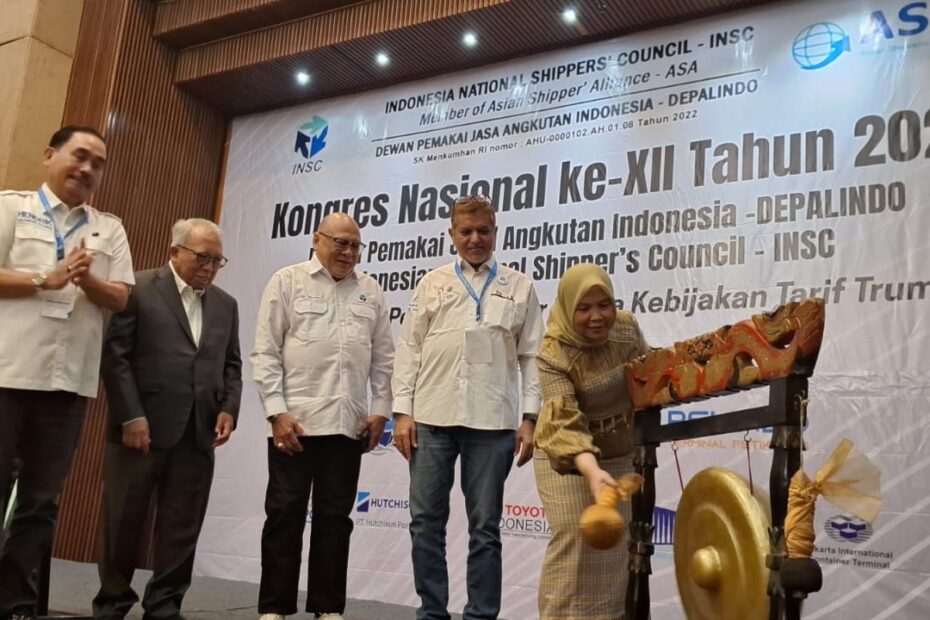
Indonesia’s Ministry of Trade has called on the Indonesia National Shippers’ Council (INSC/Depalindo) to take a more active role in improving logistics efficiency, as the government seeks to boost export competitiveness amid rising global protectionism and logistical bottlenecks.
Speaking at the opening of the 12th National Congress of INSC, also known locally as Depalindo, Director General of National Export Development at the Ministry of Trade Fajarini Puntodewi urged the council to lead collaborative efforts to reduce national logistics costs, one of the key barriers to expanding Indonesian exports.
“We can’t just aim to survive,” Fajarini said in remarks delivered on behalf of Trade Minister Budi Santoso.
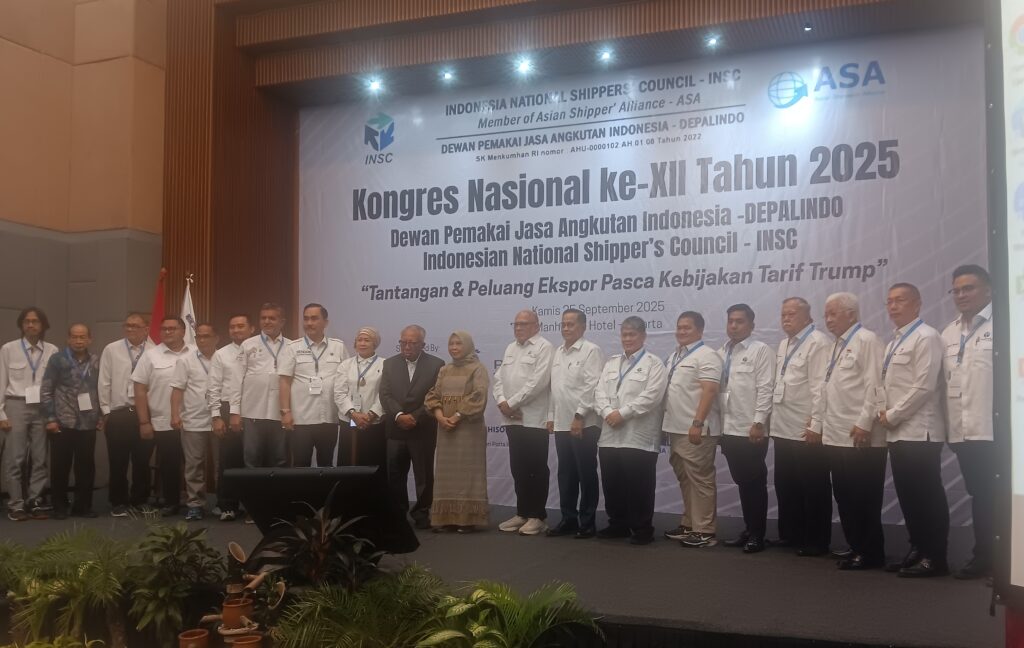
“In the face of global uncertainty, including the impact of former U.S. President Donald Trump’s tariff policies, strategic adjustments are essential to ensure Indonesian exports continue to grow and stay competitive,” she said further.
The biennial congress, held in Jakarta on Tuesday, brought together key stakeholders across the trade and transport sectors, including exporters, government agencies, and logistics associations.
A featured session titled “Tantangan dan Peluang Ekspor Pasca Kebijakan Tarif Trump” -Challenges and Opportunities for Exports Post-Trump Tariff Policy – explored the long-term implications of global trade tensions and identified policy and operational responses.
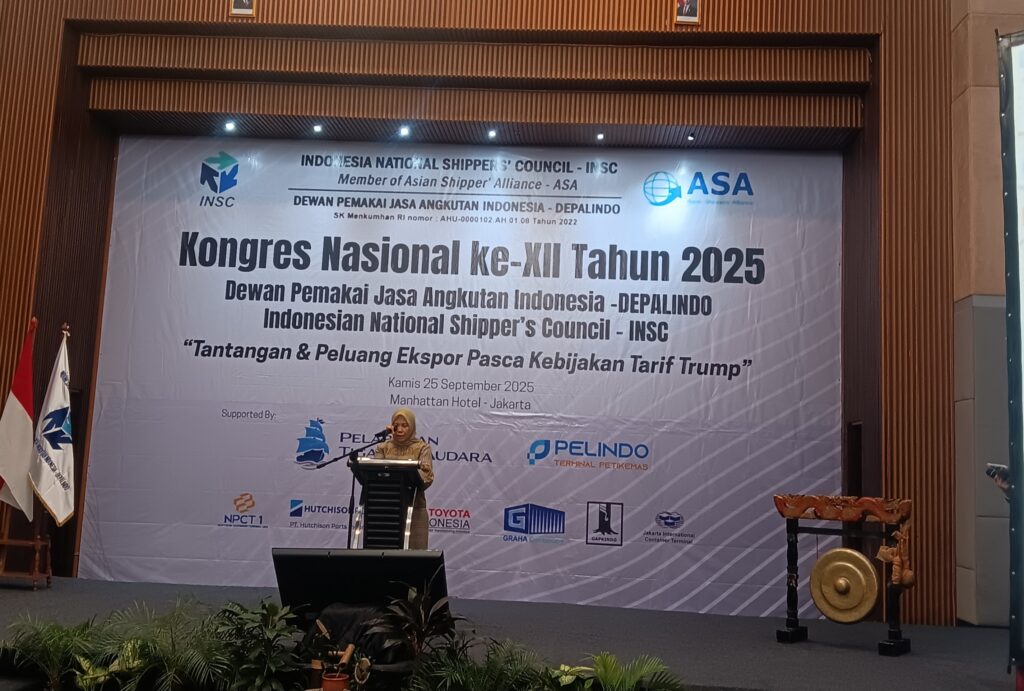
Fajarini Puntodewi: “Depalindo has a vital role to play in connecting logistics actors and creating a seamless system that can support exporters.”
Despite global headwinds, Indonesia recorded a trade surplus of $23 billion in the first half of 2025, supported by strong export performance. However, the Ministry warned that sustaining this momentum will require urgent improvements in logistics and supply chain efficiency.
“High logistics costs are eroding the competitiveness of our export products,” Fajarini said.
“Depalindo has a vital role to play in connecting logistics actors and creating a seamless system that can support exporters, particularly micro, small, and medium enterprises (MSMEs), to enter international markets more easily.”
INSC/Depalindo Chairman Toto Dirgantoro echoed the sentiment, stating that lowering logistics costs has become a national imperative.
“Trump’s policies are a challenge for all of us. In today’s global trade environment, cutting logistics costs is no longer optional, it’s a necessity,” he said. “Let’s keep moving forward to make Indonesian exports more competitive.”
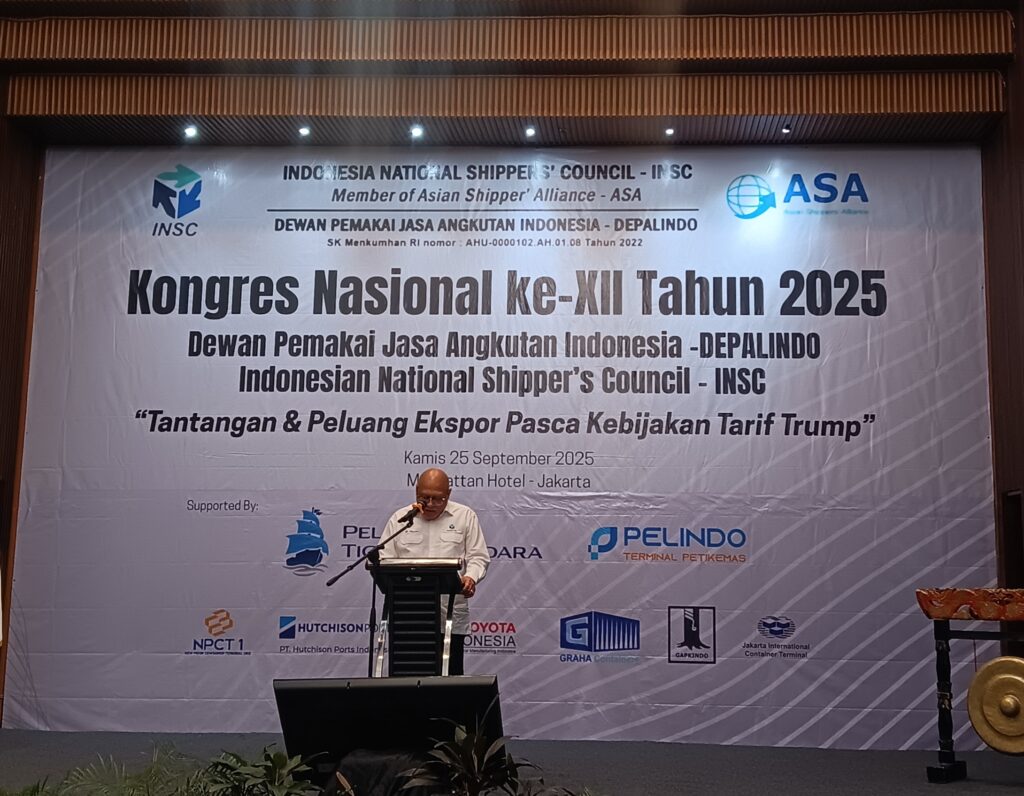
Toto Dirgantoro: “Let’s keep moving forward to make Indonesian exports more competitive.”
The event drew attendance from senior government officials, including representatives from the Directorate General of Customs and Excise, the Directorate General of Sea Transportation, and the Indonesian Quarantine Agency.
Key industry associations were also present, such as the Indonesia Stevedoring Companies’ Association (APBMI), the Indonesia Trucking Companies’ Association (APTRINDO), and the Indonesia Container Depots’ Association (Asdeki), all of whom voiced support for efforts to streamline export procedures and reduce inefficiencies in the logistics sector.
Depalindo also expressed appreciation for the continued support from the Presidential Staff Office (KSP) and the Ministry of Trade in accommodating feedback from logistics players.
“Exporters are the nation’s foreign exchange heroes,” Toto added. “It’s time for all of us to build a more efficient, resilient, and sustainable export ecosystem, together.”