
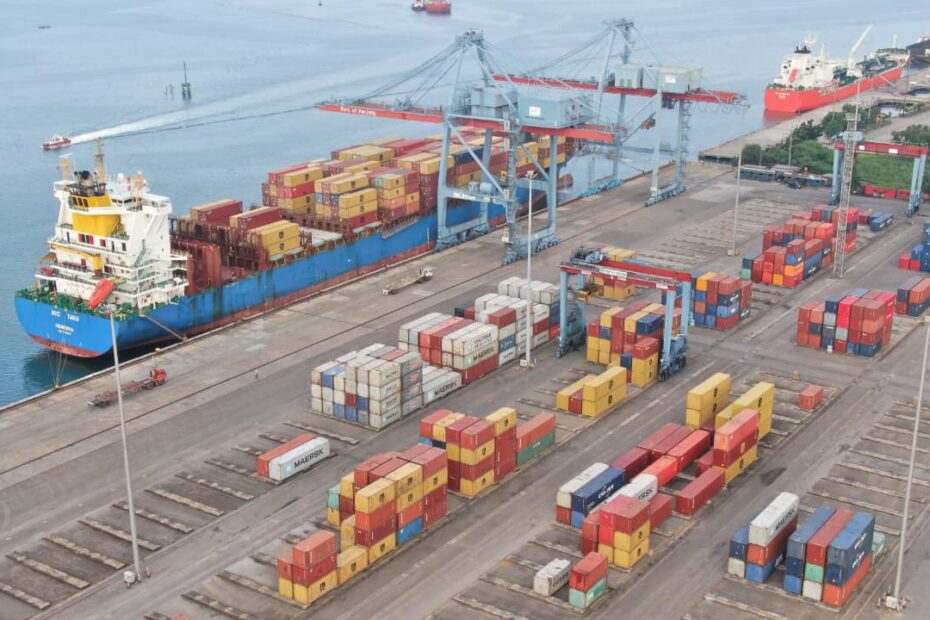
IPC Terminal Petikemas (TPK) Panjang, a container terminal under the Pelindo Group, reported a 27.69% year-on-year increase in container throughput as of the third quarter of 2025, driven by rising trade activity and enhanced logistics efficiency in Southern Sumatra.
The terminal handled 90,655 twenty-foot equivalent units (TEUs) by the end of September, up from 70,914 TEUs in the same period of 2024, according to Anang Subagyono, Area Manager of IPC TPK Panjang.
“IPC TPK Panjang’s performance demonstrates our commitment to improving logistics efficiency and enhancing Lampung’s export competitiveness,” Anang said in a statement.
The strong performance reinforces Panjang Port’s role as a key logistics hub supporting the flow of goods between regional ports and major gateways such as Tanjung Priok. The terminal’s operational improvements — including faster loading and unloading processes, expanded shipping connectivity, and continued digitalization — have helped boost export and import activity across Lampung Province.
Panjang Port plays a critical role in distributing the region’s main commodities — including coffee, pineapple, pulp, refined glycerin, and wood charcoal — to both domestic and international markets. The increased throughput is expected to support lower logistics costs, faster delivery times, and greater regional economic growth.
According to data from the Central Statistics Agency (BPS) of Lampung Province, the region’s export value reached US$684.46 million in August 2025, up 16.16% from US$589.23 million a year earlier. Imports surged 130.4% to US$222.35 million, compared with US$96.50 million in August 2024.
“Lampung has strong potential for international trade from Southern Sumatra,” Anang said. “We are committed to providing reliable and efficient services, opening new shipping routes, and partnering with logistics players to further support trade growth in the region.”