
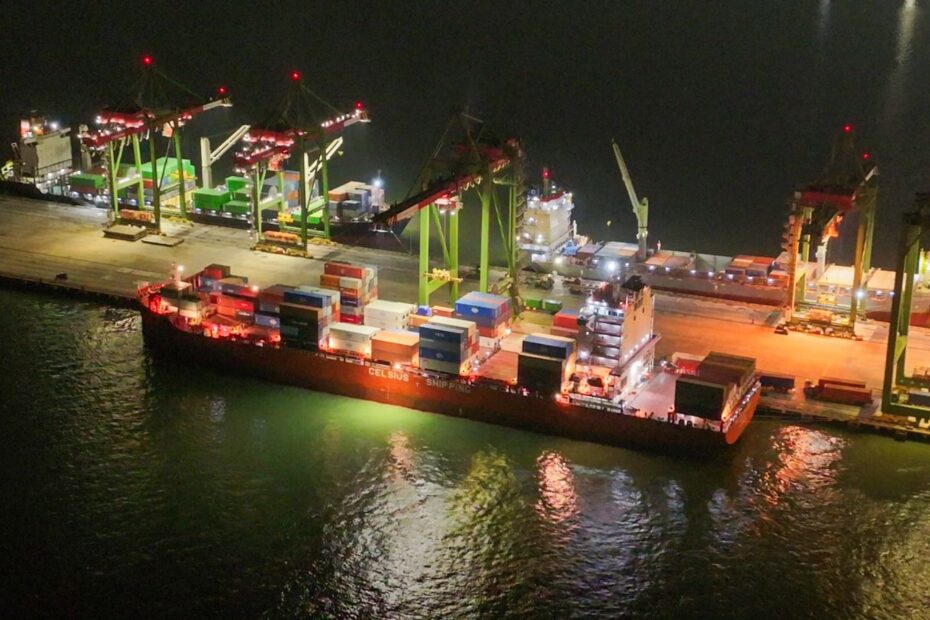
PT Terminal Teluk Lamong (TTL) recorded a 6% increase in container throughput in 2025, handling 2.83 million twenty-foot equivalent units (TEUs), up from 2.67 million TEUs a year earlier, the company said.
The growth was driven by rising international trade flows and stronger domestic connectivity across three container terminals managed by the company.
TTL operates three container terminals, including TPK Teluk Lamong, TPK Nilam and TPK Berlian, underscoring the port operator’s expanding role as a key logistics hub in East Java.
TTL’s performance mirrored Indonesia’s broader economic resilience. Data from the Central Statistics Agency (BPS) show the transportation and warehousing sector grew about 6.5% annually in 2025, supported mainly by increased port loading and unloading activity.
International container volumes at TPK Teluk Lamong rose sharply, climbing 25% to 382,612 TEUs from 306,030 TEUs in 2024. The increase followed the addition of 34 ad-hoc container vessel calls and five new international shipping services during the year.
Manufactured goods, including chemical products, electronic components and furniture, dominated export traffic, while imports of industrial raw materials rose alongside the expansion of industrial estates across East Java.
Domestic container traffic also strengthened. Throughput at TPK Nilam rose 12% year-on-year to 490,878 TEUs, driven by demand for fast-moving consumer goods, cement and steel shipments to destinations such as Banjarmasin, Kendari, Bau-Bau and Berau.
At TPK Berlian, container volumes increased 3% to 1.39 million TEUs. Growth was led by routes serving Makassar and eastern Indonesia, carrying staple food items and construction materials, highlighting the terminal’s role in supporting national logistics stability and food security objectives.
President Director David Pandapotan Sirait said the performance reflected growing customer confidence in TTL’s operational capabilities.
“The addition of new services and international vessel calls throughout 2025 is a clear recognition of our service quality and operational reliability,” David said in a statement.
He added that the company would continue to invest in service improvements, expand partnerships and strengthen logistics integration to enhance efficiency and competitiveness.
Looking ahead to 2026, TTL said it would focus on integrating infrastructure upgrades with digital systems to improve berth availability and cargo handling speeds, positioning the company to support economic growth in East Java and Indonesia’s broader maritime development.