
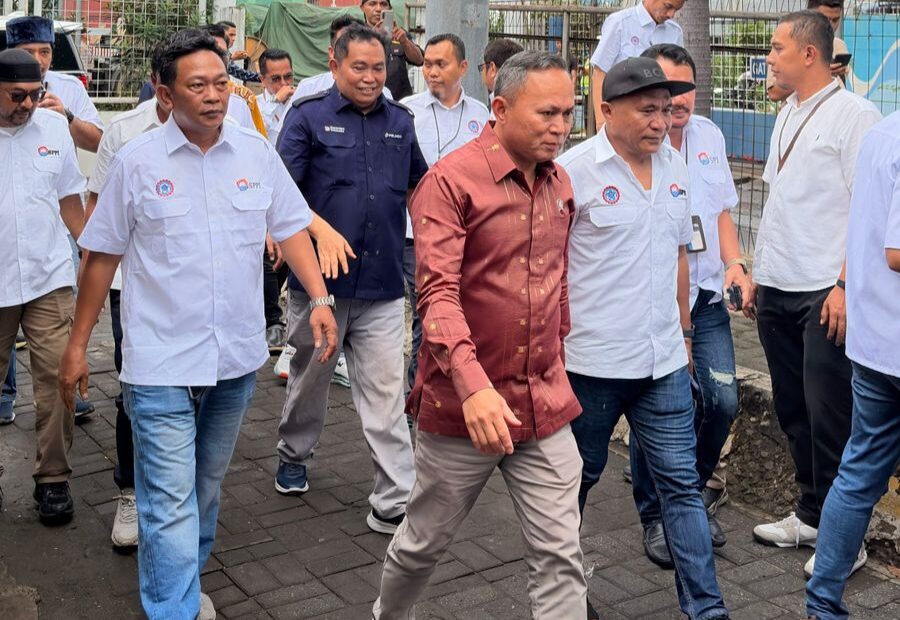
Port workers in Indonesia on Thursday, February 12, 2026, declared the formation of a national council they say will strengthen labor rights and help safeguard the country’s logistics network, underscoring the strategic role of ports in Southeast Asia’s largest economy.
The Indonesian Port Workers Council – Dewan Buruh Pelabuhan Indonesia – was formally declared at Tanjung Priok Port in Jakarta, the country’s busiest maritime gateway, in a ceremony attended by union leaders, government officials and executives from state port operator PT Pelabuhan Indonesia (Persero).
Supporters of the initiative say the council will serve as a unified platform for port workers across the archipelago, consolidating labor advocacy in a sector widely seen as critical to Indonesia’s economic growth.
“Ports are the primary engine driving the national economy. No developed country exists without developed ports,” Arief Poyuono, chairman of the Federation of State-Owned Enterprises Workers Unions, said at the event.
Arief, who also serves as a commissioner at PT Pelindo (Persero), said the council symbolized workers’ determination to play a more active role in national development.
Indonesia, the world’s largest archipelago with more than 17,000 islands, relies heavily on maritime transport to move goods between regions and connect domestic producers to international markets. Disruptions at major ports can ripple across supply chains, affecting commodity exports, manufacturing inputs and consumer goods distribution.
Strategic sector
Arief described port workers as occupying a “strategic position” within Indonesia’s broader labor movement, arguing they must take the lead in advocating for both worker welfare and economic stability.
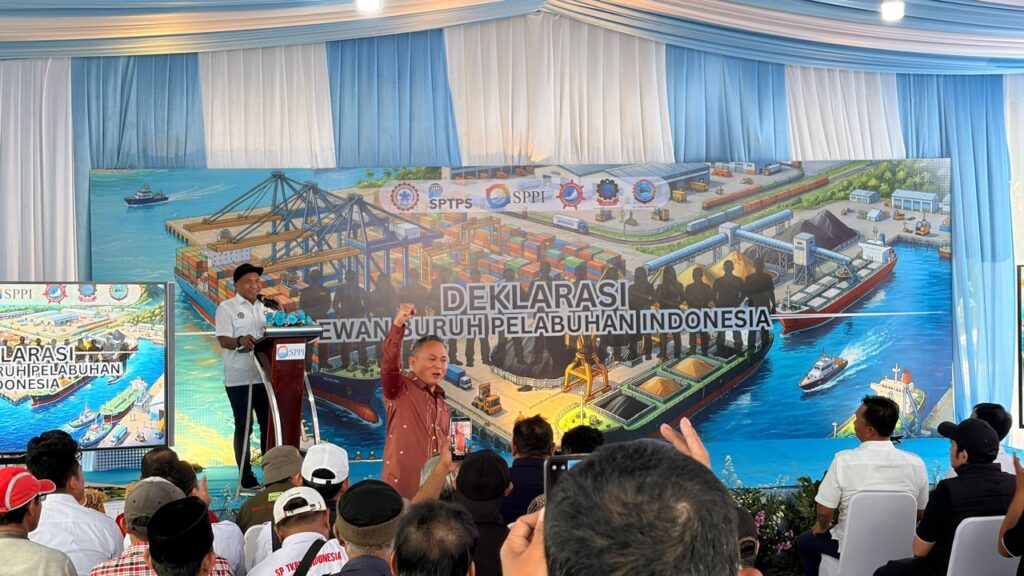
“My comrades who work at the ports must be the main driving force of the labor movement in Indonesia,” he said. “The goal is, of course, to improve the welfare of the people of this country.”
The newly declared council is the first national labor body focused specifically on the port sector, according to organizers. It aims to strengthen human rights protections, improve occupational health and safety standards, and push for better welfare provisions for workers in the maritime and transportation industries.
The launch event was also attended by Deputy Minister of Human Rights Mugiyanto Sipin and Ilhamsyah, an independent commissioner at PT Pelindo (Persero), signaling engagement between labor representatives and state stakeholders.
Balancing rights and reliability
Organizers said the council would act as a consolidation platform for workers across Indonesia’s ports, from major hubs such as Tanjung Priok to regional facilities that connect remote islands.
Beyond labor advocacy, the council’s leaders stressed their commitment to maintaining the smooth flow of national logistics, a crucial element of Indonesia’s economic resilience.
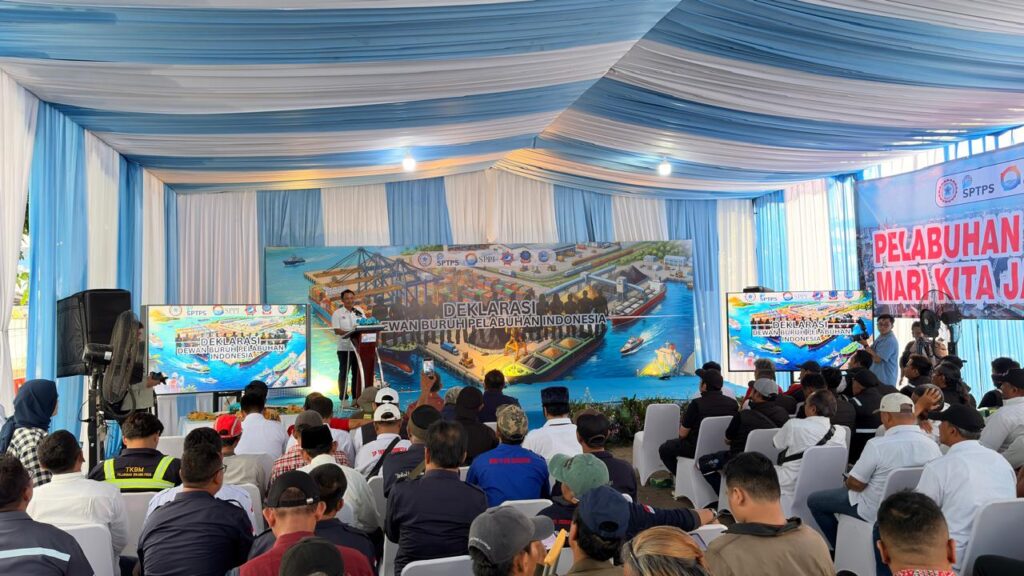
With stronger coordination and “solidarity across ports,” workers are expected not only to push for their rights, but also to help ensure uninterrupted cargo handling and distribution, they said.
As Indonesia seeks to enhance its competitiveness and reduce logistics costs, the formation of a unified port workers council highlights the dual challenge facing the sector: improving labor standards while safeguarding the maritime arteries that underpin the nation’s growth.