

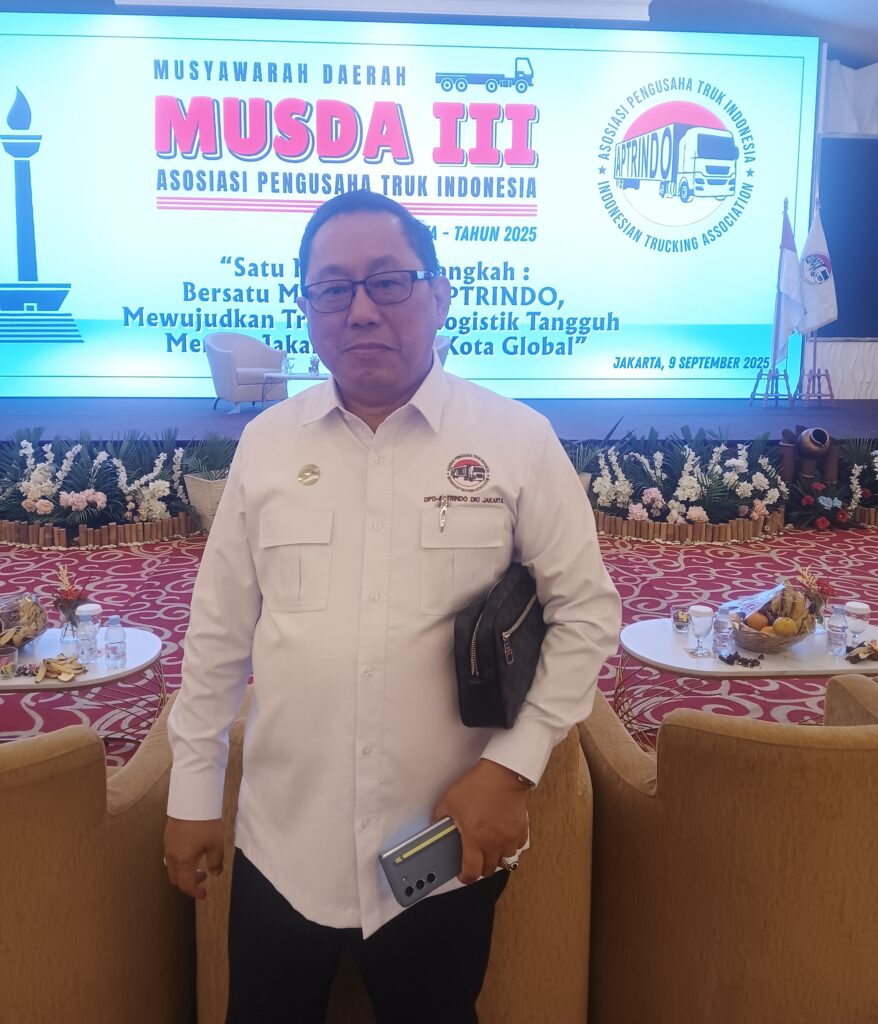
Darmawan Witanto, familiarly called Akong, was elected by acclamation on Tuesday as chairman of the Jakarta chapter of Indonesia’s Trucking Companies’ Association (APTRINDO), pledging to push for reforms in an industry weighed down by aging vehicles and rising costs.
Akong, owner of logistics firm PT Karya Abadi Sejati, assumes the role for the 2025–2030 period following the resignation of former chairman Soedirman. He had been serving as acting chairman prior to the official appointment at the association’s third regional conference (Musda), held in North Jakarta.
“We want Jakarta’s APTRINDO to be a benchmark for efficient logistics distribution between ports and industrial zones,” said Akong. “Our focus will be to help members resolve operational bottlenecks on the ground.”
Akong’s leadership comes as the trucking sector faces growing pressure to modernize amid concerns over vehicle safety, emissions, and logistics inefficiency, particularly in the capital.
Akong’s election signals continuity with APTRINDO’s recent push to modernize. As interim chairman, he had already voiced support for accelerated reforms, including phasing out old trucks and upgrading infrastructure supporting the logistics network.
Industry stakeholders say they hope his permanent appointment will bring momentum to long-standing proposals, such as tax breaks for newer vehicles and a roadmap for cleaner, more sustainable freight operations.
“Our goal is not only efficient distribution, but also ensuring that the logistics sector contributes to national environmental targets,” Akong said.
A Call for Truck Overhaul
As reported earlier, Indonesia’s trucking association called for an urgent renewal of the country’s aging truck fleet, warning that outdated vehicles are hampering logistics efficiency and worsening air pollution in major urban centres such as Jakarta.
Gemilang Tarigan, chairman of the Indonesian Trucking Entrepreneurs Association (APTRINDO), said the average age of trucks operating in the country is between 15 and 20 years, far beyond the ideal service life. Only about 21% of the approximately 4 million registered trucks in Indonesia are less than five years old, he said.
“The condition of our logistics fleet is no longer viable. It affects not just operational costs but also the environment,” Tarigan told members during the third APTRINDO Regional Conference (Musda APTRINDO DKI) in Kelapa Gading, Jakarta.
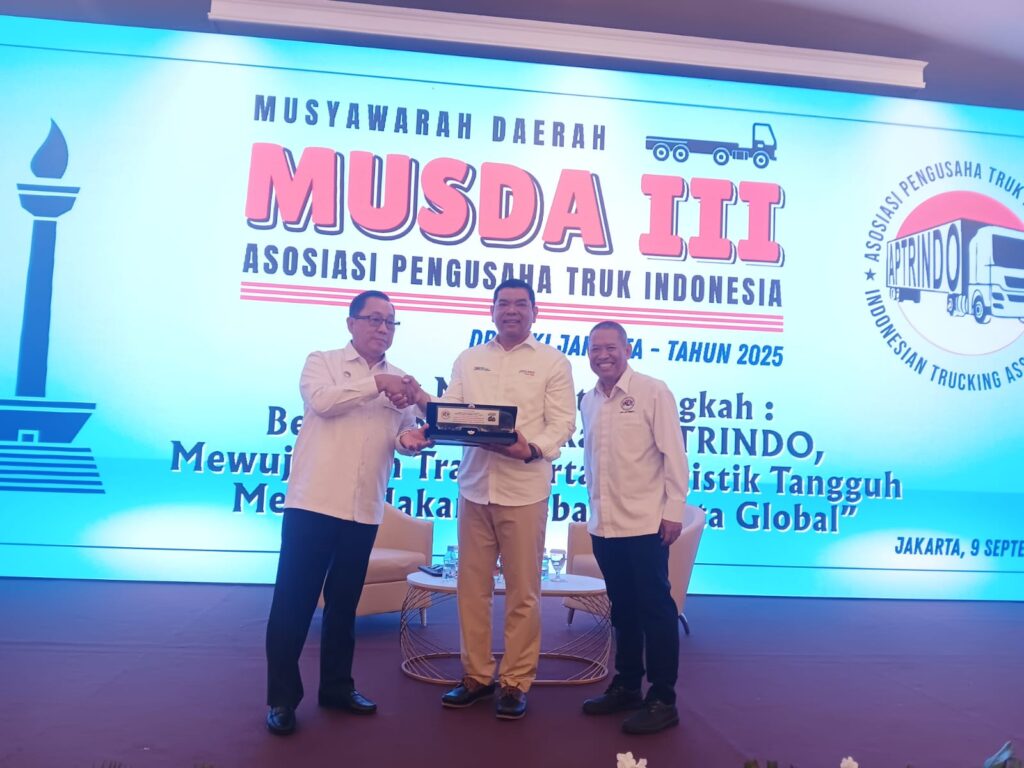
Photo: Akong (L) among port related stakeholders
Older trucks consume more fuel, are more prone to breakdowns, and contribute heavily to traffic congestion and pollution, he added. “The number of roadworthy trucks with acceptable emissions is very small. The rest are major contributors to air pollution, contradicting our goal of building a sustainable logistics system.”
Jakarta, home to Indonesia’s busiest port at Tanjung Priok, is among the most affected. As of September 7, just 5% of the 3,177 active trucks in the port area qualified as low-emission or recently manufactured vehicles.
Tarigan urged local governments—particularly the Jakarta Provincial Government—to take stronger action to support logistics fleet renewal, including providing incentives and enforcing stricter emissions standards.
“Jakarta is a global city. It should not be operating with an outdated, high-emission trucking fleet. We must lead by example,” he said.
High logistics costs are also a key concern. According to APTRINDO, fuel inefficiency and frequent mechanical failures caused by aging fleets inflate transport costs, which in turn drive up consumer prices and reduce Indonesia’s competitiveness in regional trade.
“The biggest problem we face today is the exorbitant logistics cost. It stems largely from inefficient vehicles that are still on the road,” Tarigan said. “On top of that, these trucks are also prone to accidents, which cause long traffic delays and add to the public burden.”