
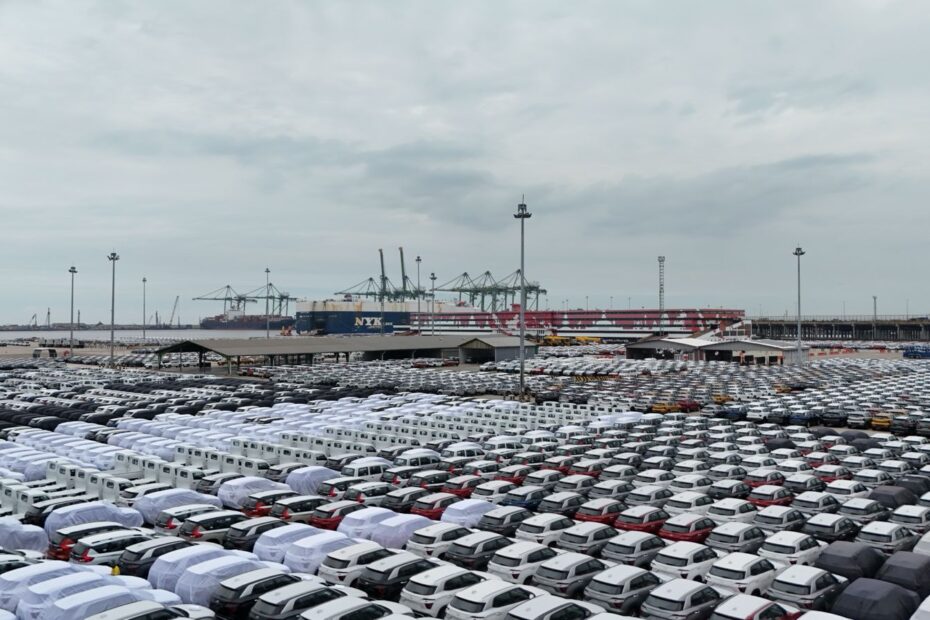
Indonesia Kendaraan Terminal Tbk (IDX:IPCC) reported a 12.28% increase in vehicle throughput as of July 2025, driven by rising import-export activity and a surge in electric vehicle (EV) shipments, the company said this week.
The vehicle logistics operator, a subsidiary under state-owned port operator Pelindo, handled 641,746 units of cargo until July, up from 571,523 units a year earlier. This include completely built-up (CBU) vehicles, trucks, buses, and heavy equipment.
The number of ship calls throughout its terminals also rose sharply to 1,834, marking a 13.07% year-on-year increase. The growth was attributed to operational expansion, including new satellite terminals and rising trade volumes amid resilient domestic economic conditions.
“The growing demand in both export and import segments, particularly in electric vehicles, has significantly contributed to our throughput,” said Endah Dwi Liesly, IPCC Corporate Secretary.
EV Cargo Surges Over 560%
Electric vehicle (EV) cargo led the surge in throughput. As of July, IPCC had handled 41,227 BEV-based CBU units—up from just 7,285 units in the same period last year, representing a 565.9% increase. BEV cargo now accounts for 8.12% of the company’s total CBU handling.
Most of the EV shipments came from major Asian and European automakers, including BYD, Vinfast, Aion, and Volkswagen, reflecting Indonesia’s growing role in the regional EV supply chain.
CBU vehicle handling remained the backbone of IPCC’s operations, with 511,212 units processed through July—up 7.78% from a year earlier. The increase was underpinned by strong export demand for Indonesian-made vehicles, particularly models with engine capacities below 2,000 cc, destined for Southeast Asia, Central Asia, and Latin America.
Truck and bus cargo also recorded double-digit growth, rising 24.4% year-on-year to 111,946 units, boosted by expanding mining and plantation activities as Indonesia pushes toward energy and food self-sufficiency by 2025.
Heavy equipment throughput surged 34.29% to 18,588 units, with the Semayang Satellite Terminal in Balikpapan handling the largest volume at 3,860 units.
Digital Transformation, Infrastructure Expansion
The company attributed the improved performance to a combination of infrastructure expansion and digital transformation initiatives, including the rollout of an integrated operations system (PTOS-C) aimed at optimizing terminal layouts and improving real-time field data.
“We continue to build strategic partnerships and transform our operational areas to enhance service delivery,” Liesly said. “This includes adopting integrated digital systems that ensure transparency, efficiency, and added value for our stakeholders.”
The growth aligns with IPCC’s long-term business development roadmap, which supports Pelindo’s broader logistics and infrastructure integration strategy. Pelindo, the country’s largest port operator, will mark the fourth anniversary of its 2021 merger in October.