
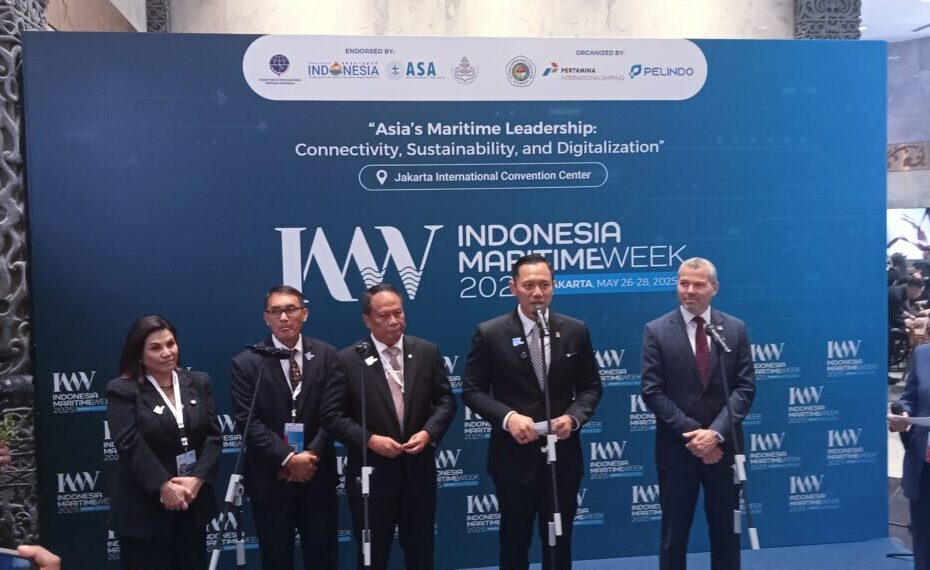
The Federation of ASEAN Shipowners’ Associations (FASA) has reaffirmed its unified commitment to strengthening maritime collaboration across Southeast Asia and beyond, following a successful Annual General Meeting (AGM) held during Indonesia Maritime Week (IMW) 2025.
Hosted in Jakarta and attended by key figures from the national shipowners’ associations of Brunei Darussalam, Indonesia, Malaysia, the Philippines, Singapore, Thailand, and Vietnam, the AGM underscored FASA’s evolving role as a strategic force in shaping the future of ASEAN shipping.
Established in 1975 through an initiative by the Indonesian National Shipowners’ Association (INSA), FASA has spent five decades championing the regional maritime sector.
The 2025 AGM marks a pivotal moment as the organization looks ahead with a renewed sense of purpose under its new Vision 2030 framework.
“This gathering is a strong testament to the spirit of togetherness that continues to thrive among ASEAN shipowners,” said Carmelita Hartoto, Chairperson of INSA, who also serves as Chairperson of both FASA and the Asian Shipowners’ Association (ASA).
Vision 2030: Regional Anchor, Global Partner
In response to mounting global challenges facing the maritime sector, from geopolitical tensions to environmental imperatives—FASA’s Vision 2030 outlines a clear medium-term strategy for 2025 to 2030. Central to this vision is a commitment “to be the unified and recognized voice of ASEAN shipping”, positioning FASA as both a regional anchor and a global partner.
The AGM also reviewed and endorsed the Executive Committee’s progress report, highlighting FASA’s instrumental role in driving reforms within the ASA, especially in governance innovation.
One of the most notable changes under FASA’s leadership was the formal activation of the Deputy Secretary-General (DSG) role within ASA for the first time. The inaugural appointee, drawn from INSA, marks a significant step in enhancing the association’s operational capabilities.
Additionally, FASA has proposed a shift from a permanent Secretary-General model to a rotating leadership structure, a move aimed at ensuring greater inclusivity, equity among member states, and improved cost-efficiency. This proposal is currently under review by a special ASA task force led by M. Safwan Othman, Chairman of the Malaysian Shipowners’ Association.
The AGM also welcomed Mr. Loh Chun How, Executive Director of the Singapore Shipping Association (SSA), as FASA’s new Secretary-General. Mr. Loh, who joined SSA earlier this year, supported Chairperson Hartoto throughout the AGM discussions and is expected to bring renewed energy and insight to the organization’s secretariat.
As the AGM concluded, FASA reaffirmed its determination to advance ASEAN’s maritime interests through collaborative leadership, strategic foresight, and a commitment to regional unity.
Align Global Technology with Local Demand
Earlier the same day, Coordinating Minister for Infrastructure and Regional Development Agus Harimurti Yudhoyono (AHY) officially opened Indonesia Maritime Week 2025 at the Jakarta International Convention Center. The event, a marquee showcase of the region’s maritime strength and innovation, attracted a wide array of stakeholders, from government leaders to industry associations.
Among those in attendance were Deputy Minister of Transportation Suntana, Secretary General of Transportation Antoni Arif Priadi, Secretary General of the International Maritime Organization (IMO) Arsenio Dominguez, and leaders from maritime associations including APBMI (Juswandi Kristanto), ABUPI (Liana Trisnawati), and local INSA chapter heads.
In his keynote, Minister AHY expressed his appreciation to the Ministry of Transportation and INSA for their pivotal role in organizing the event. He also outlined key national priorities under President Prabowo Subianto, including food and water security, renewable energy acceleration, and climate-resilient infrastructure.
“The green transition must be a path to a better life, not just a technocratic target. Solutions must be pragmatic, fair, and responsive to the community’s real needs,” he stressed.
Minister AHY also addressed the importance of aligning global technological advances with local demands.