
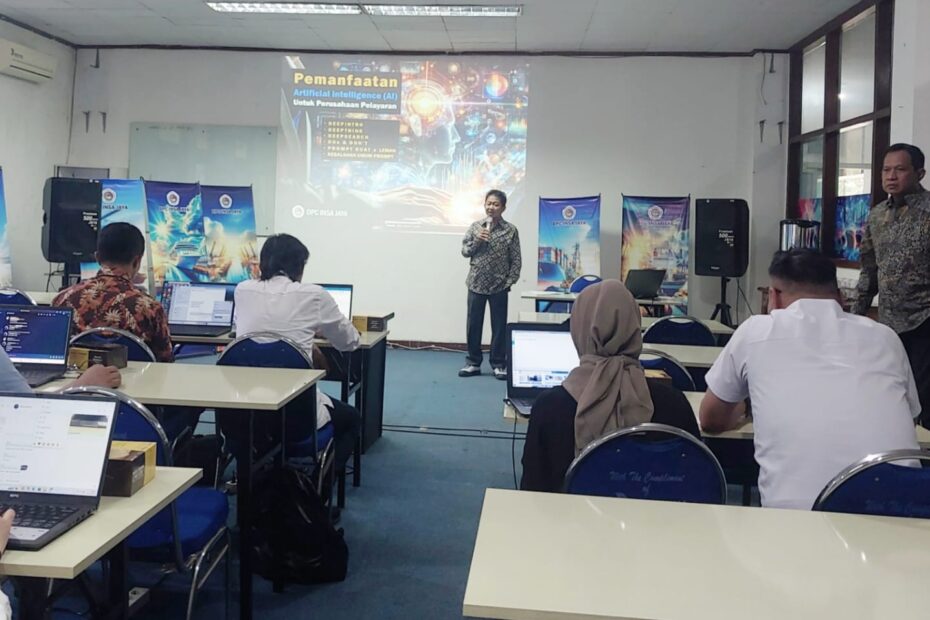
Indonesia’s shipping sector is stepping deeper into digital transformation as the Indonesian National Shipowners’ Association (INSA) Jaya Branch held a free four-day training programme on the use of artificial intelligence (AI) for maritime businesses.
The course, held from Dec. 1–4 in Jakarta, brought together 100 professionals from shipping companies, terminal operators and port partners. Participants attended in four batches of 25, with representatives from DPC INSA Jaya member firms and several major entities including PT Krakatau Bandar Samudera (KBS), PELINDO II’s Tanjung Priok branch, and MCT/Pelabuhan Tegar Indonesia.
Opening the event, INSA Jaya Chairman Andi S. Patonangi said the industry must accelerate its use of digital tools if it hopes to compete with regional and global players.
“AI is no longer the future — it’s here today,” Andi said. “If the shipping industry doesn’t adapt now, we will be left far behind.”
The programme aimed to equip maritime professionals with practical AI skills, starting with a “Deep Intro AI” overview to explain how AI systems work. Sessions then progressed to the “Deep Think AI” method for analysis, problem-mapping and scenario planning, and “Deep Search AI” techniques for faster and more accurate data processing. The training concluded with a focus on advanced prompting — the ability to craft precise instructions that generate reliable outputs for real industry needs, from operational planning and customer service to administrative tasks.
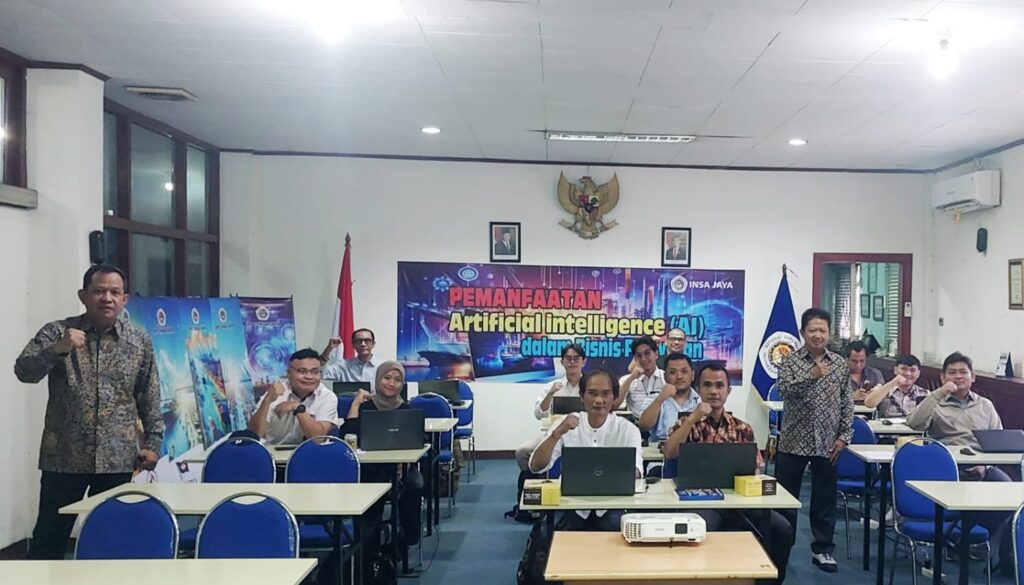
Two speakers led the sessions: Mohamad Erwin Y. Zubir, Secretary of the INSA Jaya Branch, who discussed strategies for applying AI within Indonesia’s shipping ecosystem; and Frederik H. F. Abarua, S.Kom., M.Kom., an AI specialist who reviewed technical fundamentals and presented case studies from the logistics and maritime sectors.
Both speakers underscored that AI adoption does not require large investment. Many digital platforms are already accessible to companies of all sizes, they said, provided that workers are trained to use them effectively.
Participants also took part in hands-on exercises using AI tools and templates, including prompt development, automated data processing and the creation of AI-generated business analyses and reports. Organisers said discussions throughout the sessions were lively, with many participants exploring how AI could improve port operations and service speed.
INSA Jaya said it hopes the programme will help build a more adaptable maritime workforce as the country pursues broader digital transformation.
“Digital transformation is not an option — it’s a necessity,” Erwin said in closing. “AI is the gateway to the future of Indonesian shipping.”