
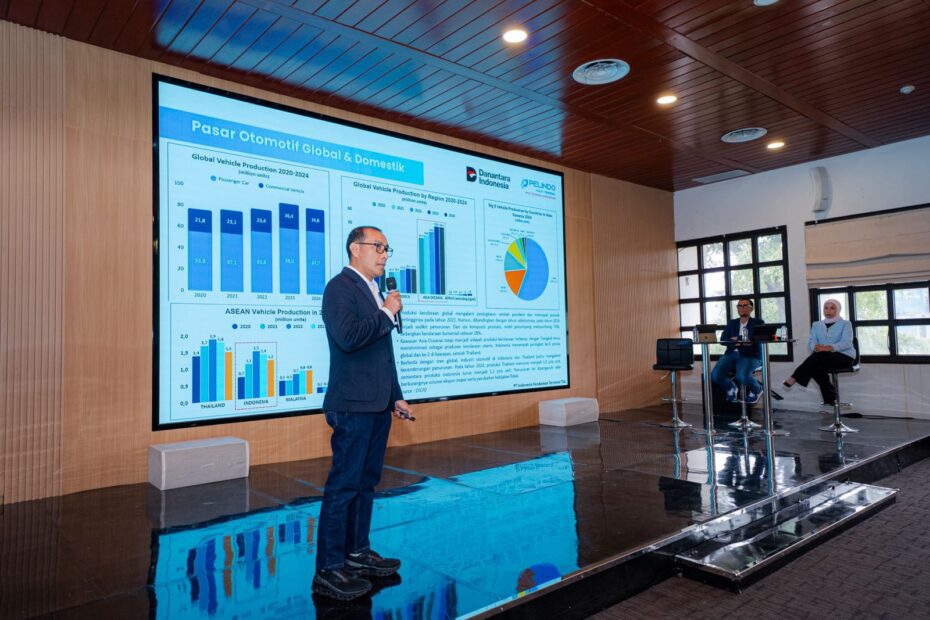
Optimism ran high at the Museum Maritim in Tanjung Priok on Wednesday as PT Indonesia Kendaraan Terminal Tbk (IPCC) projected full-year growth of more than 20%, buoyed by strong third-quarter results and ongoing digital transformation.
President Director Sugeng Mulyadi said the vehicle terminal operator, a key player in Indonesia’s automotive logistics network, had submitted its third-quarter financial report early to the Financial Services Authority (OJK) and the Indonesia Stock Exchange (IDX) on Oct. 20, a move he described as a show of confidence in the company’s direction.
“The results through the third quarter demonstrate the company’s healthy and solid fundamentals,” Sugeng told Public Expose 2025 on Wednesday, 29 October 2025.
“We are confident we can close 2025 with growth exceeding 20%,” he said.
Profits Climb Nearly 30%
The company reported a net profit of 190.3 billion rupiah ($11.6 million) for the first nine months of 2025, a 28.4% increase from 148 billion rupiah in the same period last year. Revenue rose 12.7% to 660.2 billion rupiah from 586 billion a year earlier.
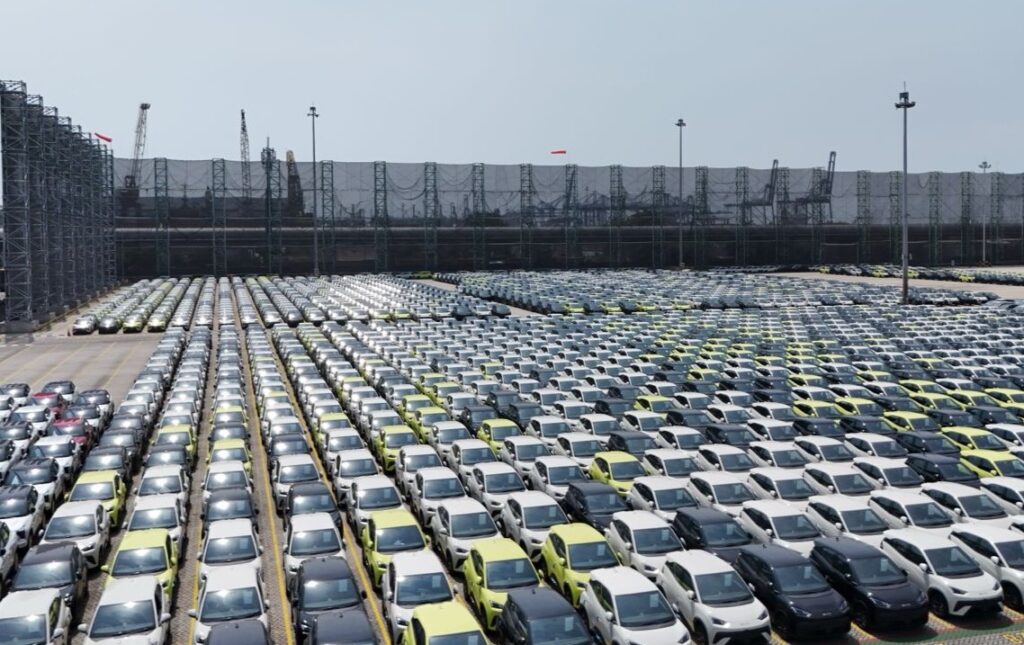
The gains were driven primarily by IPCC’s completely built-up (CBU) vehicle cargo segment, which accounted for about 77% of total revenue. The segment’s strength reinforces IPCC’s role as Indonesia’s main gateway for imported and exported vehicles, serving major automotive brands operating in Southeast Asia’s largest economy.
Director of Finance, Human Resources, and Risk Management Wing Megantoro said IPCC’s debt-free balance sheet had given it room to expand without relying on external borrowing.
“This performance is supported by a strong financial position,” Wing said. “IPCC is currently debt-free, with total assets up 4.2% to 1.93 trillion rupiah as of September 2025.”
Driving Efficiency Through Digitalization
Behind the upbeat numbers lies a broader transformation effort. Over the past two years, IPCC has implemented several modernization initiatives aimed at improving efficiency and integrating services across its terminals.
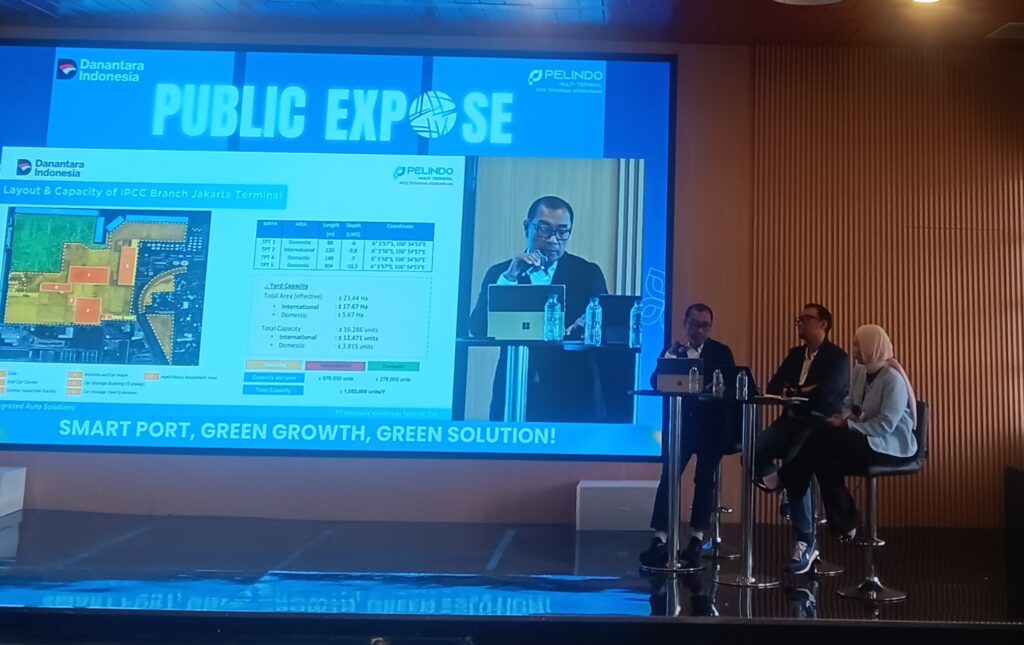
Central to that effort is PTOS-C, a digital-based terminal operating system now running at both international and domestic facilities. The company has also digitized its enterprise resource planning (ERP) and financial management processes to reduce paperwork and allow real-time performance tracking.
“These transformation steps are about making our services more efficient, modern, and customer-oriented,” Sugeng said. “Technology adoption is part of a cultural shift toward agility and transparency.”
The initiatives are part of IPCC’s 2025 roadmap under the brand tagline “Integrated Auto Solutions.” The strategy seeks to connect logistics operations more seamlessly while improving service reliability and data accuracy — factors seen as increasingly vital in Indonesia’s fast-evolving automotive sector.
Reviewing Tariffs to Match Investment
As part of its growth plan, IPCC is reviewing service tariffs at several of its managed ports, including Tanjung Priok, Belawan, Pontianak, Balikpapan, Banjarmasin, and Makassar. The review is aimed at aligning prices with inflation and the company’s substantial investment in upgrading facilities and systems.
Sugeng noted that tariffs have not changed since 2021, despite average annual inflation of about 5%. “Based on inflation alone, a reasonable adjustment after more than three years would be around 15%,” he said.
He added that any tariff increase would be accompanied by tangible service improvements. “We are committed to ensuring that every adjustment provides added value to customers through better quality and operational efficiency.”
Positioning for 2026 and Beyond
With steady profit growth, a robust balance sheet, and a digital transformation underway, IPCC is positioning itself for another strong year in 2026. The company plans to deepen its partnerships with vehicle manufacturers, expand integrated logistics offerings, and maintain strict corporate governance standards.
Sugeng said the focus remains on sustainable growth and innovation rather than short-term gains. “Our growth story is not just about numbers,” he said. “It is about resilience, innovation, and readiness for the future.”
As the presentation concluded, the sense of confidence among IPCC’s executives reflected broader optimism in Indonesia’s logistics sector, which continues to benefit from rising vehicle exports and domestic demand.
From its origins as a traditional port operator, IPCC’s evolution into a digitally enabled logistics provider mirrors Indonesia’s wider infrastructure ambitions, to become a modern, globally competitive maritime nation. If the company maintains its current momentum, its target of more than 20% growth this year could mark the beginning of an even larger transformation story.