
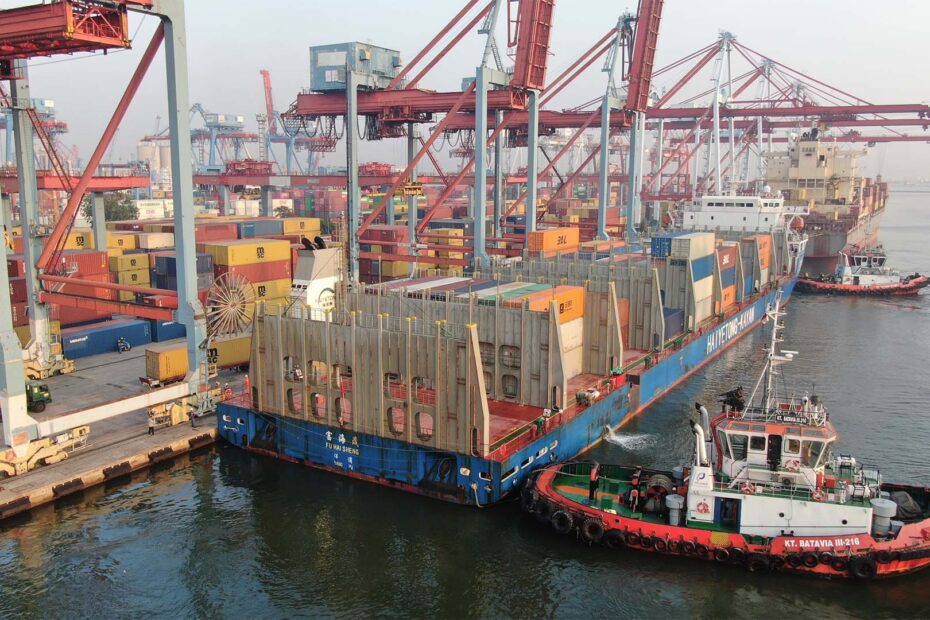
OVP Shipping in collaboration with its local agent KCA Global Maritim has resumed its Ad Hoc shipping service via IPC TPK to China, marking a step forward in regional maritime connectivity.
The service was officially reactivated with the arrival of the MV Fu Hai Sheng at Terminal 3 of Tanjung Priok Port in Jakarta. The Chinese-flagged vessel, measuring 141 meters in length with a beam of 28 meters, handled a total of 275 containers during its call. It departed the same day for Port Klang, Malaysia, en route to its final destinatiCon in Qingdao, China.
The new route—Jakarta-Port Klang-Qingdao—is expected to strengthen trade flows between Southeast Asia’s largest economy and its top trading partner, amid rising bilateral commerce.
“We welcome the launch of this new service from OVP Shipping. The arrival of MV Fu Hai Sheng is not just another vessel call—it reflects the growing maritime ties between Indonesia and China,” said Pramestie Wulandary, Corporate Secretary of IPC TPK.
“Through this collaboration, IPC TPK is committed to supporting efficient terminal operations that enhance national trade competitiveness.”
Surge in Trade and New Shipping Routes
The Ad Hoc service comes amid a broader expansion by IPC TPK, which has launched six new shipping routes in 2025 alone. The year began with Marsa Ocean Shipping’s ARX Direct Call to Djibouti, followed by Meratus Line’s fleet enhancement in February for its Papua New Guinea service.
In April, IPC TPK served FIAS Shipping’s KM HT Progress bound for Bangkok and Ho Chi Minh City. May saw the addition of services by Pelayaran Sukses Sindo Damai to Singapore, Pontianak, and Panjang. In September, HDAS Co. and Karana Line introduced a direct Vietnam route with the MV Alvan.
This increase in regional connections reflects rising demand for Indonesian exports and imports, particularly with China.
Bilateral Trade on the Rise
According to Statistics Indonesia (BPS), exports to China rose 8.9% in the first half of 2025, reaching USD 30.5 billion. Key drivers included nickel, iron and steel, as well as plantation goods such as rubber—up 182%—coffee (90%), cocoa (88%), and fruit (10%).
Meanwhile, imports from China grew 21% to USD 40.2 billion, dominated by vehicles, electronics, and machinery.
“Synergy between terminal operators and shipping lines is essential to building a robust and efficient supply chain,” Wulandary said. “We believe services like this contribute significantly to Indonesia’s export performance and economic momentum.”