
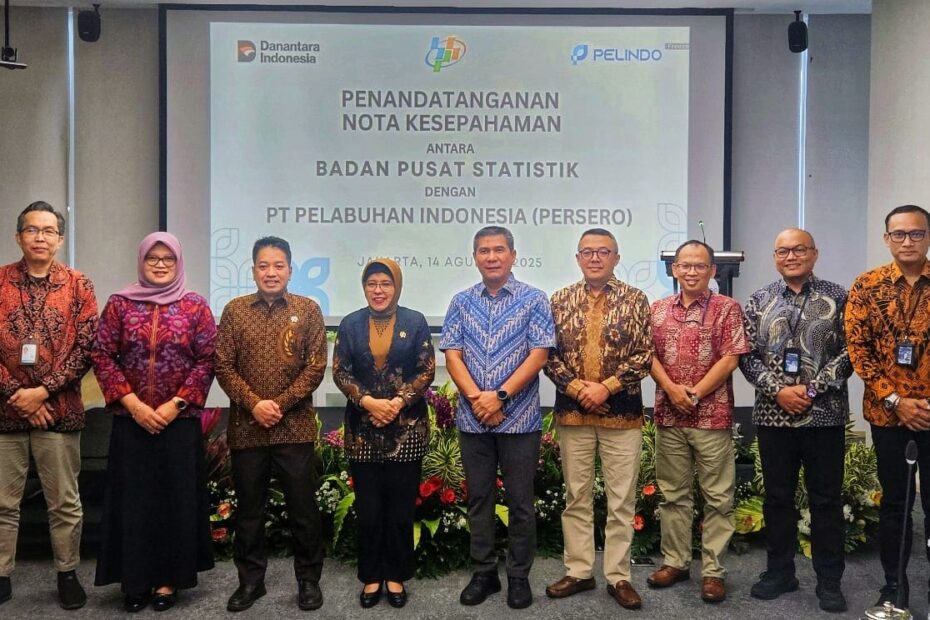
Indonesia’s state-owned port operator PT Pelabuhan Indonesia (Pelindo) and the Central Statistics Agency (BPS) signed a memorandum of understanding on Thursday, August 14, 2025, to enhance cooperation in collecting and utilizing statistical data on port services, in a bid to improve economic policymaking in the maritime sector.
The agreement, formalized at Pelindo Tower in North Jakarta, aims to boost the accuracy and timeliness of port-related data, which plays a critical role in tracking the performance of Indonesia’s logistics and shipping industries.
“This marks a significant step toward strengthening national statistics, particularly in the maritime transportation subsector,” said BPS Chief Amalia Adininggar Widyasanti.
“Accurate, real-time data will not only improve policy planning but also help curb the underground economy by ensuring all port activity is officially recorded.”
Amalia noted that the maritime transportation sector posted growth of 9.8% in the second quarter of 2025, outpacing national economic growth of 5.12%.
Under the agreement, Pelindo will provide BPS with more granular data from its operations, including domestic manifest information and commodity flows between cities—data that could help map economic activity with greater precision.
“Pelindo is fully committed to supplying accurate, real-time port data,” said Arif Suhartono, President Director of Pelindo.
“With our integrated operational systems, every container movement and port activity is digitally recorded. This collaboration will allow us to share that information in a way that directly supports national development.”
The partnership is also expected to support the development of a broader, integrated national data ecosystem for the logistics and transportation sectors—seen as vital infrastructure in Southeast Asia’s largest economy.
“This collaboration brings value not only to Pelindo and BPS, but also to stakeholders across Indonesia’s port and logistics industries,” Arif added.
Pelindo operates the majority of Indonesia’s commercial ports following a 2021 merger of four regional port companies. The firm plays a key role in supporting Indonesia’s ambition to become a global maritime hub.