
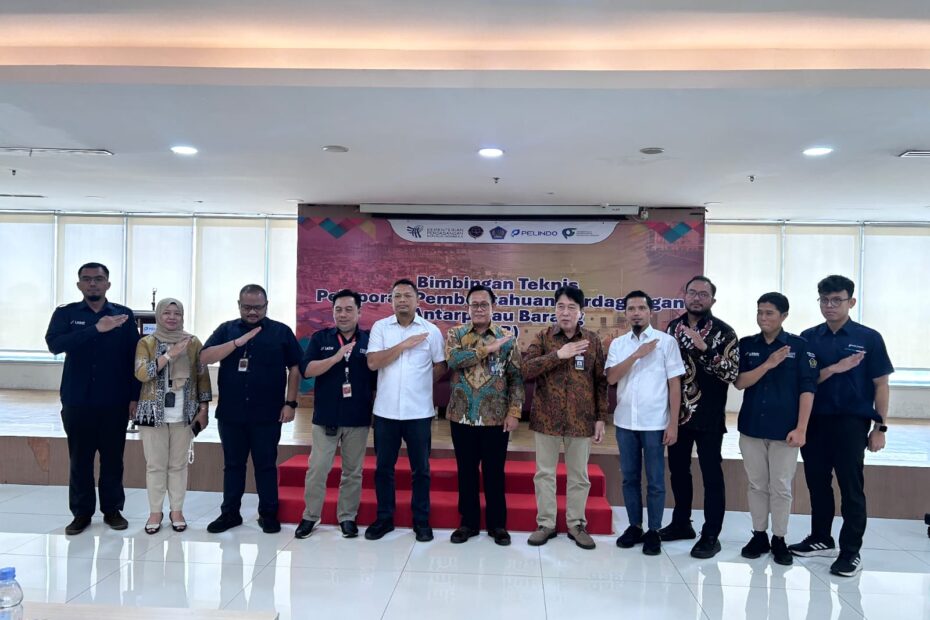
Pelindo Regional 2 Tanjung Priok reaffirmed its commitment to modernizing Indonesia’s logistics system by supporting the Phase 3 Technical Guidance for inter-island trade (PAB – Perdagangan Antarpulau Barang) implementation, held at the port’s 9th-floor auditorium in North Jakarta on Thursday.
The initiative, jointly organized by the Ministry of Trade, the Ministry of Transportation, and the Indonesia National Single Window (LNSW), aims to strengthen governance, transparency, and efficiency in the reporting and movement of goods between islands.
The program is being rolled out in stages across 12 ports from October 21 to November 27, 2025, including those under the Pelindo Regional 2 operational area. Participants include port operators, logistics associations, private businesses, and local government agencies.
Training sessions covered the National Corruption Prevention Strategy (Stranas PK) in PAB implementation, the use of the PAB Number as a key reference for ship departure documentation through the Indonesia National Single Window (SINSW), and the integration of the PAB system with LNSW.
Participants also learned how to apply the PAB Number in managing terminal access and services within Pelindo’s port facilities.
Beyond classroom materials, attendees took part in hands-on practice sessions and open discussions to prepare for field implementation.
“Pelindo is committed to fully supporting the implementation of the Port Authority (PAB) system as a concrete step to strengthen logistics governance and streamline service processes at the port,” said Chandra Irawan, Senior Commercial Manager of Pelindo Regional 2 Tanjung Priok, representing Executive General Manager Yandri Tri Saputra.
“The integration of systems and policies will provide certainty for service users and ensure the smooth flow of goods through Tanjung Priok,” he added.
Pelindo Regional 2 Tanjung Priok continues to coordinate closely with the Port Authority (KSOP), Customs and Excise, the Regional Government, and other stakeholders to ensure consistent and effective implementation of the PAB across all terminals within Indonesia’s busiest port.