
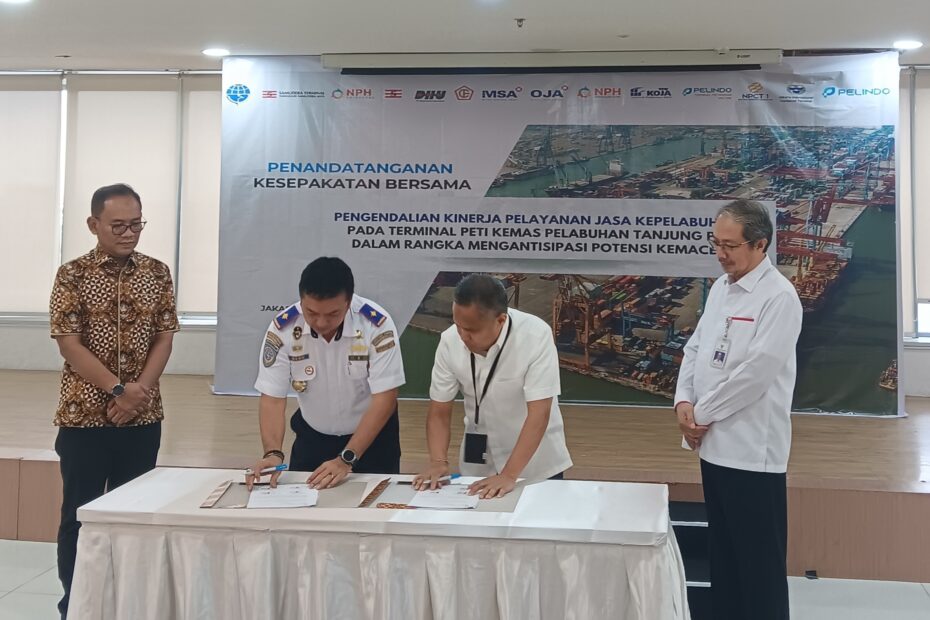
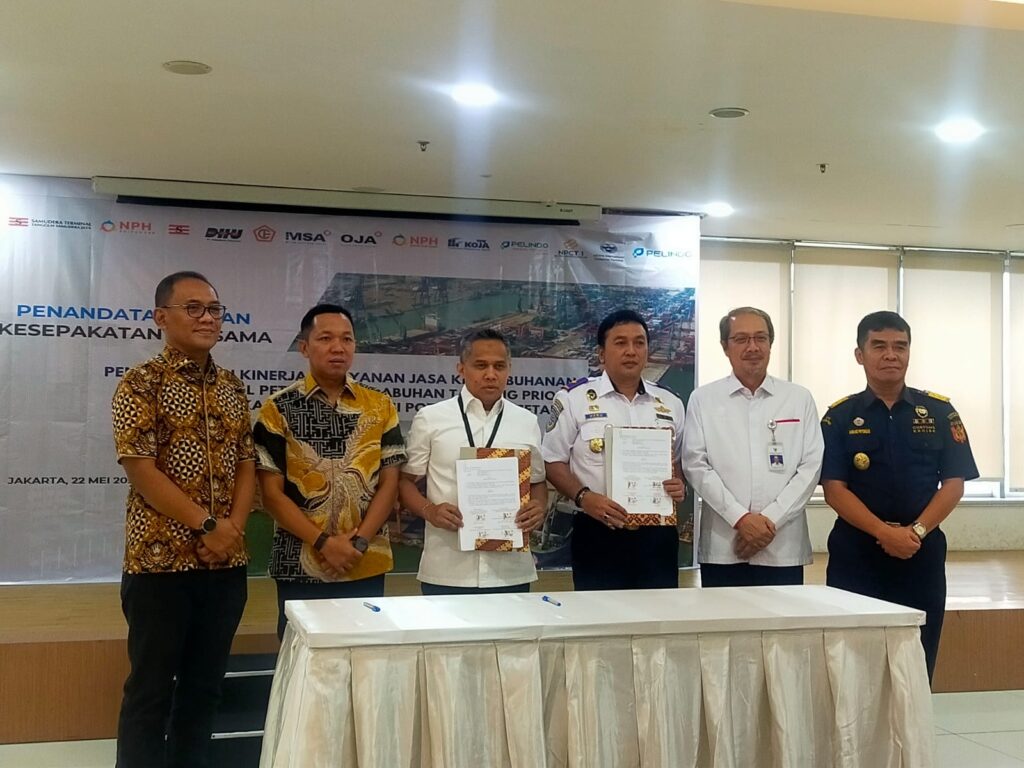
A new chapter in unlocking the bottlenecks of Indonesia’s busiest port Tanjung Priok, including in preventing potential traffic jam in the future, unfolded this week as container terminal operators of the port came together to sign a joint agreement on Thursday, May 22, 2025.
The agreement, aimed at boosting coordination, improving data integration, and ensuring compliance with Yard Occupancy Ratio (YOR) regulations, is being hailed as a collective step toward greater logistics efficiency.
But as the ink dries, a pressing question remains: Will this MoU spark real operational reform, or will it be remembered as another ceremonial gesture lost in the bureaucracy of port administration?
The MoU, initiated under the leadership of the Tanjung Priok Port Authority (KSOP) and PT Pelindo Regional 2, involves virtually all major terminal operators at the port.
These include IPC TPK, Jakarta International Container Terminal (JICT), TPK Koja, NPCT-1, TPK Koja, MAL NPH, PT Tunas Sumber Jaya (TSJ), PT Prima Nur Panurjwan (PNP), PT Dwipa Harsa Utama (DHU), PT Mitra Sarana Abadi (MSA), PT Ocean Jasa Alam (OJA), PT Adipurusa, and PT Temas Port.
Their shared commitment: to smoothen the flow of loading and unloading operations, optimize cargo movement, and ease the congestion that frequently clogs port access points.
Capt. Heru Susanto, M.M., Head of the Tanjung Priok KSOP explains that this joint agreement outlines a series of concrete measures aimed at enhancing coordination and efficiency among key stakeholders at the port. Among the agreed-upon actions are:
- Active coordination among relevant stakeholders to ensure they fulfill their responsibilities in line with the agreement and existing regulations.
- Monitoring and control of the Yard Occupancy Ratio (YOR) in container stacking areas, managed by the Tanjung Priok Main KSOP Office, to prevent congestion.
- Optimization of goods movement through tighter control of receiving and delivery activities, led by the Terminal Operator and coordinated by PT Pelabuhan Indonesia (Persero).
- Traffic mitigation strategies to ease vehicle flow around the port area, reducing bottlenecks.
- Ongoing data and information sharing to support informed policy decisions and ensure smooth operational performance.
“The main goal of this agreement is to strengthen the synergy among port stakeholders,” said Heru Susanto.
“This collaboration enables us to respond swiftly to operational challenges, particularly those that could disrupt the flow of vehicles and goods,” he said further.
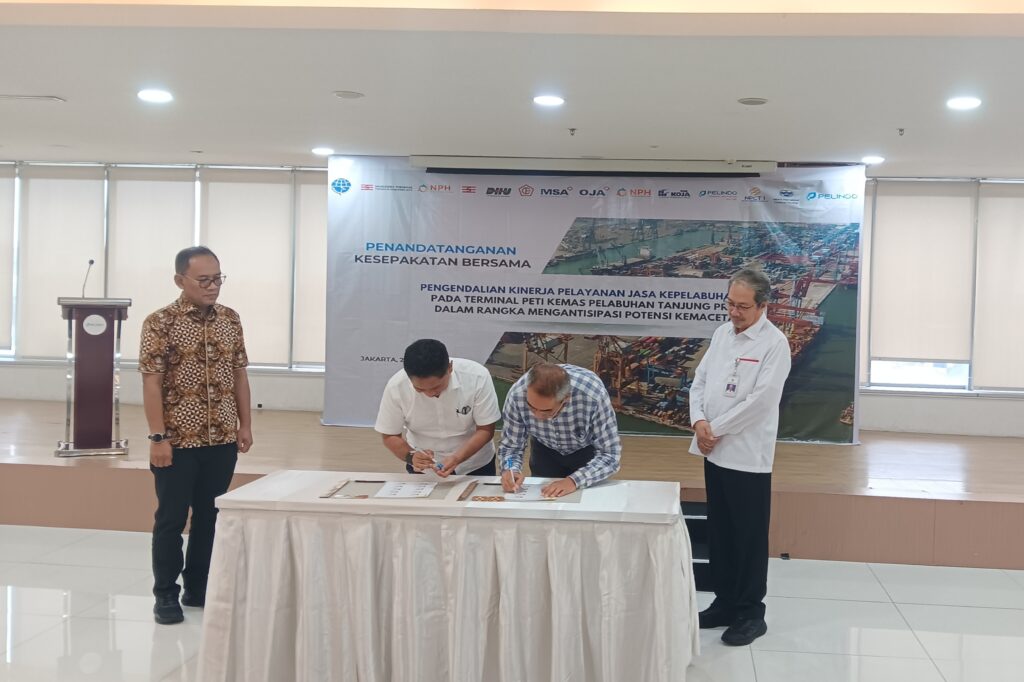
The signing was witnessed by high-ranking officials including M. Anto Julianto, Director of Ports at the Directorate General of Sea Transportation, and M. Adji, President Director of Pelindo Container Terminal Subholding (SPTP), a clear signal of the government’s intent to monitor the pact closely.
“This must be a living document, actively implemented, not just symbolic,” warned Anto, emphasizing that port inefficiencies stem not only from technical lapses but also from a lack of unified resolve.
“Port congestion is not just a logistical issue. It’s a reflection of our collective discipline and collaboration.”
Better System
In 2024, container traffic at Tanjung Priok reached 7.7 million TEUs, with 5.2 million coming from international lines. The volume underscores the strategic importance of the port as Indonesia’s maritime gateway and explains why expectations for reform are so high.
“Physical upgrades alone aren’t enough,” said SPTP President Director M. Adji. “We’re also pushing forward with digital integration. Real efficiency requires not just better infrastructure, but smarter systems.”
Pelindo is currently investing heavily in both hardware and software, aiming for a seamless blend of terminal modernization and end-to-end digital logistics management.
Stronger Momentum
The ceremony drew a cross-section of stakeholders from government, private operators, and trade associations. In attendance were senior executives from Pelindo, customs officials, and port police, alongside industry groups such as the Indonesia National Shipowners’
Association (INSA Jaya), the Stevedoring Companies Association (APBMI Jakarta), ALFI Jakarta, GPEI, GINSI, and trucking organizations including Logindo, Organda Angsuspel, and Aptrindo.
Their presence reflects the broad recognition that solving Tanjung Priok’s congestion issues requires not just technical tweaks but cultural and institutional alignment across the logistics chain.
Execution Is Everything
Despite the fanfare, many remain cautiously optimistic. Stakeholders agree that the effectiveness of this agreement will ultimately rest not on the MoU itself, but on what happens in the days and months to follow.
Will data actually be shared in real time? Will yard management be strictly monitored? Will terminal operators adjust their operations in sync?
“The real test is in the implementation. Don’t look back, we have to move forward,” said Adil Karim, ALFI/ILFA Jakarta Chairman.
“We don’t want this to become another forgotten file in a drawer. We don’t want another problem of traffic jam will persist, and grow.”
For now, the MoU marks a hopeful turning point. Whether it becomes a catalyst for long-overdue transformation or yet another missed opportunity will depend entirely on follow-through.