
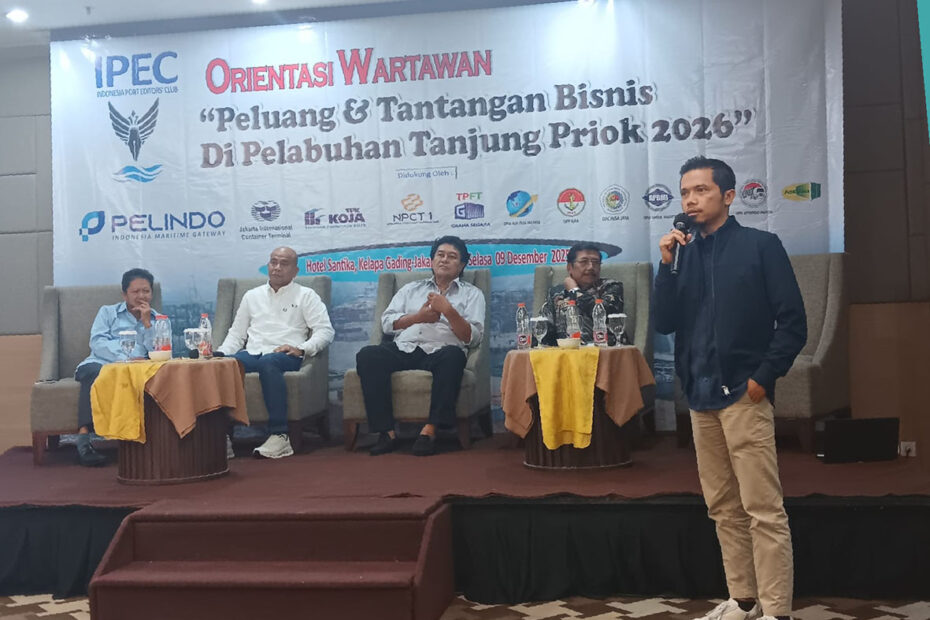
Indonesia’s leading export-import gateway is moving to sharpen its competitive edge ahead of 2026, as the Port of Tanjung Priok accelerates operational modernization and fortifies digital resilience in an increasingly technology-driven logistics landscape.
At the center of that effort is the port authority’s plan to deploy a Business Continuity Management System, or BCMS, designed to keep critical port services running during disruptions, from cybersecurity breaches to operational shutdowns triggered by natural or industrial events.
The push reflects a broader reassessment among Indonesia’s logistics stakeholders, who see rising risks at a time when global trade is shifting and regulatory pressures are tightening.
“The Tanjung Priok Port Authority is preparing three priority programs to ensure the sustainability and competitiveness of Tanjung Priok Port as the national export-import hub,” said Capt. Heru Susanto, head of the Tanjung Priok Port Authority (KSOP).
Speaking at a journalist orientation event organized by the Indonesia Port Editors’ Club (IPEC) in North Jakarta on Tuesday, he cited the rollout of the BCMS, an upcoming collaboration with the Immigration Office on Seafarers’ Books issuance, and the establishment of a unified command system for oil-spill response.
According to Heru, the BCMS will serve as a structured management framework enabling the port to identify, respond to and recover from disruptions with minimal economic and operational fallout. With digitalization accelerating across port terminals, shipping agents, and logistics service providers, cyber risk is rising sharply.
“Use of digital technology in port operations will only increase. The BCMS is directly linked to cybersecurity, so this digitalization trend must be accompanied by stronger protection,” he said.
Heru noted that global trade is entering a more unpredictable phase, with shifting supply chains, new compliance regimes and rising geopolitical tensions. For major ports, he said, adaptability is no longer optional. “Tanjung Priok is undergoing a major transformation to strengthen its competitiveness as an international port,” he said.
The port’s repositioning comes at a time when Indonesia is pushing to improve logistics performance, lower trade costs and boost global maritime connectivity. Priok, which manages the lion’s share of the country’s trade, is a critical pressure point in that national strategy.
A Changing Trade Landscape
The IPEC orientation event drew senior executives from Pelindo Regional 2, the shipping association INSA, the forwarders’ group ALFI, trucking associations and stevedoring unions—an indication of both the port’s influence and the growing cross-sector concern about future readiness.
Heru said the port’s business prospects remain strong, supported by Indonesia’s economic momentum, but the outlook will increasingly depend on global factors ranging from freight-rate volatility to realignment of manufacturing supply chains.
“New dynamics will continue to emerge, creating opportunities as well as challenges,” he said, adding that the media plays a critical role in shaping public understanding of these shifts.
Yandri Trisaputera, executive general manager of Pelindo Regional 2 Tanjung Priok, emphasized the port’s central role in the national economy. Priok handles up to 65% of Indonesia’s export-import and domestic cargo traffic, making uninterrupted operations essential for manufacturers, retailers and commodity exporters.
“With increasingly complex dynamics, challenges will grow. But we remain optimistic that 2026 holds potential for further growth,” Yandri said. Pelindo, he added, welcomes constructive critiques—including from reporters—as it works to elevate service levels and reduce bottlenecks.
IPEC President Ridwan Said said the theme for this year’s event reflects the port’s longstanding function as a bellwether for Indonesia’s logistics flows. More than 70% of national trade passes through Priok’s terminals, making it a critical node in supply-chain stability.
But Ridwan acknowledged that the port is facing new strains: rising yard congestion, pressure from shippers demanding faster turnarounds, and evolving customs and shipping documentation requirements.
“Through this discussion forum, IPEC aims to help develop shared solutions to safeguard the smooth flow of logistics,” he said.
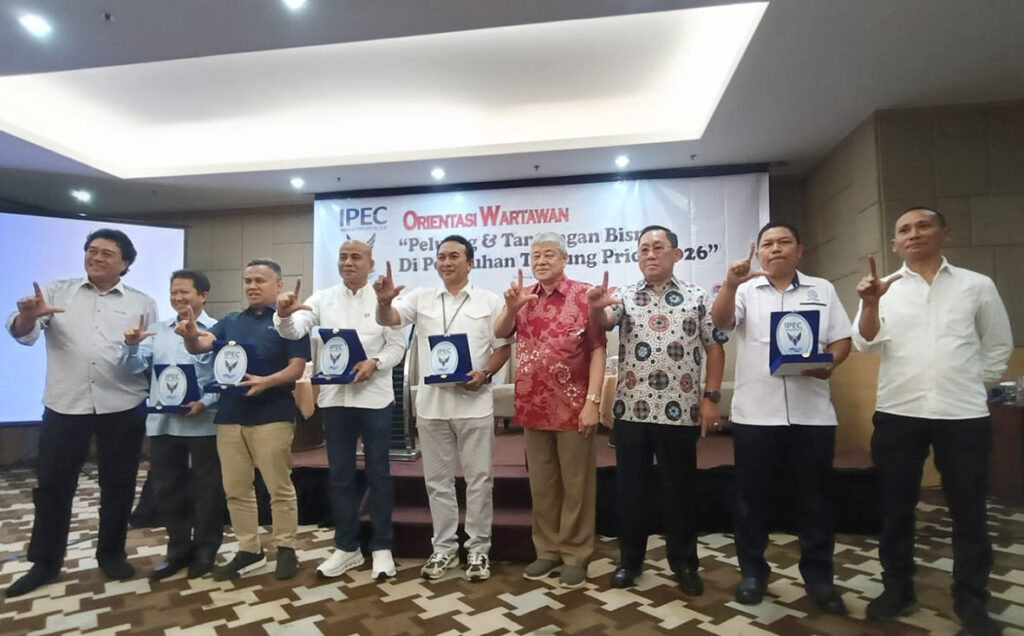
Industry Players Call for Modernization, Collaboration and Green Logistics
Beyond operational continuity, shipping and logistics industry leaders say a broader modernization push is needed to ensure Priok remains competitive amid accelerating changes in global transport.
INSA Jaya Chairman Andi Pattonangi called for coordinated strategies and deeper private-public collaboration to support shipping industry growth into 2026.
During a discussion session, ALFI DKI Jakarta Chairman Adil Karim said logistics activities show “bright prospects” for next year. The sector is benefiting from expanding e-commerce demand, continued infrastructure build-out, and resilient supply-chain activity. Citing data from the Central Statistics Agency (BPS), he said Indonesia posted 5.05% economic growth through October 2025, with the transportation and warehousing subsector expected to grow 12.53% this year.
Adil also pointed to emerging opportunities in green logistics. Electric vehicles for last-mile delivery, route-optimization systems and emissions-reduction technologies are gaining traction among logistics companies looking to comply with future environmental regulations and meet customer expectations for sustainable services.
Still, he warned that key structural barriers remain. ODOL (over-dimension and overloaded) truck enforcement, holiday operating restrictions, geopolitical tensions, uneven technology adoption and digital-infrastructure gaps continue to weigh on industry performance.
“Human resource competency, regulatory constraints and technological delays remain obstacles that need immediate solutions,” he said.
Positioning for 2026
For Priok and its stakeholders, 2026 is shaping up as a pivotal year. The port is seeking to maintain its dominant share of Indonesia’s trade while adapting to new global standards and sharpening resilience against disruptions. Industry leaders say that the success of this transition will depend on clear regulation, investment in infrastructure, strong digital governance and collaboration across the port ecosystem.
With the BCMS as a cornerstone initiative—and rising recognition of the need for cybersecurity, modernization and sustainability—Tanjung Priok is signaling that it intends not only to keep pace with global trade developments, but compete more aggressively within them.