
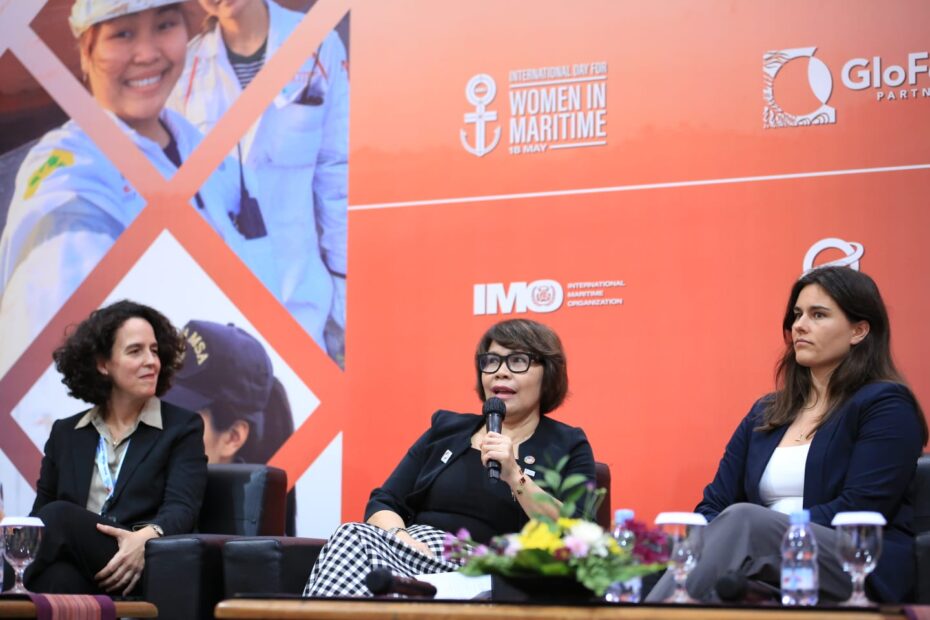
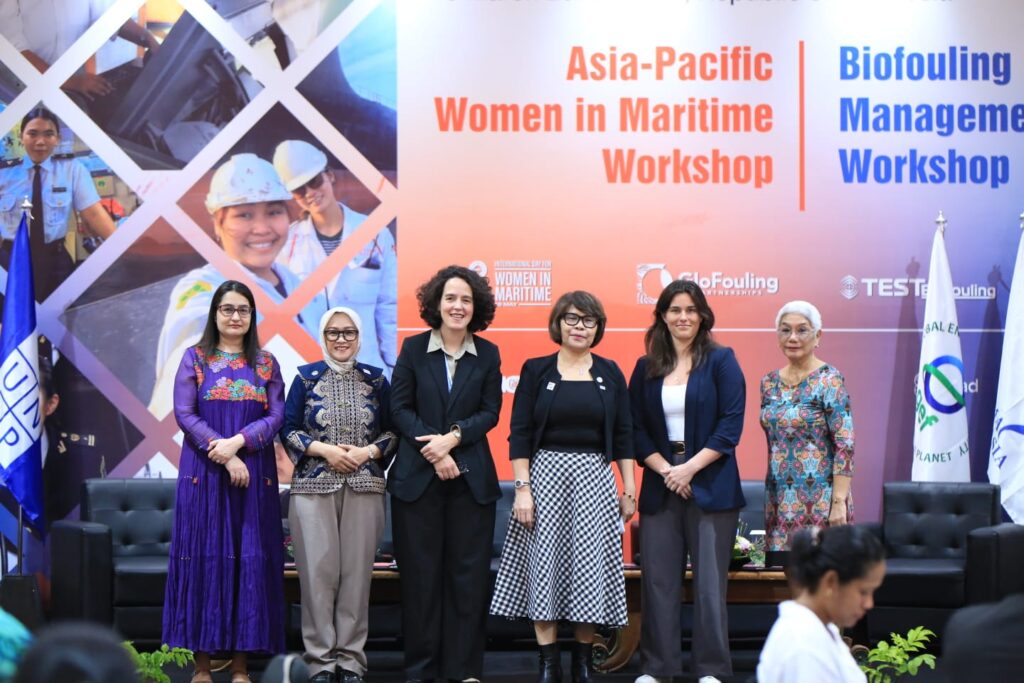
Women in Maritime Indonesia (WIMA INA) reaffirmed its commitment to increasing female participation in the maritime industry by successfully hosting the International Biofouling Management Workshop for the Asia-Pacific Region last month in Bali, March 13, 2025.
The event was held as part of the 3rd Global Project Task Force Meeting (GPTF-3) under the GEF-UNDP-IMO GloFouling Partnerships framework.
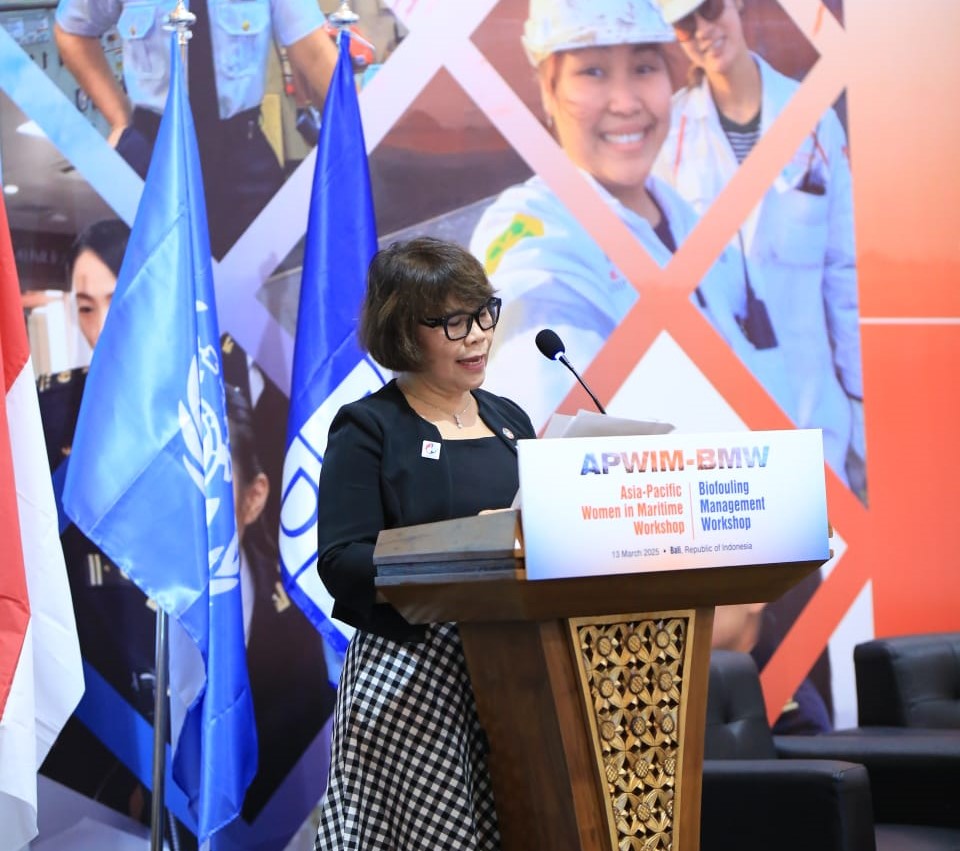
In her opening remarks, WIMA INA Secretary General Tresna Pardosi emphasized the importance of gender equality and women’s empowerment in the maritime world.
“The maritime sector has long been dominated by men,” Tresna noted. “Stereotypes and misconceptions that women are unfit for seafaring roles have severely limited their opportunities in this field.”
She highlighted the sobering statistic that women account for less than 2% of the global seafaring workforce. “These figures clearly show that we have much work ahead to achieve gender equality,” she stressed.
Tresna expressed her appreciation to the International Maritime Organization (IMO) for its continued efforts in creating inclusive platforms and initiatives.
“I’m pleased that today’s workshop brings attention to gender mainstreaming within the maritime sector,” she said. “We’re discussing not only biofouling management but also the vital roles of women in science, technology, engineering, and mathematics (STEM). Topics like cultural bias, gender role assumptions, and the importance of male allies in gender equality are also front and center.”
She praised the IMO for its active support of gender diversity, especially in developing countries. “As a UN maritime body, the IMO is instrumental in helping achieve Goal 5 of the UN Sustainable Development Goals—gender equality and the empowerment of all women and girls.”
Tresna outlined several key IMO initiatives: encouraging women’s participation in training and projects, establishing women’s maritime associations globally, designating May 18 as International Day for Women in Maritime, launching the IMO Gender Equality Award, and assisting member states in integrating more women into the sector.
She also tied the forum’s theme to this year’s International Women’s Day campaign, “Accelerate Action,” which urges urgency in dismantling systemic barriers to gender equality.
“Digitalization, technological innovation, and sustainability efforts within the maritime sector are opening new pathways for women,” she said. “But awareness, support, and collaboration from all stakeholders are essential to build a truly inclusive and equitable industry.”
Tresna closed her speech with a powerful call to action: “I encourage all women in maritime to be agents of change in their workplaces and inspire others to help create inclusive, barrier-free environments. With cross-gender collaboration, we can build a sustainable system for gender equality throughout the shipping industry.”
Government Recognition and Support
The Directorate General of Sea Transportation also acknowledged WIMA INA’s significant contributions to promoting women’s roles in Indonesia’s maritime sector and international maritime discourse.
Lollan Panjaitan, Secretary of the Directorate General, commended WIMA INA’s initiatives in maritime training, mentorship, and community outreach.
“We deeply appreciate WIMA INA’s active involvement in international forums, including the Biofouling Management Workshop for the Asia-Pacific Region,” he said.
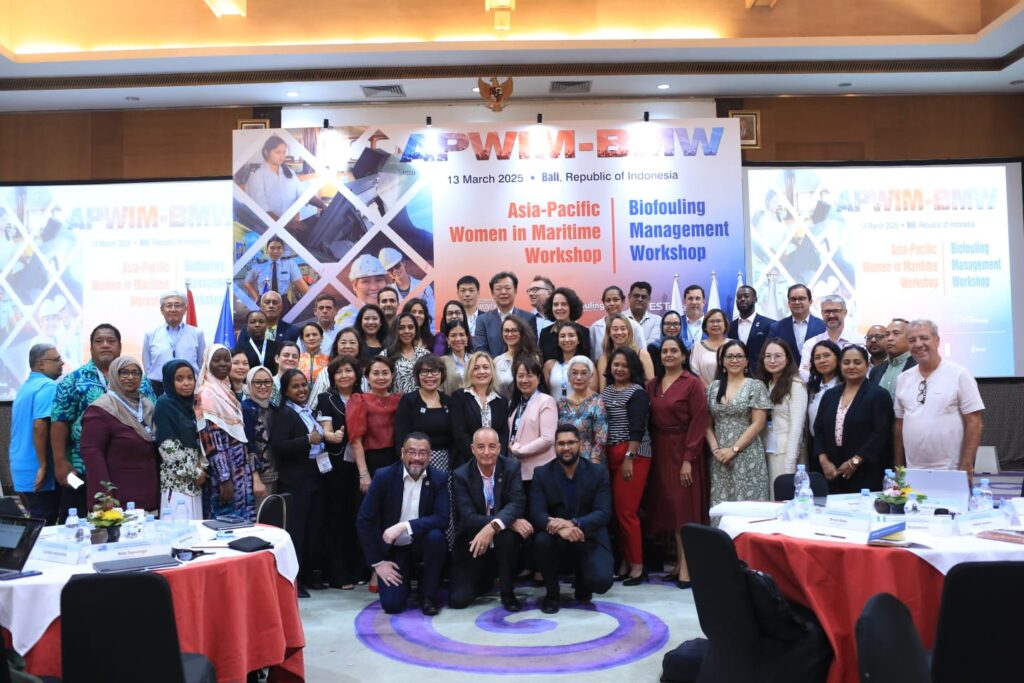
Held at the Truntum Hotel in Bali, the workshop received support from the IMO, the Global Environment Facility (GEF), and the United Nations Development Programme (UNDP). The GPTF-3 marked the culmination of activities within the GloFouling Partnership Project since its inception in 2018.
The event welcomed approximately 70 international participants from 26 countries, over 10 global organizations, and numerous local attendees, underscoring Indonesia’s growing role in global maritime sustainability and gender inclusivity.