
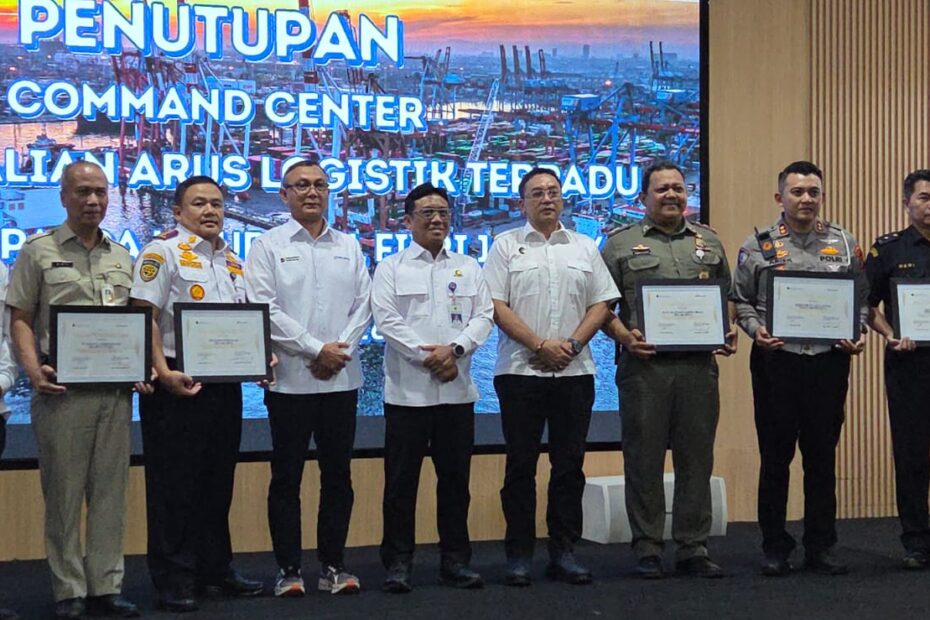
Tanjung Priok Port Authority (KSOP) said a temporary command center overseeing cargo movements at Tanjung Priok port helped ease congestion following the Eid al-Fitr holiday, offering a potential model for managing future surges in logistics activity.
The Integrated Logistics Flow Control Command Center, established by the Tanjung Priok Port Authority (KSOP), Transport Ministry, operated from March 30 to April 19 to manage the annual spike in cargo traffic that typically follows the holiday period.
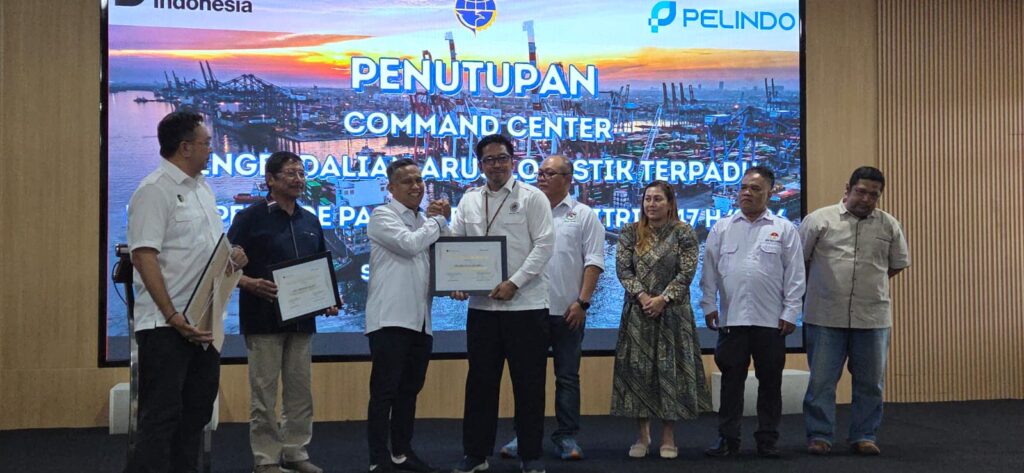
The facility was formally closed on Monday by Director General of Sea Transportation Muhammad Masyhud, who said this year’s post-holiday period saw significantly improved traffic conditions.
In past years, Tanjung Priok, Indonesia’s busiest port, has experienced severe congestion after Eid, as delayed shipments and resumed industrial activity converge, straining port capacity and surrounding road networks. Officials said those disruptions were largely absent this year.
“Traffic is running smoothly, with no congestion issues like last year,” Masyhud said during the closing ceremony, according to official remarks. He added that the outcome aligned with expectations from both the government and logistics industry players.
The command center brought together port authorities, terminal operators, trucking firms and shipping companies to coordinate decisions in real time. Officials and industry representatives said the centralized approach improved responsiveness and reduced bottlenecks across the logistics chain.
At the core of the strategy was a phased gate pass system regulating truck entry into the port. The policy limited the number of trucks allowed to access terminals at any given time, with quotas adjusted based on evolving conditions.
From March 30 to April 12, gate pass issuance was capped at 50% of normal capacity, allowing authorities to stabilize yard conditions following the holiday slowdown. As congestion risks eased, the quota was raised to 75% between April 13 and April 19.
Officials said the gradual increase helped prevent sudden surges in truck arrivals that can overwhelm port infrastructure, particularly during periods of uneven cargo pickup and delivery schedules.
Another key component was the daily monitoring of yard occupancy ratios, a measure of how much container storage space is being used. By tracking these figures in real time, authorities were able to anticipate congestion risks and adjust operational policies accordingly.
“When occupancy levels rise, we can immediately take anticipatory measures,” said a port official involved in the operation. “That responsiveness is critical in preventing backlogs.”
Gate Pass Issuance Averages 80%
Heru Susanto, head of the Tanjung Priok Port Authority, said the flexibility of the gate pass system allowed for rapid adjustments without disrupting cargo flows.
“Gate pass arrangements are very flexible, adapting to field conditions, and the average occupancy rate has reached around 80%,” he said. That level is generally considered manageable for large container terminals, though sustained increases above that threshold can signal rising congestion risks.
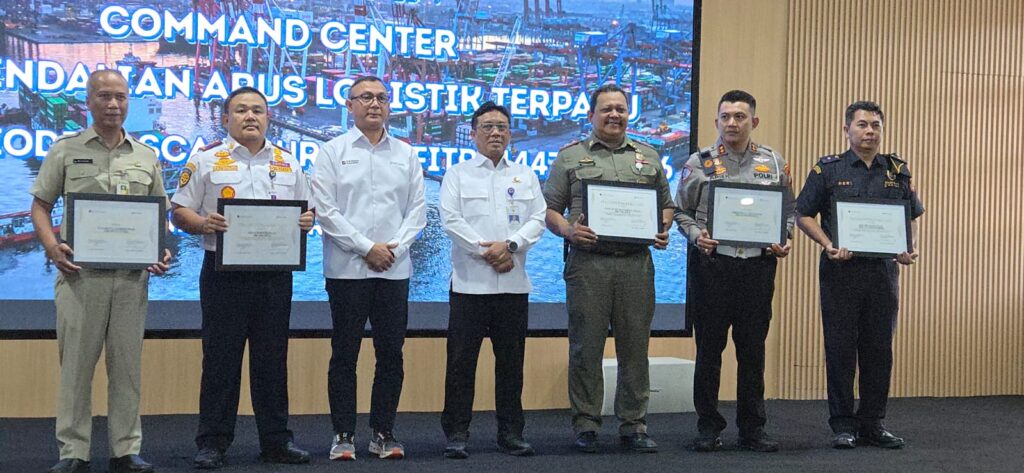
Industry groups, including trucking and shipping associations, participated in daily coordination efforts, helping align schedules and reduce mismatches between cargo availability and transport capacity.
Logistics operators said the improved coordination reduced waiting times for trucks and minimized delays in cargo handling, though some cautioned that the system’s effectiveness depends on timely communication.
Several industry representatives said earlier notification of policy changes would allow companies to better prepare operational adjustments, such as reallocating fleets or rescheduling deliveries.

One proposal put forward by business groups was to establish a minimum 14-day lead time for policy socialization before implementation. They said such a window would help reduce confusion and improve compliance across the logistics chain.
Benchmark for Future Peaks
Despite those concerns, stakeholders broadly described the command center as a success and a step toward more structured logistics management in Indonesia.

Muhammad Masyhud
The Transport Ministry said it plans to evaluate the operation and consider applying similar measures during other peak periods, including year-end holidays and major national events that drive spikes in cargo volumes.
Analysts say Indonesia’s logistics sector faces ongoing challenges tied to infrastructure constraints, fragmented coordination and fluctuating demand patterns. Efforts to introduce data-driven decision-making and centralized oversight could help address some of those issues, particularly in high-traffic hubs such as Tanjung Priok.
For now, officials view the post-Eid operation as a proof of concept.
“The combination of data monitoring, adaptive policy and strong coordination has shown that congestion can be managed more effectively,” Masyhud said.
Authorities said the next step will be to refine the system and explore how elements of the command center can be integrated into routine port operations, rather than deployed only during peak periods.
If implemented more broadly, such measures could help improve reliability across Indonesia’s logistics network, where delays at major ports often ripple through supply chains and affect domestic distribution.