
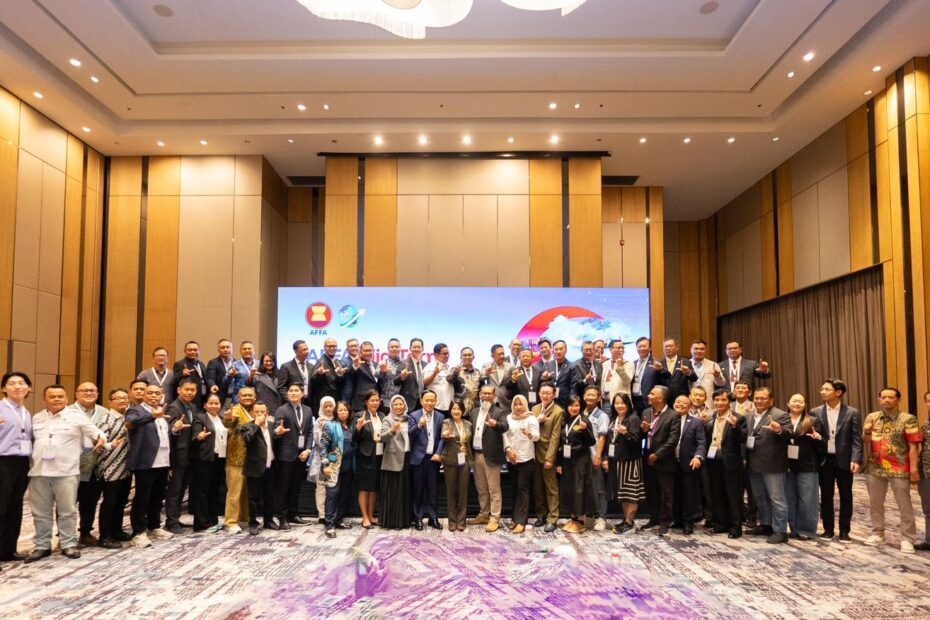
ASEAN freight forwarders gathered in Batam to advance trade facilitation, digitalization, supply chain security, and workforce development, aiming to strengthen regional logistics integration amid shifting global trade and supply chains
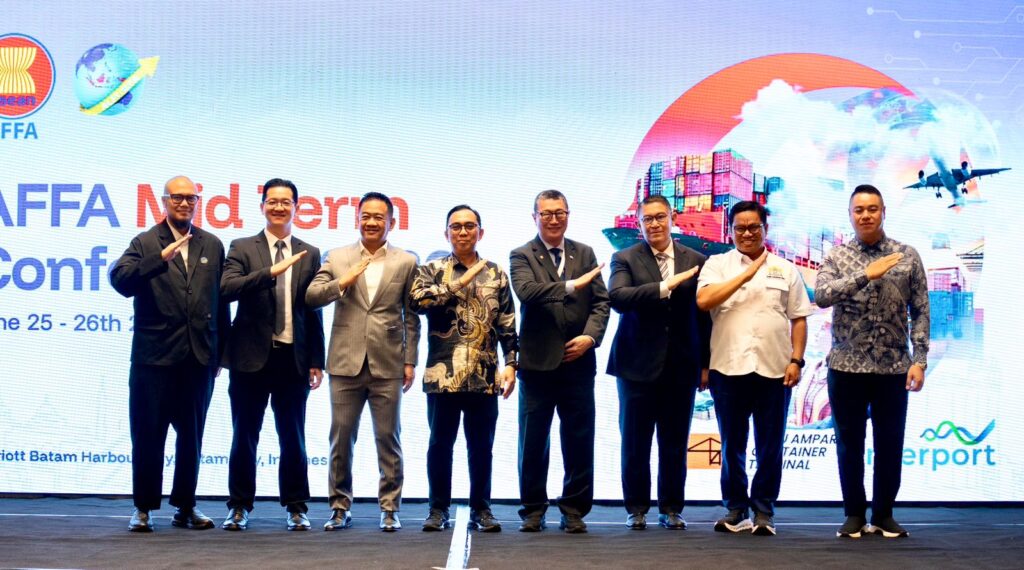
The ASEAN Federation of Forwarders Associations (AFFA) convened its 2026 Council Mid-Year Meeting in Batam on June 25-26, bringing together logistics industry representatives from across Southeast Asia to strengthen regional connectivity through trade facilitation, digitalization, security and workforce development.
Hosted by the Indonesian Logistics and Forwarders Association (ALFI) in collaboration with AFFA, the meeting gathered delegates from the federation’s 10 member associations and other national logistics stakeholders under the theme, “Strengthening ASEAN Logistics Connectivity through Trade Facilitation, Digitalization, Security, and Capacity Development.”
The meeting comes as Southeast Asia’s logistics sector undergoes rapid transformation, driven by rising intra-ASEAN trade, supply chain diversification, e-commerce growth and increasing demand for resilient, sustainable logistics networks. The ASEAN freight and logistics market is projected to reach about US$288 billion in 2025 and expand to US$390 billion by 2030, with Indonesia expected to remain the region’s largest contributor.
“Logistics connectivity is the lifeblood of ASEAN economic integration,” ALFI Chairman M. Akbar Djohan said.
“Amid geopolitical uncertainty and shifts in the global supply chain, our region must strengthen collaboration to remain competitive. This forum provides a platform for stakeholders to align priorities and develop a common regional agenda,” he added.
Yukki Nugrahawan Hanafi, Senior Vice President of the International Federation of Freight Forwarders Associations (FIATA) and Chairman of AFFA’s Advisory Board, said Batam was selected because of its strategic role in regional logistics.
“Batam demonstrates how port connectivity, trade facilitation, digital transformation and logistics infrastructure can strengthen regional competitiveness,” Yukki said. “Hosting this meeting here reflects our commitment to developing new logistics hubs that support ASEAN economic integration.”
Located along the Strait of Malacca, one of the world’s busiest shipping lanes, Batam serves as a key maritime gateway linking Indonesia with regional and global markets. More than 102,500 vessels are expected to transit the strait in 2025, up from about 94,300 a year earlier. Supported by its Special Economic Zone and Free Trade Zone status, the city has become an increasingly important logistics hub.
Discussions during the meeting focused on three strategic priorities: trade facilitation, security and digitalization, and capacity development.
Delegates reviewed progress on the ASEAN Single Window, customs modernization, multimodal transportation and greater participation by micro, small and medium-sized enterprises in regional trade. They also discussed digital freight forwarding, electronic bills of lading, cybersecurity and supply chain visibility, alongside initiatives to strengthen professional certification, workforce skills and youth and women’s participation in the logistics industry.
Yukki said efficient trade facilitation depends on secure digital systems and a skilled workforce.
“Logistics efficiency extends beyond physical infrastructure to governance, technology and investment in education and talent development,” he said. “These elements form the foundation of a resilient and adaptive ASEAN supply chain that is better integrated with global trade.”
The meeting is expected to produce AFFA’s Strategic Priorities 2026-2027, policy recommendations on ASEAN trade facilitation, digitalization and supply chain security, and a regional capacity development roadmap. Delegates are also discussing Timor-Leste’s prospective membership in AFFA.
AFFA Chairman Chalermsak Karnchanawarin said ASEAN’s location at the center of global shipping places the region in a strong position to enhance its role in international trade.
“Our task is to ensure this strategic position delivers tangible benefits through more efficient logistics, competitive supply chain costs and sustainable regional economic growth,” Chalermsak said.