
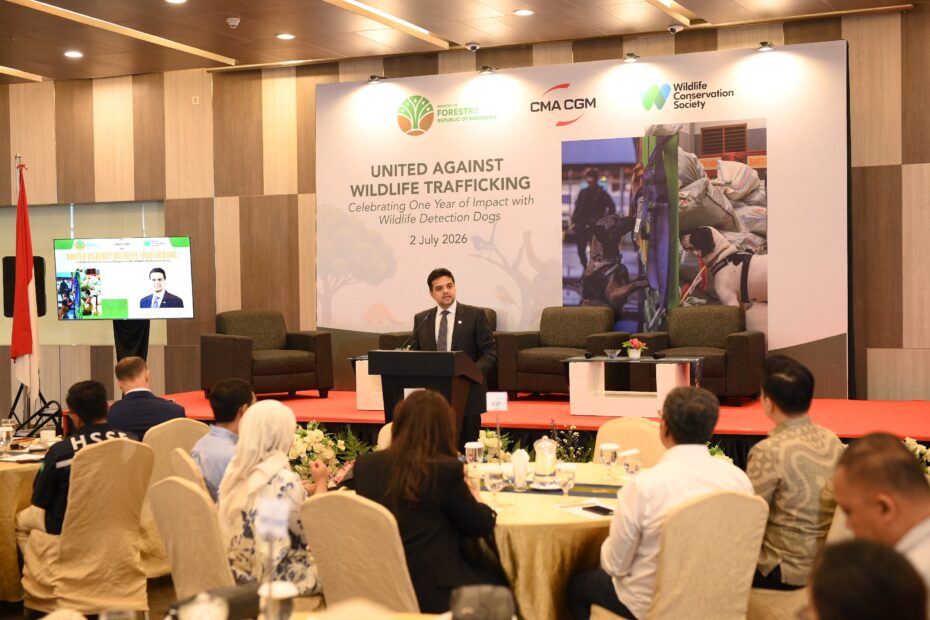
The logistics company says collaboration with Indonesia’s Ministry of Forestry and WCS Indonesia has strengthened cargo screening, enforcement capacity, and wildlife protection through detection dogs and joint operations nationwide
French shipping and logistics company CMA CGM said its partnership with Indonesia’s Ministry of Forestry and the Wildlife Conservation Society (WCS) Indonesia has strengthened efforts to combat illegal wildlife trafficking through the country’s logistics network, supporting dozens of enforcement operations and expanding cargo screening capabilities.
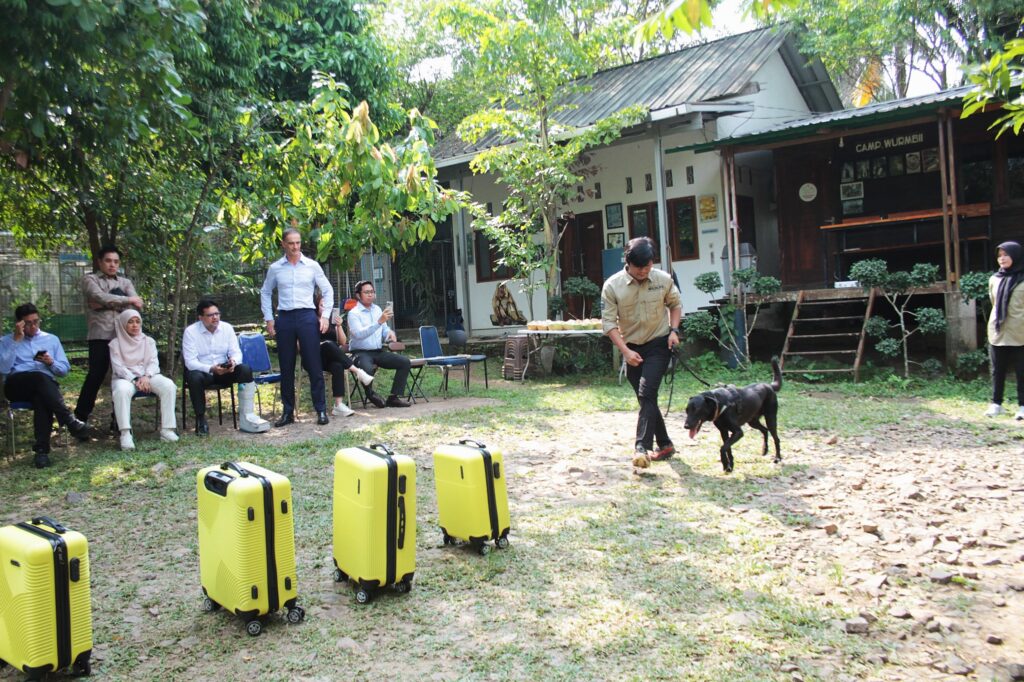
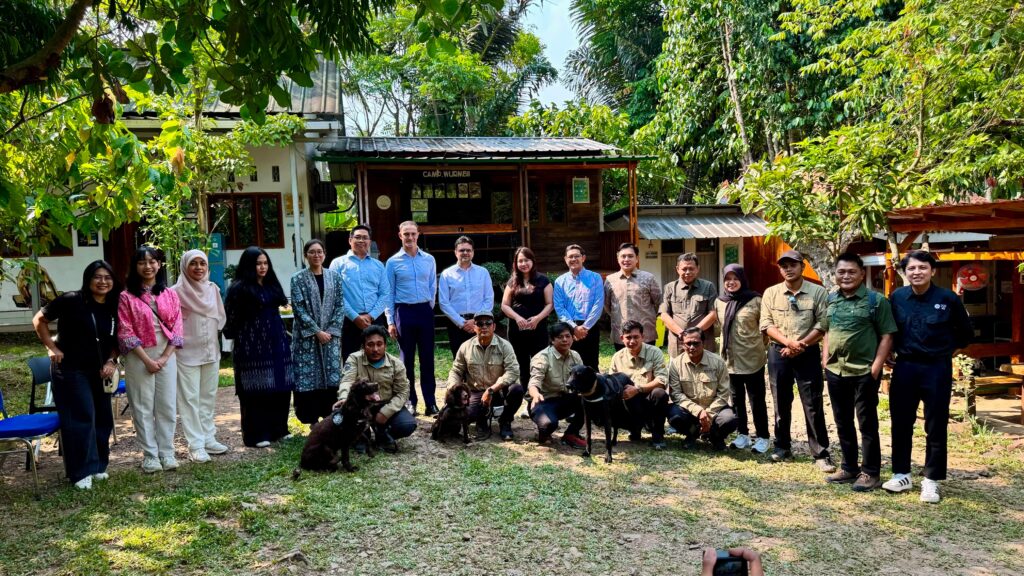
Representatives from the Ministry of Forestry, WCS Indonesia and CMA CGM gathered in Bandar Lampung to review the collaboration’s progress since its launch in 2024 before visiting the Wildlife Detection Dog (WDD) training facility in Kalianda, South Lampung. The visit showcased how specially trained dogs are used to detect wildlife and wildlife products concealed in cargo shipments.
The partnership focuses on reducing the use of ports and logistics routes for wildlife trafficking by combining government enforcement, conservation expertise and private-sector logistics support.
According to the partners, the collaboration has supported 39 joint operations with government agencies since 2024, leading to the seizure of 957 animals from illegal wildlife trafficking networks. Authorities have released 770 of those animals back into their natural habitats after rehabilitation.
Among the rescued animals were protected Indonesian species, including the Sunda pied fantail, Javan leafbird and changeable hawk-eagle, highlighting the continued threat posed by illegal wildlife trade to the country’s biodiversity.
The initiative has also included assessments of port vulnerabilities to identify potential smuggling routes, training programs for 127 port officials and law enforcement personnel from multiple government institutions, and the deployment of K9 units under the Wildlife Detection Dog program.
The WDD program was established by WCS Indonesia together with its local partner, Jaringan Satwa Indonesia (JSI), to support the Ministry of Forestry’s Directorate of Conservation Species and Genetic Resources in detecting illegal shipments of protected plants and wildlife.
Director of Conservation Species and Genetic Resources Ahmad Munawir said preventing wildlife trafficking requires coordinated monitoring and stronger oversight across logistics corridors that are vulnerable to exploitation by criminal networks.
“The protection of wild plants and animals is a shared legal responsibility that requires collaborative, integrated and risk-based monitoring,” Munawir said. “Logistics routes are among the key points that must continue to be strengthened because they may be exploited within illegal trade chains.”
He said the use of detection dogs, combined with capacity building for enforcement officers and closer coordination between public agencies and private companies, could improve the speed and accuracy of wildlife inspections while providing a model that could be expanded to other areas facing high risks of illegal trade.
WCS Indonesia said the program demonstrates how conservation organizations, government agencies and logistics companies can work together to strengthen frontline detection before trafficked wildlife reaches domestic or international markets.
Sofi Mardiah, Senior Manager of Wildlife Trade and Policy Program at WCS Indonesia, said the collaboration has improved operational readiness while reinforcing the role of supply chains in preventing wildlife crime.
“The past year has demonstrated that protecting wildlife and protecting supply chains go hand in hand,” she said, adding that early detection remains critical to disrupting trafficking networks.
For CMA CGM, the initiative forms part of the company’s broader efforts to strengthen supply chain integrity and prevent its global logistics network from being used for illicit activities.
“As a global player in shipping and logistics, we recognize that supply chains play a critical role in both enabling and preventing illicit activities,” said Ikram Ghazali, President Director of CMA CGM Indonesia.
“Our partnership with the Ministry of Forestry and WCS Indonesia reflects our commitment to strengthening safeguards across logistics networks and supporting practical solutions such as the Wildlife Detection Dogs program.”
Illegal wildlife trafficking remains one of the world’s largest transnational environmental crimes, threatening biodiversity while increasing the risk of zoonotic disease transmission through the movement of illegally traded animals. The partners said continued cooperation between governments, conservation organizations and logistics providers will be essential to improving detection capabilities and preventing wildlife trafficking through Indonesia’s ports and transport networks.