
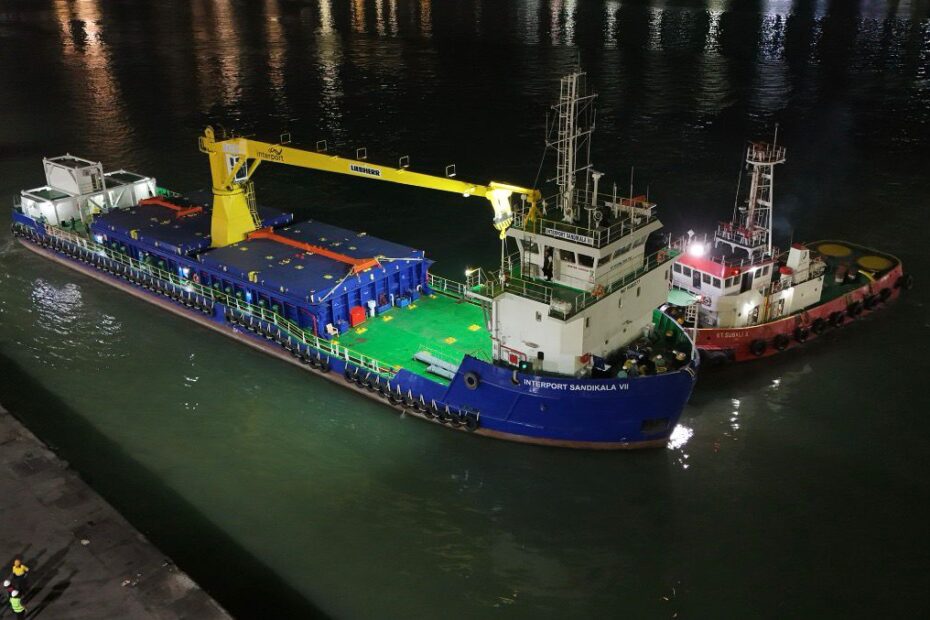
New multipurpose vessel expands access to remote mining, energy and infrastructure projects, offering flexible cargo transport, shallow-water operations and independent loading capabilities across Indonesia’s underserved maritime regions
Maritime logistics company Interport has launched its newest vessel, Interport Sandikala VII, as it seeks to strengthen cargo distribution to remote areas with limited port infrastructure and improve logistics support for Indonesia’s mining and energy sectors.
The Indonesian-flagged vessel recently completed its maiden voyage from Tanjung Perak Port in Surabaya to Balikpapan, a journey that took about four days. The vessel is expected to enhance logistics connectivity for mining, oil and gas, construction and infrastructure projects, particularly in regions with challenging geographical conditions.
Interport Sandikala VII is the first multipurpose vessel owned by PT Interport Dirandra Syandana (INDIS), a subsidiary of Interport. The vessel is designed to transport a range of cargo types, including containers, general cargo and breakbulk shipments.
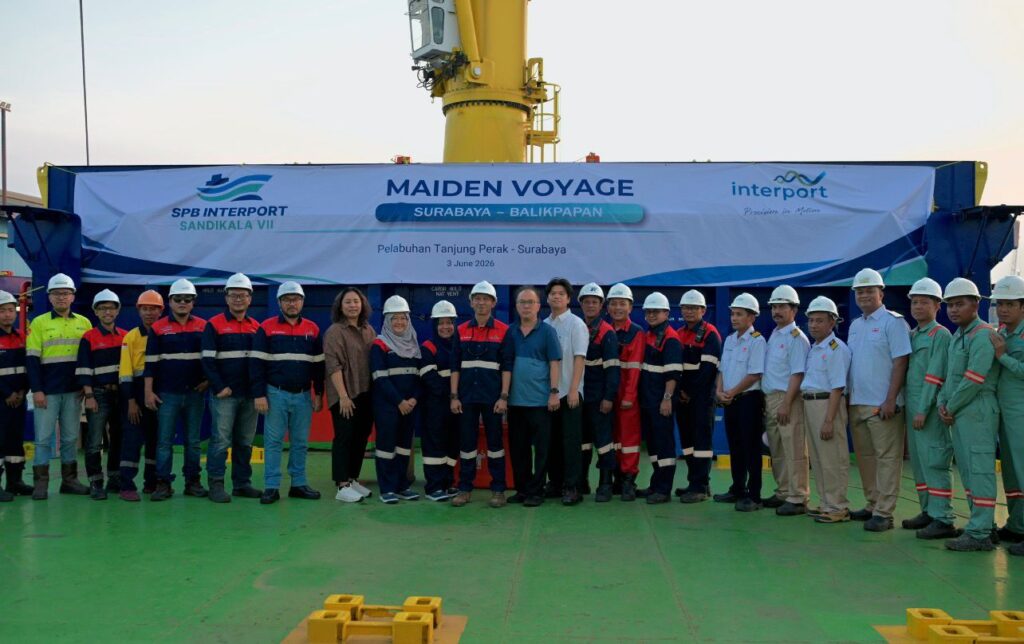
With a capacity of 1,400 deadweight tons (DWT), the vessel can carry up to 107 twenty-foot equivalent units (TEUs) when configured entirely for container cargo. For breakbulk shipments, it has a carrying capacity of approximately 1,200 tons.
“The vessel is designed to meet operational requirements in hard-to-reach locations, particularly in the mining industry, which requires flexible and reliable logistics solutions,” INDIS Director Yusuf Indrawarman said.
A key feature of Interport Sandikala VII is its ability to operate in shallow waters and river routes with limited depth. Measuring 67.2 metres in length and drawing approximately 3.2 metres of water, the vessel can access inland areas that are beyond the reach of larger cargo ships.
To support operations at pioneer ports and project sites with limited infrastructure, the vessel is equipped with a marine crane capable of lifting up to 40 tons. It also features an azimuth thruster drive system that improves manoeuvrability in narrow waterways and during berthing operations.
According to Interport, the combination of cargo flexibility, shallow-draft capability and self-sustained loading and unloading equipment makes the vessel well suited for serving industries operating in remote and infrastructure-constrained locations.
The vessel’s deployment reflects broader efforts by Indonesia’s shipping industry to improve supply-chain efficiency and expand logistics access to regions that have historically faced transportation challenges.
Through the fleet expansion, Interport aims to strengthen domestic maritime logistics services while supporting growing industrial activity in eastern Indonesia and other natural resource-producing regions.