
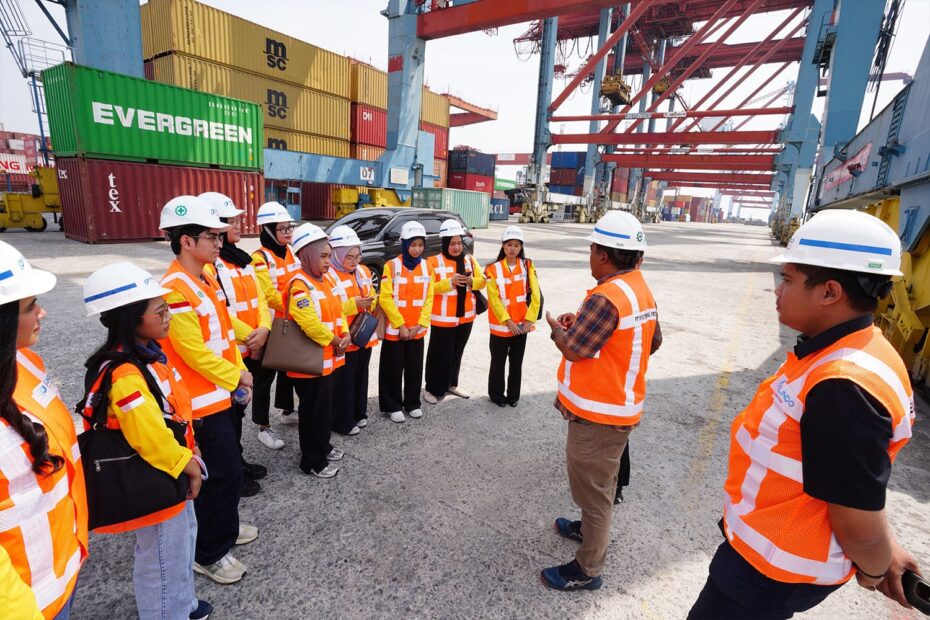
Container terminal operator IPC Terminal Petikemas (IPC TPK) hosted students from the Faculty of Economics and Business at the University of Indonesia as part of its Port Trace Program aimed at introducing students to modern port and logistics operations.
The industrial visit, held on May 8 at Tanjung Priok Port in North Jakarta, provided students with firsthand exposure to container terminal activities, digital logistics systems and supply chain management practices.
Through the program, students visited the Integrated Planning & Control Room and Operations Terminal 3, where they observed container loading and unloading operations and learned about the role of ports in international trade and national logistics distribution.
IPC TPK said the program was designed to bridge academic theory with operational realities in the port industry, while introducing students to developments in digitalization, sustainability and operational efficiency.
Participants also received an overview of integrated operational systems, risk mitigation measures, customer relationship management and cross-functional coordination within port operations.
IPC TPK Corporate Secretary Daniel Setiawan said the company aimed to broaden students’ understanding of opportunities in the port and logistics sector.
“The port industry today is highly open and requires diverse expertise, ranging from economics and business to technology, data, sustainability and communications,” Daniel said in a statement.
He added that the company hoped students would view the sector as a growing and modern industry with broad career prospects.
IPC TPK, a container terminal operator under the Pelindo Group, said early industry exposure was important in helping narrow the gap between educational institutions and industry needs.
The company said the Port Trace Program also aimed to help students understand how logistics efficiency affects distribution costs, how trade flows through ports and how terminal operators are implementing digital transformation and Environmental, Social and Governance (ESG) principles in their operations.