
Working with Indonesia’s Customs authority, JICT helps clear long-stay import containers, easing yard congestion, improving terminal capacity, accelerating cargo flow, and supporting more efficient national port logistics
PT Jakarta International Container Terminal (JICT) and Indonesia’s Directorate General of Customs and Excise have completed the settlement of long-stay imported goods at Tanjung Priok Port, part of efforts to improve cargo flow and strengthen logistics efficiency.
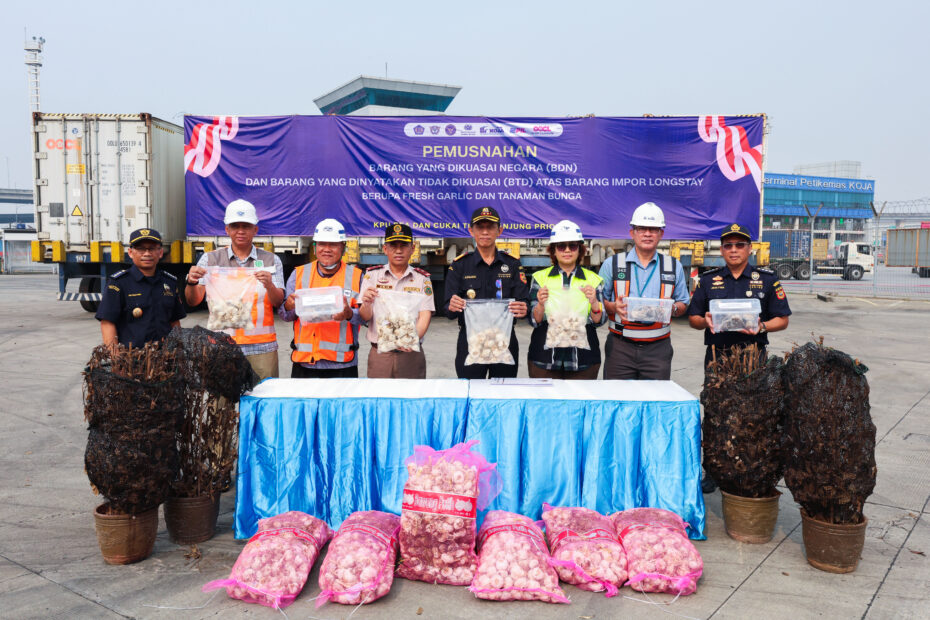
The settlement covered State-Controlled Goods (Barang Dikuasai Negara/BDN), including cut flowers and pussy willow, as well as Declared Uncontrolled Goods (Barang yang Dinyatakan Tidak Dikuasai/BTD), comprising thousands of sacks of fresh garlic.
The goods were declared unfit for use following inspections by the Jakarta Animal, Fish and Plant Quarantine Agency and were destroyed in accordance with Indonesian regulations. A handover ceremony was held at the JICT Waiting Bay before the goods were transported for destruction at a facility operated by PT Sinergi Prima Sejahtera in Tangerang Regency.
JICT said the initiative forms part of its cooperation with Customs to reduce the accumulation of long-stay cargo at the port and improve the utilization of container yard capacity.
JICT President Director Ade Hartono said resolving long-stay containers helps optimize terminal operations by freeing storage space, improving container circulation, and supporting more efficient cargo handling.
“The resolution of long-stay containers is part of a joint effort to create a more efficient, orderly and competitive logistics ecosystem,” Ade said in a statement on Tuesday.
According to JICT, the program also helps reduce congestion in temporary storage areas, improves the availability of shipping containers, accelerates cargo turnover, and enhances services for port users.
The terminal operator said it will continue coordinating with the Directorate General of Customs and Excise, Pelindo, shipping lines, quarantine authorities, and other stakeholders to ensure cargo clearance processes comply with applicable regulations while supporting smoother logistics flows.