
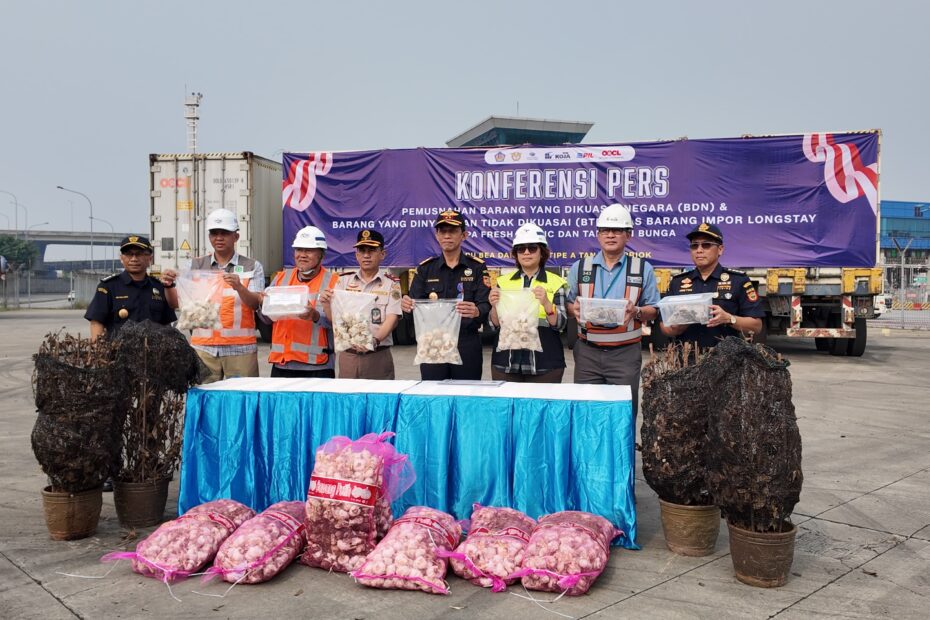
Collaboration with customs, quarantine authorities, and shipping lines cleared abandoned BDN and BTD imports, optimizing terminal capacity, reducing congestion, and supporting efficient national logistics operations
Koja Container Terminal (KSO TPK Koja), in coordination with the Tanjung Priok Type A Customs and Excise Office, the Jakarta Animal, Fish, and Plant Quarantine Center, PT Jakarta International Container Terminal (JICT), and PT Pacific International Lines (PIL) Indonesia, destroyed five containers of long-stay imported goods on Wednesday as part of efforts to improve port efficiency and accelerate cargo clearance.
The destruction took place at the PT Sinergi Prima Sejahtera facility in Tangerang, Banten, and followed an announcement by customs authorities on July 7 regarding the settlement of long-stay imported cargo designated as State-Controlled Goods (BDN – ‘Barang yang Dikuasai Negara’) and Goods Declared Uncontrolled (BTD – ‘Barang yang Dinyatakan Tidak Dikuasai’).
The destroyed cargo included 4,350 sacks of fresh garlic stored in three 40-foot refrigerated containers and flower products stored in two additional containers.
The shipments had remained at Tanjung Priok Port since July and August 2025 after the consignee could no longer be contacted and the shipper formally abandoned ownership through a Letter of Cargo Abandonment.
Following the abandonment, Tanjung Priok Type A Customs and Excise Office designated the cargo as Goods Declared Uncontrolled (BTD) under the Regulation of the Minister of Finance No. 92 of 2025. The regulation requires the destruction of BTD goods that are rotten, expired, damaged, or otherwise unfit for consumption.
Before the destruction, the Jakarta Animal, Fish, and Plant Quarantine Center inspected the cargo to ensure compliance with technical and biosafety requirements.
KSO TPK Koja said the three refrigerated containers had occupied the terminal’s container yard for around 340 days, reducing yard capacity, slowing container turnover, and increasing operational and environmental risks.
To facilitate the clearance process, the terminal operator waived stacking, recooling, and monitoring charges for the affected containers. Other operational fees, including lift-on services, gate passes, and related administrative charges, remained applicable, while PT Pacific International Lines Indonesia assumed responsibility for administrative procedures and disposal costs.
“The settlement of long-stay imported goods is part of our commitment to maintaining smooth terminal operations and supporting the efficiency of the national supply chain,” Safuan, Corporate Secretary of KSO TPK Koja, said in a statement.
He said collaboration among Customs, the Quarantine Office, shipping lines, and terminal operators was essential to creating a more efficient and reliable logistics ecosystem while optimizing terminal capacity and improving services for port users.
The clearance of long-stay cargo forms part of broader efforts by Indonesian authorities and port operators to reduce container dwell time, improve utilization of terminal facilities, and strengthen the efficiency of the country’s logistics network.