
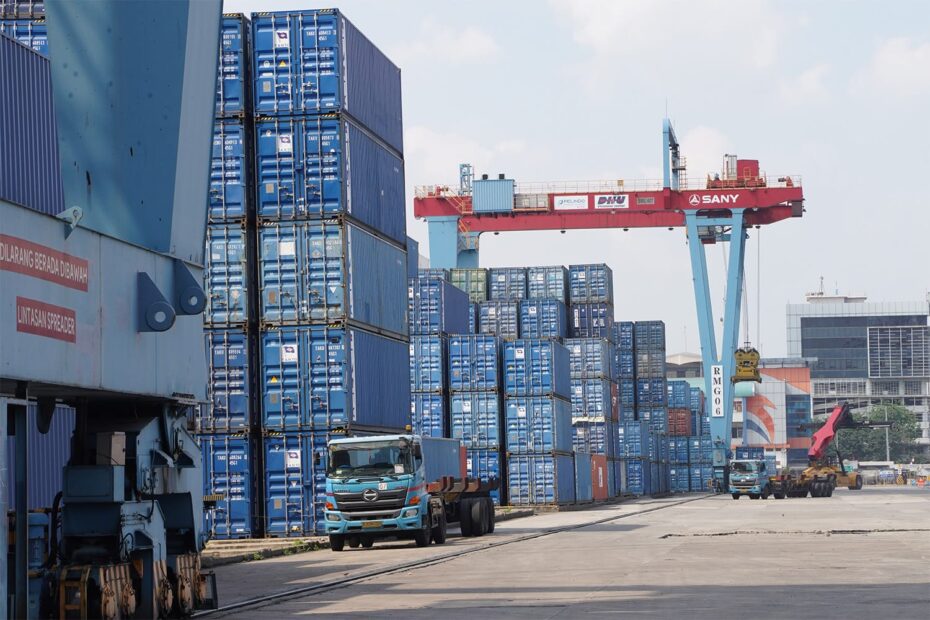
Vessel traffic and container flows at Indonesia’s main container terminals eased after the Eid al-Fitr holiday, reflecting a growing shift among logistics operators and importers to move cargo ahead of seasonal restrictions rather than after the holiday rush.
Operational data from IPC TPK showed ship calls fell to 88 in the post-Eid period from 121 before the holiday, a decline of about 27%. Container throughput also dropped sharply, from 77,577 twenty-foot equivalent units (TEUs) before Eid to 47,775 TEUs afterward.
The trend mirrors patterns seen over the past two years, suggesting that shipping lines and cargo owners are increasingly frontloading deliveries before Eid to avoid tighter operational controls and congestion risks at ports.
During the holiday period, authorities imposed measures to manage cargo flows at Tanjung Priok Port, including gate-pass quotas and tighter vessel-arrival scheduling. In the first week after Eid, terminal operating capacity was capped at 50% before gradually returning to normal levels.
The restrictions encouraged logistics players to accelerate shipments ahead of the holiday, reducing the risk of bottlenecks afterward.
“In the past two years, there has been a shift in Eid logistics patterns,” said Pramestie Wulandary, corporate secretary of IPC TPK.
“Service users now tend to send cargo earlier, before operational restrictions and traffic management measures take effect. As a result, post-Eid vessel activity no longer experiences the sharp surge seen in previous years.”
She said the pattern reflected improving coordination among terminal operators, shipping lines and cargo owners in planning cargo distribution during one of Indonesia’s busiest seasonal periods.
The decline in post-holiday traffic does not necessarily point to weaker trade activity, according to IPC TPK, but rather to a redistribution of cargo flows aimed at preventing congestion at ports and surrounding access roads.
“This shows logistics planning is becoming more coordinated and evenly distributed,” Pramestie said. “Port operations can continue running smoothly while congestion risks are anticipated earlier.”
IPC TPK said it would continue coordinating with port authorities, shipping operators and other stakeholders to maintain stable cargo flows before and after the Eid period.