
There are evidences to say that it is the problem of slot/space shortage – rather than container shortage – as the main problem of global supply chain and the as logjam of Indonesia’s export.
Since October, slot/space shortage has become a dominant issue of Indonesia’s export, not the issue of container shortage anymore, logistics business players have said.
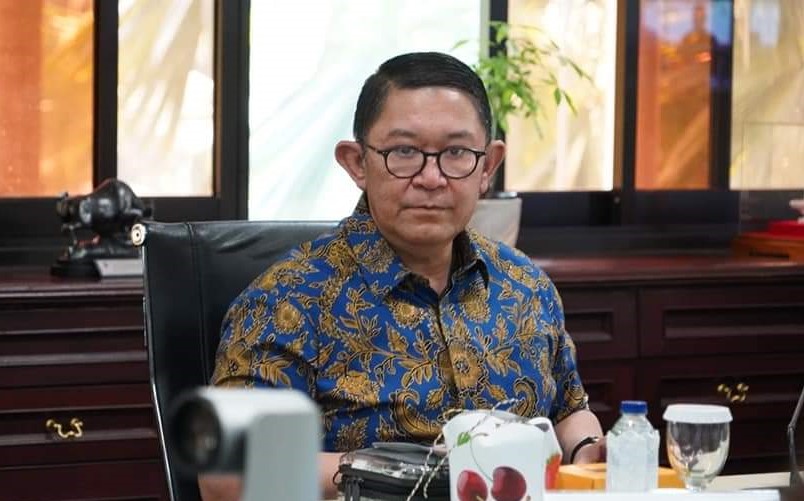
Even, the slot/space shortage of mother vessels serving some world’s leading ports, according to Chairman of Indonesia Logistics and Forwarders’ Association (ALFI) Yukki Nugrahawan Hanafi, has become dominant factor of fluctuated freight rate.
Quoting the result of survey on export activities from ASEAN countries to US and Europe, Yukki said: “Now, our export commodities of furniture, textile, food and beverage are suffering much from the freight rate rise. But, the commodities of electronics and automotive are suffering less.”
Yukki calls for the adoption of CIF (Cost, Insurance, and Freight) in Indonesia’s term of export.
However, Yukki appreciated the increasing export last year. ALFI data says last year the export volume of the three commodities (furniture, textile, food and beverage) still experienced increase, proven by the increasing throughput at the three Indonesia’s main gateways of Tanjung Priok (Jakarta), Tajung Emas (Semarang), and Tanjung Perak (Surabaya).
The fluctuated export freight rate also took place at the routes to Shanghai and other destinations in China. Even, it will continue to rise until Chinese New Year.
“The freight rate to the two countries (US and China) always become references and determine our export commodities competitiveness,” Yukki said further.
Yukki expects the problem of slot/space shortage will soon get solution, thus the freight rate hike can be controlled.
“Government incentives like subsidies to exporters needs to be carried out for high competitiveness commodities so that they are able to change the export payment method from FOB to CIF and have bargaining for overseas buyers. In addition, it encourages main line operators (MLO) to continuously carry out repositioning (repo) empty containers that are still stuck at some overseas ports,” said Yukki.